Pomeranian and Kartuska geese: native Polish breeds
The Pomeranian goose (gęś pomorska) and the Kartuska goose (gęś kartuska) are two native Polish breeds, kept for generations in Pomerania and Kashubia. Both are heavy farm geese, but they differ in origin and breed standard. We explain the difference and what you need to do to keep a flock healthy and within the rules.
verifiedFrom the team that has organised work on poultry farms for years.
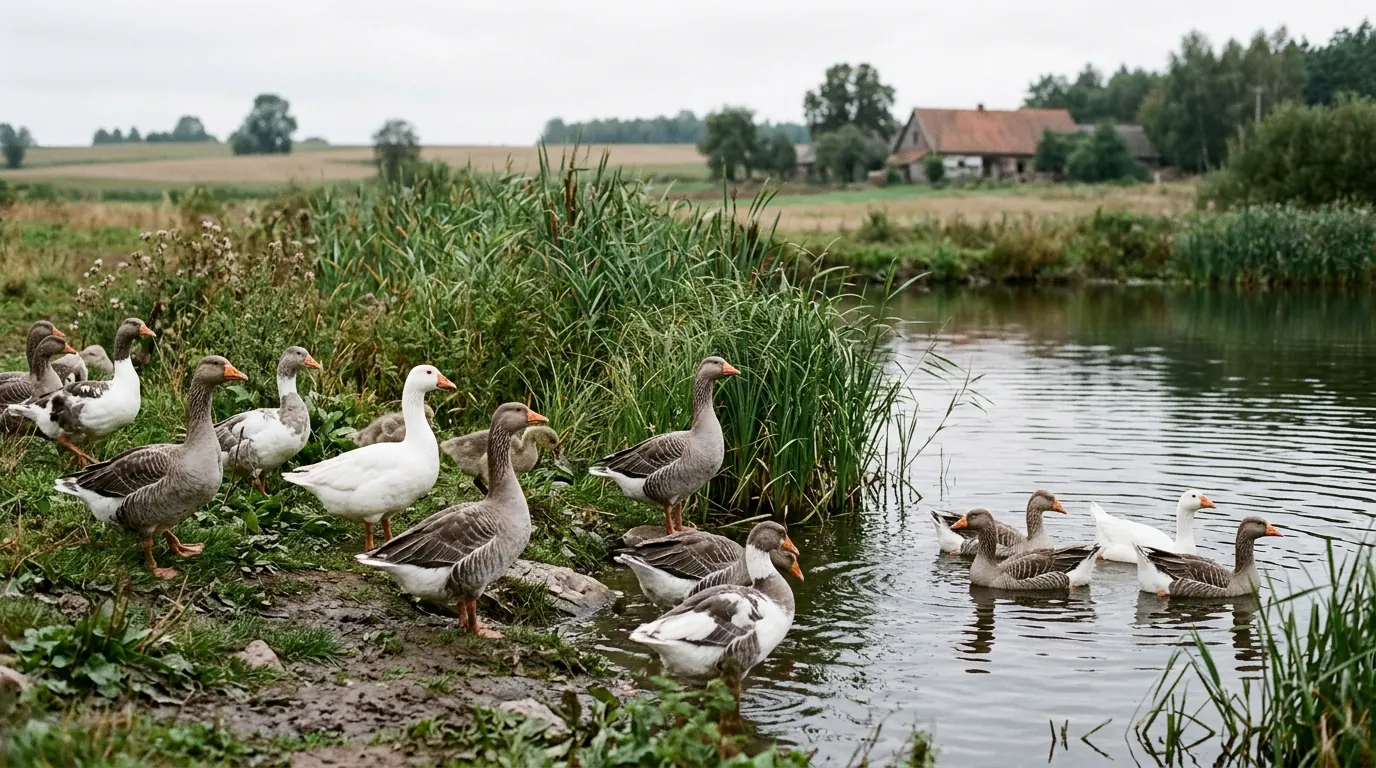
The Pomeranian and Kartuska geese are native breeds. That means they were developed in Poland from local populations, not imported. The Pomeranian goose comes from Pomerania, the Kartuska from Kashubia. Native breeds usually suit the Polish climate well, but they are rarely part of large-scale production, so you need to check where the birds come from. For the wider picture, read about goose breeds and our overview of native Polish chicken breeds.
Two breeds, one region
Both breeds are farm geese from northern Poland. The names show where each breed was developed, not what it is used for. In practice keepers often treat them together, because feeding and housing needs are similar. The differences lie mainly in the breed standard: the look of the bird, its build and its breeding lines. When you buy goslings or ganders, ask about their origin and compare the birds with the standard described in materials from the National Research Institute of Animal Production (Instytut Zootechniki PIB).
Where the two breeds come from
Pomeranian goose
The Pomeranian goose comes from Pomerania and has long been kept on farms in northern Poland. For centuries poultry was raised mainly for meat and feathers, so this breed became part of local farming tradition. Today most flocks are small farms and family holdings, and purebred birds can be hard to find. When you plan your flock, check that your source of goslings can document where the birds come from. The EFSA scientific opinion on duck and goose welfare lists the Pomeranian among heavyweight geese, which can weigh 7–10 kg (females 7–9 kg, males 8–10 kg), and describes it as a meat-type goose with exceptional growth rate and meat quality, but medium or weak reproductive traits.
Kartuska goose
The Kartuska goose comes from Kashubia and is named after the Kartuzy region. Like the Pomeranian, it is a local breed whose fate depended on keepers' interest and demand for farmyard poultry. The name points to a region, not to production traits, so compare birds against the standard, not the name. If you plan to keep this breed, ask the breeder whether the birds come from a line he or she has kept themselves.
How to recognize a Pomeranian and a Kartuska goose
Body build
Both breeds are heavy, with a broad body and strong legs. The standard describes the shape of the bill and neck and the color of the plumage, and these are the traits that tell birds apart in a flock. Body weight alone is not enough to judge a bird, because it depends on sex, age and feeding. Compare geese of the same sex and similar age, and talk to a breeding adviser about birds you doubt.
What to look for when buying
When you buy, ask where the parent birds come from and whether the breeder keeps flock records. A healthy bird has clear eyes, moves freely and has clean feathers around the vent. Ask about any vaccinations and treatments used. Write everything down in your records straight away, before the birds enter the house.
What these breeds are kept for
Meat and feathers
Both breeds are kept mainly for meat and feathers. Carcass value rises when birds are well reared and have access to grass. Purchase prices change over time and depend on region, bird age and buyer, so we give no amounts here. To check current prices, ask local buyers and processors. We describe feeding rules in our text on feeding geese and ducks.
Laying and hatching
Laying geese lay eggs seasonally, and hatchability depends on the line and on conditions during the breeding season. Record egg numbers, hatch results and the results of each flock separately, so you can compare them year to year. This is easy to do in the poultry house records module. You then see which line performs better instead of relying on memory.
Housing and feeding
House and run
Geese need dry bedding, clean water and a grassy run. The house should protect against wind and drafts, and the pop holes to the run should be wide enough that birds do not crowd at the door. We describe building needs in our text on housing requirements for geese. Before any rebuild, talk your plan over with a vet and an adviser.
Feeding
Feed should be balanced for the age of the birds and what they are kept for. Pasture adds to the diet but does not replace feed when the grass is poor. Set feeding norms with a nutrition adviser, not from general advice. Change feed gradually and watch flock behavior and feed use.
Biosecurity and disease
Biosecurity
Keep the flock apart from other birds, limit visits from outsiders and check the quality of drinking water. Change footwear at the house entrance and keep a visitor log. Salmonella is one of the main threats to geese, so it pays to know how it is controlled. Read about it in our text on Salmonella in geese. When you plan protective measures, use the biosecurity planning module in DlaFerm.
Treatment and withdrawal periods
The vet always chooses the medicine and the dose. The keeper records the date given, the product name and the end of the withdrawal period, because this is the basis for selling meat and eggs safely. We describe how to keep these records in the treatment and withdrawal period module. Whenever a date changes, check the entry with your vet.
Keeper duties and flock registration
Reporting your flock
You must report a poultry flock to the District Veterinary Officer (powiatowy lekarz weterynarii). This also applies to small backyard flocks if the birds are kept on a holding. You can find current rules in Poland's Internet System of Legal Acts (Internetowy System Aktów Prawnych). We describe the legal state as of 22.11.2026, but check for changes before you report. Requirements for show or sales flocks may be wider. Separately, a Polish regulation of the Minister of Agriculture of 23 December 2022 (Dz.U. 2023 poz. 2829, Poland's Journal of Laws) sets out who must report events to the computer database: keepers of poultry holdings with at least 100 geese, or holding at least 500 eggs.
Records and inspection
The Veterinary Inspection (Inspekcja Weterynaryjna) can check flock documents and how you keep them. So record arrivals and dispatches of birds, treatments and deaths in one place. Good records also make it easier to prepare for sales and settle with buyers. If you are unsure what needs an entry, talk to your vet.
Frequently asked questions
What is the difference between a Pomeranian and a Kartuska goose?add
Both are native Polish breeds. They differ mainly in regional origin and breed standard: the look of the bird, its build and plumage color. You can check exact traits in the breed description from the National Research Institute of Animal Production (Instytut Zootechniki PIB). When you buy birds, always ask about their origin.
Can you keep Pomeranian and Kartuska geese together?add
Yes, if they come from the same population and are of similar size. Mixing lines without a plan makes it harder to track results and the origin of goslings. Record each group separately.
How do you recognize a Pomeranian goose?add
You recognize it by how well it matches the breed standard: the shape of the body, neck and bill, and the plumage color. One trait is not enough, so judge the whole bird. If you doubt a bird, ask a breeding adviser.
Do you need to register a goose flock in Poland?add
Yes, you must report a poultry flock to the District Veterinary Officer. You can find current rules in Poland's Internet System of Legal Acts, and we describe the legal state as of 22.11.2026. Before you change the size of your flock, check the requirements with your vet.
Who chooses the medicine for geese?add
The vet always chooses the medicine and the dose. The keeper records the treatment and the end date of the withdrawal period. Treatment records in DlaFerm help you keep track of withdrawal periods.
Where can you check goose prices?add
Prices change over time and depend on region, bird age and buyer. Ask local keepers and processing plants. Do not rely on a single quote; compare several sources before you sell.
Sources & resources
- linkChief Veterinary Inspectorate (Główny Inspektorat Weterynarii) — gov.pl/web/wetgiw
- linkNational Research Institute of Animal Production (Instytut Zootechniki PIB) — izoo.krakow.pl
- linkMinistry of Agriculture and Rural Development — gov.pl/web/rolnictwo
- linkInternet System of Legal Acts (Internetowy System Aktów Prawnych) — isap.sejm.gov.pl
Prepared by: DlaFerm Team based on data from the sources listed · Publisher: INSTA-TECH sp. z o.o.
Do you keep a flock of native geese?
The DlaFerm farm management module keeps flock records, treatments and withdrawal periods in one place. Create a free farm account and see how it works on your own farm.
Phone
+48 796 258 151