Goose plucking: feathers, pluckers and rules
Goose feathers are harvested mainly during the natural molt, not by tearing them from a live bird. A plucker makes the work easier with a larger flock, but the job must follow welfare rules and animal protection law. We explain when and how to pluck, what to watch for and how to record the job.
verifiedFrom the team that has organised work on poultry farms for years.
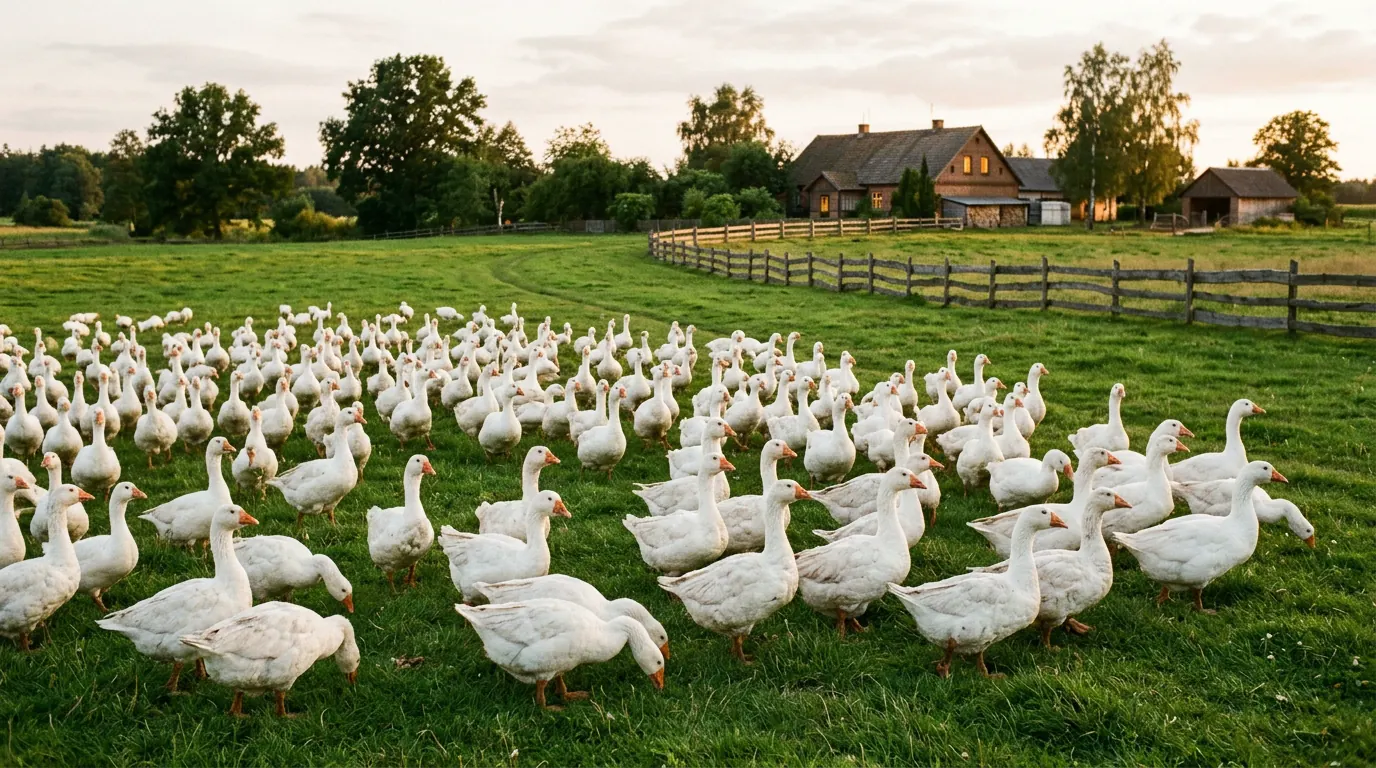
Plucking geese means collecting feathers from the bird. In practice you do it mainly during the molt, when feathers come away from the skin easily on their own. A goose plucker is a machine or tool that speeds this up with a larger flock. Before you plan the job, check that it is legal and that your birds are fit for it. Below we go through the rules step by step. We give no deadlines, because they can change.
Why this topic needs care
Goose feathers have value, but the bird is a living animal, not a raw material. Every plucking causes stress and risks damaging the skin, and careless work can leave wounds that later become infected. Before your first job, learn the basics of goose keeping, including raising goslings from the first weeks, because the condition of young birds affects how well they cope with later handling. Also check the current text of the animal protection rules in ISAP (Poland's online legal acts database) and talk to your vet about the state of your flock. If the rules or the practice of the inspectorate are unclear, ask the county veterinary officer (powiatowy lekarz weterynarii) before you decide.
What is and is not allowed when plucking
Plucking a live bird
In practice, goose feathers are harvested mainly during the molt, when the feathers loosen on their own. Tearing feathers from a bird that is not molting is a serious welfare breach and may be banned under animal protection law. The exact rules are set in national and EU law. Check their current state in ISAP (isap.sejm.gov.pl) and in the guidance of the Chief Veterinary Inspectorate (Główny Inspektorat Weterynarii). We give no act numbers or deadlines here, because they can change. Before the job, talk to the county veterinary officer, especially if you plan to pluck a larger flock or hire an outside crew.
Records of the job
Record the date of the job, the number of birds, the place of work and who did the plucking. If you hire an outside crew, also record the terms of the contract and how you settle payment. These records help during an inspection and when you analyze how plucking affects flock condition. You can keep the data in the poultry house records, where all jobs are in one place.
Goose plucker: types and use
Hand plucking
With a small flock, you collect feathers by hand and gently pull only those that are already loose. This method takes time and patience, but it lets you check skin and bird condition as you go. It suits farms where feather quality matters more than speed. Calm the birds before the job and do not hold them long in a cramped space, because stress alone lowers immunity.
Using a goose plucker
A goose plucker is a machine that helps collect feathers during the molt when you have to handle many birds. When choosing equipment, look at how it works, how easy it is to clean and how safe it is to operate. We describe poultry pluckers separately in our guide to poultry pluckers; here we focus on the rules of use. Whatever the equipment, do not use it on birds that are not molting, and always stop if you see bleeding or clear distress in a bird.
Before plucking: bird, crew and place
Bird condition
Pluck only a healthy goose. A sick or weak bird, or one that has just been handled, should not be plucked. If you see bleeding, skin changes, apathy or lameness, stop work and report it to your vet. Before the job, also check whether a withdrawal period after treatment is still running. If the bird was treated, do not assume the job is safe until your vet confirms it. We describe withdrawal rules in a separate module, and the medicine and dose are always chosen by a vet.
Place and crew
Pluck in a dry, sheltered place, without drafts and sudden noise. If you hire an outside crew, agree on the way of working, the number of people and break rules, because a tired worker makes more mistakes. After the job, birds need a moment of calm and constant access to water. Do not turn them out at once into frost or onto wet ground, and before they go back into the house make sure the skin is not damaged.
Skin, disease and risks after plucking
Skin after plucking
After the job, watch the skin for several days. Minor redness usually heals, but wounds that grow, ooze pus or attract other birds need a vet's advice. Damaged skin is a common start of cannibalism in geese, because birds peck at spots that stand out. Before you decide on the next job, check that earlier wounds have healed.
Hygiene of tools and feathers
Clean equipment and feather containers after each batch of birds and disinfect them with a product used as the manufacturer recommends. Store feathers in a dry place, because damp favors microbes. Always do the work in line with biosecurity rules: outside tools, boots and clothing are a common route of infection between farms and within one farm. Record which cleaning products you used each time.
Feathers in the keeper's accounts
What sets the value of feathers
The value of feathers depends on the species and breed of goose, feather quality, cleanliness and whether they were collected during the molt. Market prices change often, so we give no amounts. Check current buyers' offers, ask several buyers and compare the terms of collection, transport and payment. Remember that feathers are a side product, not the main source of income, so judge them together with the whole flock budget.
Settling payment for a service
If an outside crew does the plucking, agree the rate per bird or per kilogram of feathers before the job. Put the rate in the contract and in your records, with the date and number of birds. Without such a record, misunderstandings at settlement are easy. You will find more on flock budgets in our article on the profitability of goose farming, which helps you set labor, feed and equipment costs side by side.
Frequently asked questions
Can you pluck geese all year round?add
No. Feathers are harvested mainly during the natural molt, when they come away easily without pain or skin damage. Plucking outside that period risks a welfare breach. Check the exact rules in animal protection law and with your vet.
Do you need a goose plucker?add
No. With a small flock, you collect feathers by hand. A plucker makes the work easier with more birds, but it must be used in line with welfare rules. When choosing equipment, look at how easy it is to clean and how safe it is to operate.
Does a goose need treatment after plucking?add
Minor scratches usually need no treatment, but wounds that ooze pus, bleed or make the bird apathetic must be reported to your vet. Only a vet chooses the medicine and dose. Before selling birds or eggs, check the withdrawal rules after any treatment.
How often can you pluck geese?add
It depends on the breed, flock condition and molting period, so we give no fixed interval. Repeat the job only when the birds are healthy and the feathers loosen on their own. Agree the intervals with your vet and record them.
Where can you check the current rules on plucking?add
You will find the texts of acts and regulations in ISAP, Poland's online legal acts database. The Chief Veterinary Inspectorate publishes welfare guidance. Before the job, it is also worth asking the county veterinary officer how the rules are applied in practice.
Is selling goose feathers profitable?add
It depends on the market price, which changes, and on labor and equipment costs. Before you decide, work out the cost of the job and compare it with current buyers' offers. We describe the full flock budget in a separate article.
Sources & resources
- linkChief Veterinary Inspectorate (Główny Inspektorat Weterynarii) — gov.pl/web/wetgiw
- linkOnline System of Legal Acts (ISAP) — isap.sejm.gov.pl
- linkMinistry of Agriculture and Rural Development — gov.pl/web/rolnictwo
- linkNational Research Institute of Animal Production (Instytut Zootechniki PIB) — izoo.krakow.pl
Prepared by: DlaFerm Team based on data from the sources listed · Publisher: INSTA-TECH sp. z o.o.
Hiring a crew to pluck, or doing it yourself?
The service settlement module in DlaFerm.pl helps you record jobs and rates in one place. Create a free farm account or get in touch, and we will show you how it works in practice.
Phone
+48 796 258 151