Chinese Geese: Breed, Egg Laying and Care
The Chinese goose is a light goose breed with an upright stance and good egg laying. It is kept mainly for eggs and for grazing on grass. We explain how to recognize the breed, what to expect from a laying season, and how to organize water, range and flock records. A vet always chooses the medicine and the dose.
verifiedFrom the team that has organised work on poultry farms for years.
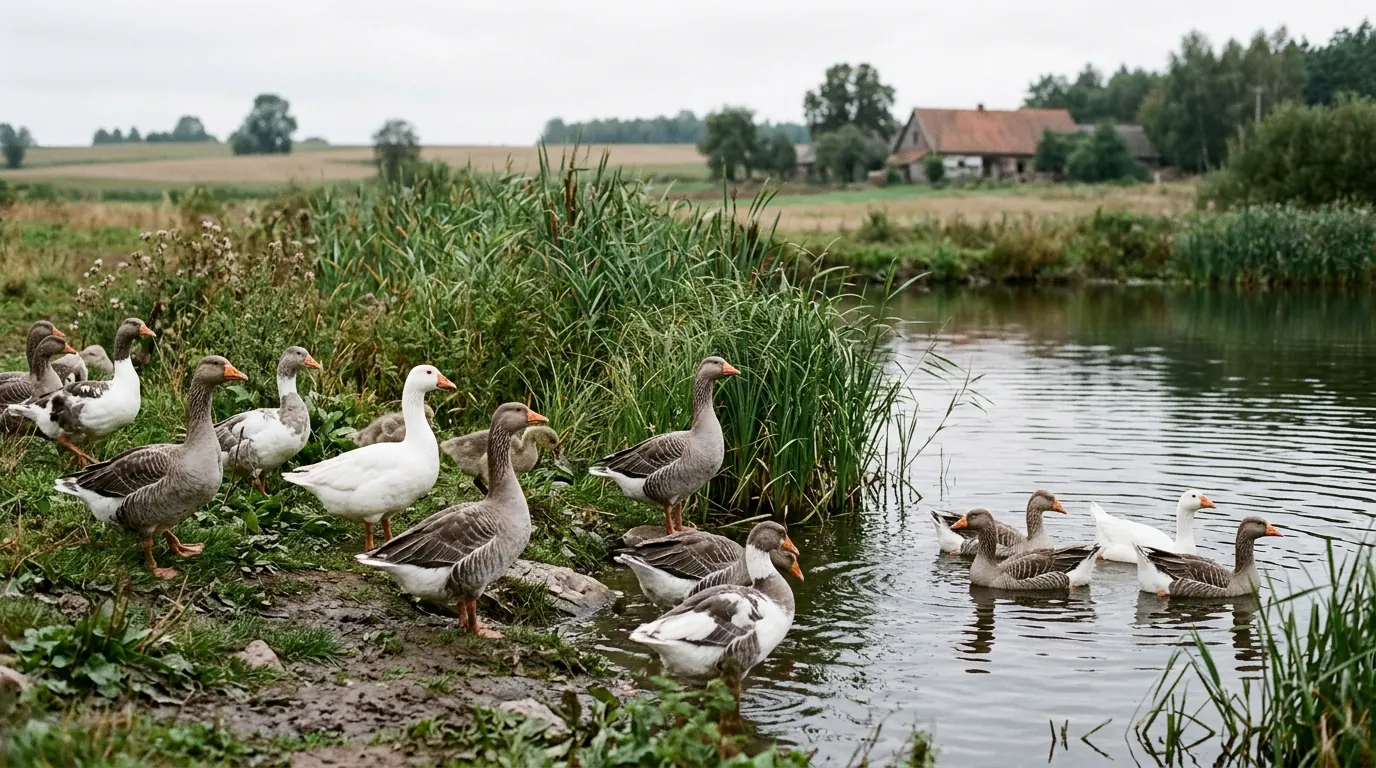
The Chinese goose has a long neck and an upright stance. It is known above all for good egg laying and for staying active on pasture. In practice, keepers choose it for eggs and for utility flocks, not for meat birds. Below we describe the look of the breed, the laying season, and what to provide in the house, on the range and in your paperwork.
Where the breed comes from
The Chinese goose is one of the oldest domesticated goose breeds. Its ancestor is the swan goose, a wild species from East Asia. That explains the upright posture, the long, slim neck and the knob at the base of the bill, which is more prominent in ganders. Compared with meat breeds, it has a lighter build and a longer, slimmer neck that is carried upright, not horizontally.
How to recognize a Chinese goose
Shape and feathers
The Chinese goose stands upright, with a slim neck and tight, close-lying feathers. White and gray-brown varieties are the most common. The knob by the bill is larger and more distinct in ganders than in geese, which helps when sexing birds. Before you buy, check that the birds have clean, even feathering and a lively, alert manner.
Weight and build
The Chinese goose is lighter than most meat breeds, so keepers who raise carcasses usually pick other breeds. Its strengths are activity and the ability to gather feed from pasture. A light bird needs less room on the range, but do not overload it with concentrate feed, because it then loses laying condition.
Chinese goose egg laying in practice
The laying season
Chinese geese lay mainly in spring, after winter, as the days get longer. Some keepers extend the season with lighting in the house, but agree a light program with your vet or adviser. Keep the hours of light constant and give the birds a dark break at night, because sudden changes stress them and cut laying.
Eggs and hatching
Goose eggs are larger than hen eggs and have a thicker shell. For hatching, choose clean, undamaged eggs and store them in a cool, dry place. Incubation of goose eggs commonly takes about 28–30 days. Set temperature and humidity according to your incubator's manual and check them regularly, because deviations lower the hatch rate.
Water, range and house
Water
Geese need access to water for swimming, cleaning their feathers and mating. The drinker should be deep enough for a bird to dip its bill and head. Fence off or clean standing water on the range, because pathogens develop faster in stagnant water. Check water cleanliness every day, especially in hot weather.
Pasture and range
The Chinese goose makes good use of green feed, so pasture lowers feeding costs. The range must be fenced, free of sharp objects and have enough trees or cover for birds to shelter from the sun. Limit grazing on wet ground, because it leads to foot and skin disease.
House and litter
At night geese need a dry, airy house without drafts. Litter must be dry and changed, because wet litter encourages foot disease. Record every entry of people into the house and onto the range, and limit access for outsiders, especially after visits to other farms. See how to do this in the QR entry and exit log.
Biosecurity and treatment
Quarantine for new birds
Keep geese bought from outside apart for an observation period before you join them to the rest of the flock. Before buying, ask about the health status of the source flock and run the tests your vet recommends. You can draft your farm entry procedure in the biosecurity plan generator.
Treatment and withdrawal periods
A vet always chooses the medicine and the dose. After giving a medicine, record the date, the product name and the end of the withdrawal period. Do not sell eggs or meat before the withdrawal period ends, because inspectors check compliance against your records. Keep treatment records in the treatment and withdrawal records so everything sits in one place.
Flock records and regulations
Flock records
Keep records of bird numbers, placements, deaths and events in the house. At an inspection, the inspector asks about flock numbers and documents, and notes on paper get lost easily. In a poultry house records program you can update records as you go and compare successive laying seasons.
Regulations
Requirements for keeping poultry come from Poland's animal protection act and its implementing regulations. We describe the legal position as of 22.11.2026. Rules change, so before you invest, check the current text in ISAP (Poland's online legal acts database) and ask your county veterinarian (powiatowy lekarz weterynarii). We cover the changes in animal protection in our article on the animal protection act.
What sets the price of a Chinese goose
The price depends on the bird's age, sex and origin, and on whether you buy hatchlings, young geese or a laying flock. Demand in a given season also affects it. Check current offers with breeders and in poultry clubs, and weigh the purchase against the cost of feed, water and treatment. You will find more on live poultry prices in how much a hen, duck or goose costs.
Frequently asked questions
How many eggs does a Chinese goose lay?add
The Chinese goose is considered a good layer among geese, but laying depends on the line, the bird's age, conditions and day length. Work out the number of eggs per season from your own flock's data. Keeping records lets you compare seasons.
Are Chinese geese good for meat?add
The breed is lighter than typical meat geese, so keepers who raise carcasses usually choose other breeds. The Chinese goose works best as a layer and a grazing bird. Decide the flock's purpose before you buy.
How do you hatch Chinese goose eggs?add
You can hatch eggs in an incubator or set them under a broody goose if the bird shows the instinct. Incubation of goose eggs commonly takes about 28–30 days. Set the parameters according to your incubator's manual and check them regularly.
Do Chinese geese need water to swim in?add
Access to water helps with cleaning feathers, grooming and mating. The drinker should be deep enough for a bird to dip its bill. Standing water on the range must be fenced off or cleaned, because it encourages disease.
Do you have to register keeping geese in Poland?add
Duties depend on the size and type of the operation, and the regulations set out the details. Check current requirements in ISAP and with your county veterinarian, because rules change. We describe the legal position as of 22.11.2026.
When can you sell eggs after treatment?add
After a medicine is given, a withdrawal period applies. Your vet and the product documentation give its length. Until it ends, do not sell eggs or meat from that group of birds. Record the date given and the end of the withdrawal period.
Sources & resources
- linkChief Veterinary Inspectorate (Główny Inspektorat Weterynarii) — gov.pl/web/wetgiw
- linkMinistry of Agriculture and Rural Development — gov.pl/web/rolnictwo
- linkNational Research Institute of Animal Production (Instytut Zootechniki PIB) — izoo.krakow.pl
- linkInternet System of Legal Acts (ISAP) — isap.sejm.gov.pl
Prepared by: DlaFerm Team based on data from the sources listed · Publisher: INSTA-TECH sp. z o.o.
Keeping geese alongside other poultry?
The DlaFerm poultry farm management program keeps flock records, treatment records and farm entries in one place. Create a free farm account and see how it works for you.
Phone
+48 796 258 151