Saddleback geese: breed, looks and use
The saddleback goose is a domestic goose breed recognized by its plumage pattern. You judge its looks against the breed standard, and its performance depends on the line and your goal. Below we explain how to check birds before you buy and how to keep them in your flock records.
verifiedFrom the team that has organised work on poultry farms for years.
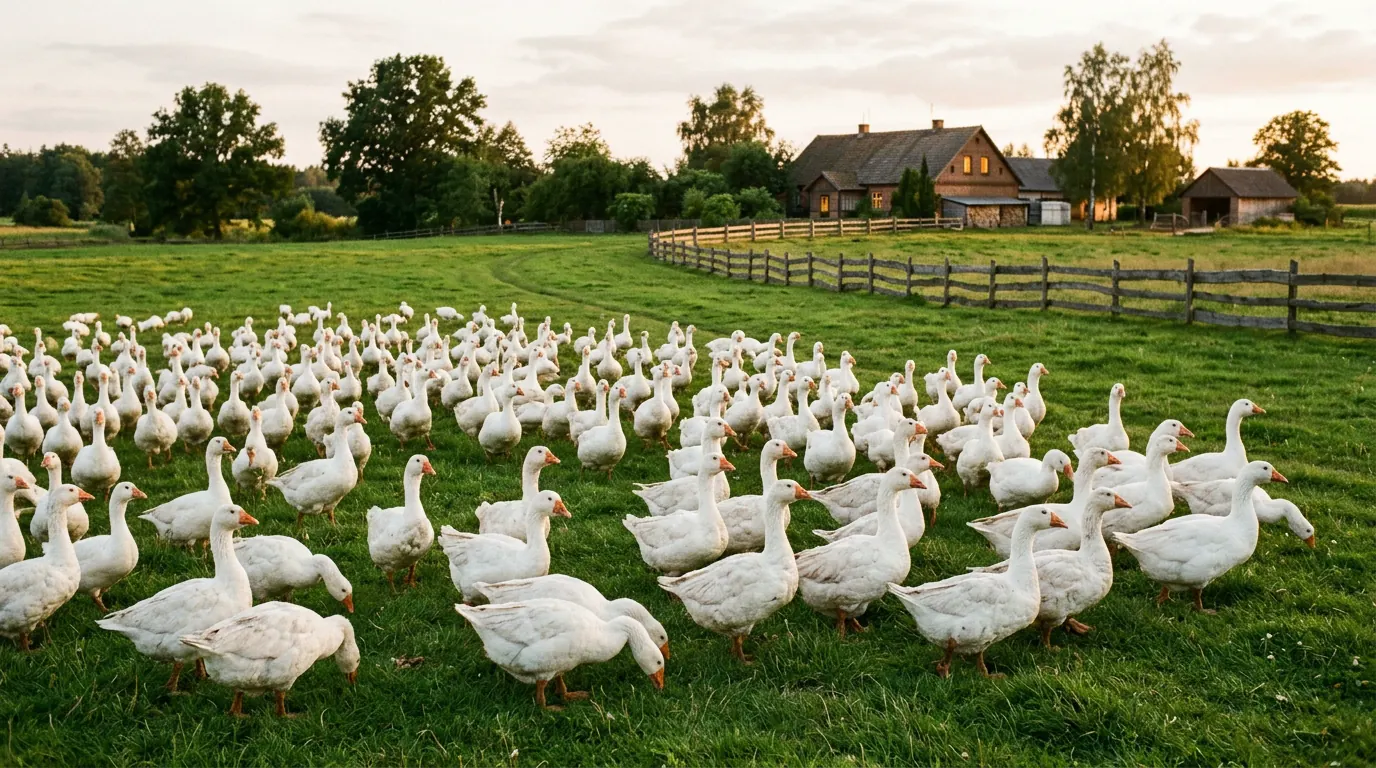
The saddleback goose is a domestic goose breed recognized mainly by the plumage pattern it is named after. Whether a goose meets the standard is judged by build, feather color and bill, not by a single trait. We give no body weight, laying rate or growth rate here, because we have no reliable figures for this breed. You will find exact parameters in the breed standard and from a breeder who keeps a pedigree. Below we cover what to look for in appearance, how to use the goose on your farm, and what to provide in the house, on the range and for health.
Who this breed suits
The saddleback goose suits a keeper who wants to keep the breed pure or add birds of a specific look to the flock. If your goal is the fastest meat production or the highest egg numbers, compare it with the breeds in our guide Goose breeds: Landes, Kholmogory, Cuban and grain geese. You can also find information on goose breeds from the Instytut Zootechniki PIB (National Research Institute of Animal Production) and current poultry rules in ISAP (Poland's database of legal acts).
How to recognize a saddleback goose
Plumage pattern
The key trait is the distribution of colors on the back and sides, which sets the breed apart from geese with uniform plumage. When you buy, ask the breeder for the breed standard and photos of adult birds of both sexes from the same flock. Judge the pattern on adult plumage, because young geese molt and the look can be incomplete. One feather of another color does not rule a bird out, but clear departures from the standard over a larger part of the body mean the goose does not meet the breed standard.
Telling the sexes apart
In domestic geese, ganders are usually larger and have a louder, deeper voice. Geese (females) tend to be smaller and quieter. These differences show clearly only in adult birds, so when buying young birds, confirm the sex with the breeder. The surest way is a pedigree record and flock records in which you note the sex of every bird from the start.
Telling it from the White Kołuda
The White Kołuda goose is pure white, so in a mixed flock it is easy to mistake for white geese of other origin. Keep birds of the two breeds in your records with separate marking. You can read about the White Kołuda in our separate guide to the White Kołuda goose.
What you can use a saddleback goose for
Meat
Meat geese are slaughtered when they reach a weight set by the keeper and the market, not at a fixed age. We give no slaughter weight or growth rate for the saddleback goose. Before you decide to raise them for meat, ask the breeder for data from his line and record your own weight gains in the flock records, so you can compare results after a few seasons.
Laying and hatching
Geese lay mainly in spring, as the days lengthen, and that is also when hatching is done. Breeding needs a plan: choose geese and ganders from different families to limit inbreeding. Store hatching eggs in a cool, clean place and do not wash them before incubation, because you damage the protective bloom on the shell. Record the number of eggs each season.
Feathers
Feathers can be a by-product of keeping geese, but they are no excuse for plucking birds often. Check the welfare rules for harvesting feathers in the legal acts available in ISAP. If you are unsure how the rules apply on your farm, ask the district veterinarian (powiatowy lekarz weterynarii).
Feeding and grazing saddleback geese
Geese are herbivores and make good use of fresh grass. In the growing season grazing lowers feed costs, but it needs a fenced pasture with access to water. In winter and for goslings, a complete feed matched to the birds' age is the basis. We describe feeding standards and how to calculate them in our guide to feeding geese and ducks.
Water and grain
Geese need constant access to clean drinking water, and water for swimming or rinsing their bills if conditions allow. Give grain as a supplement, not the main feed, because too much grain and fat leads to obesity. Place the feeder and drinker so that water does not foul the feed and the litter.
Changing feed
Introduce every feed change gradually over several days, mixing the old and new feed. A sudden change lowers appetite and upsets digestion. Record which batch you feed and from what date, because it makes later analysis of weight gain and laying easier. You can track feed conversion in the FCR and EPEF online module.
House and range for saddleback geese
Geese need a dry, airy house that protects against drafts but does not let damp and ammonia build up. Keep the litter dry and replace it when it cakes or gets wet. We describe space and ventilation requirements for geese in our guide to housing for geese. In practice the most important thing is to check litter and air daily, especially in winter.
Fencing and predators
The range must be fenced to protect birds from the fox and dogs, and you should shut the geese in the house at night. Check the fence after storms and after winter, because small holes are the most common way in for predators. Record inspection dates in the house records, so you know when the protections were last checked.
Stocking density
Too many birds in a limited space raises litter moisture and the number of health problems. Before you place geese, work out the area of the house and range, then compare it with the number of birds recorded in the system. If the flock grows, recalculate stocking density before symptoms appear.
Prevention and flock health
The most common goose problems are bacterial diseases, gut parasites and injuries from poor housing. We cover salmonella and its importance for the flock in a separate guide, and worms in the article Worms in geese. Whenever you suspect disease, call a vet, who will choose the medicine and dose.
Withdrawal period
A medicine given to a goose may have a withdrawal period, after which meat or eggs are not fit for sale. The drug's manufacturer states the length of the withdrawal period and the vet recommends it, so do not estimate it yourself. Record every treatment with the date, product name and end date of the withdrawal period in the Treatment and withdrawal period module, so you do not sell birds during withdrawal.
Biosecurity
Limit visitors' access to the flock and change footwear before entering the house. Admit only birds with health documentation and log every entry. At an inspection, show the entry and exit log, and prepare your action plan beforehand.
Flock records and formal duties
You will find the rules on identification, registration and records for poultry in ISAP, and oversight of their application is carried out by the Główny Inspektorat Weterynarii (Chief Veterinary Inspectorate). Check the legal status on the day you act, because rules change. The legal state this text is based on is 22.11.2026. In practice, keep flock records from day one, not just before an inspection.
What to record
In your records note the number and sex of birds, placement date, origin, inspection results, treatments and withdrawal periods. For a conservation breed, add the pedigree and photos of adult birds. If you keep several species, separate geese from other poultry so records do not mix. A farm management program collects this data in one place.
Documents and records
When you sell live geese or hatching eggs, the documents must match what is actually in the house. Check this before every sale, not only in case of an inspection. Clear up any doubtful points in the rules with the district veterinarian.
Frequently asked questions
How do you tell a saddleback goose from other geese?add
Most reliably by the breed standard, which is the color pattern on the back and sides of an adult bird. Ask the breeder for photos of adult geese of both sexes from his flock. One feather of another color does not decide whether a bird belongs to the breed.
How much does a saddleback goose weigh?add
We give no body weight in this guide, because we have no reliable figures for this breed. You will find the data in the breed standard and from a breeder who keeps a pedigree. Compare the weight of birds in your own flock with your records from successive weeks.
Are saddleback geese good for meat?add
They can be raised for meat, but the result depends on the line, feeding and slaughter age. Before you decide, collect data from your own flock for at least one season. Records let you compare weight gains between groups.
Do saddleback geese need water to swim in?add
Drinking water is essential at all times, and water for swimming or rinsing bills if conditions allow. The water must be clean, and the ground around the drinker must not turn to mud. Protect the range from run-off from the house.
When do saddleback geese lay eggs?add
Geese lay mainly in spring, as the days lengthen. Timing and numbers depend on the line, age and feeding. Record laying in your flock records to see the flock's pattern from season to season.
How do you prevent worms in geese?add
The basics are pasture rotation, clean litter and regular flock checks. A vet decides diagnosis and treatment and chooses the medicine and dose. Record treatments and withdrawal periods, so you do not sell birds too early after treatment.
Sources & resources
- linkChief Veterinary Inspectorate (Główny Inspektorat Weterynarii) — gov.pl/web/wetgiw
- linkMinistry of Agriculture and Rural Development — gov.pl/web/rolnictwo
- linkNational Research Institute of Animal Production (Instytut Zootechniki PIB) — izoo.krakow.pl
- linkInternet System of Legal Acts (ISAP) — isap.sejm.gov.pl
Prepared by: DlaFerm Team based on data from the sources listed · Publisher: INSTA-TECH sp. z o.o.
Do you keep geese alongside other poultry?
In the house records module you can log groups and batches of birds, and in the Treatment and withdrawal period module you note treatments and withdrawal end dates. Create a free farm account and see how it works in practice.
Phone
+48 796 258 151