Aylesbury duck: the English meat breed
The Aylesbury is a large white duck bred in England for meat. It has white plumage, a pale flesh-colored bill and a heavy, horizontal body. Here is how to recognize it, what to expect when rearing it and which breeds to compare it with.
verifiedFrom the team that has organised work on poultry farms for years.
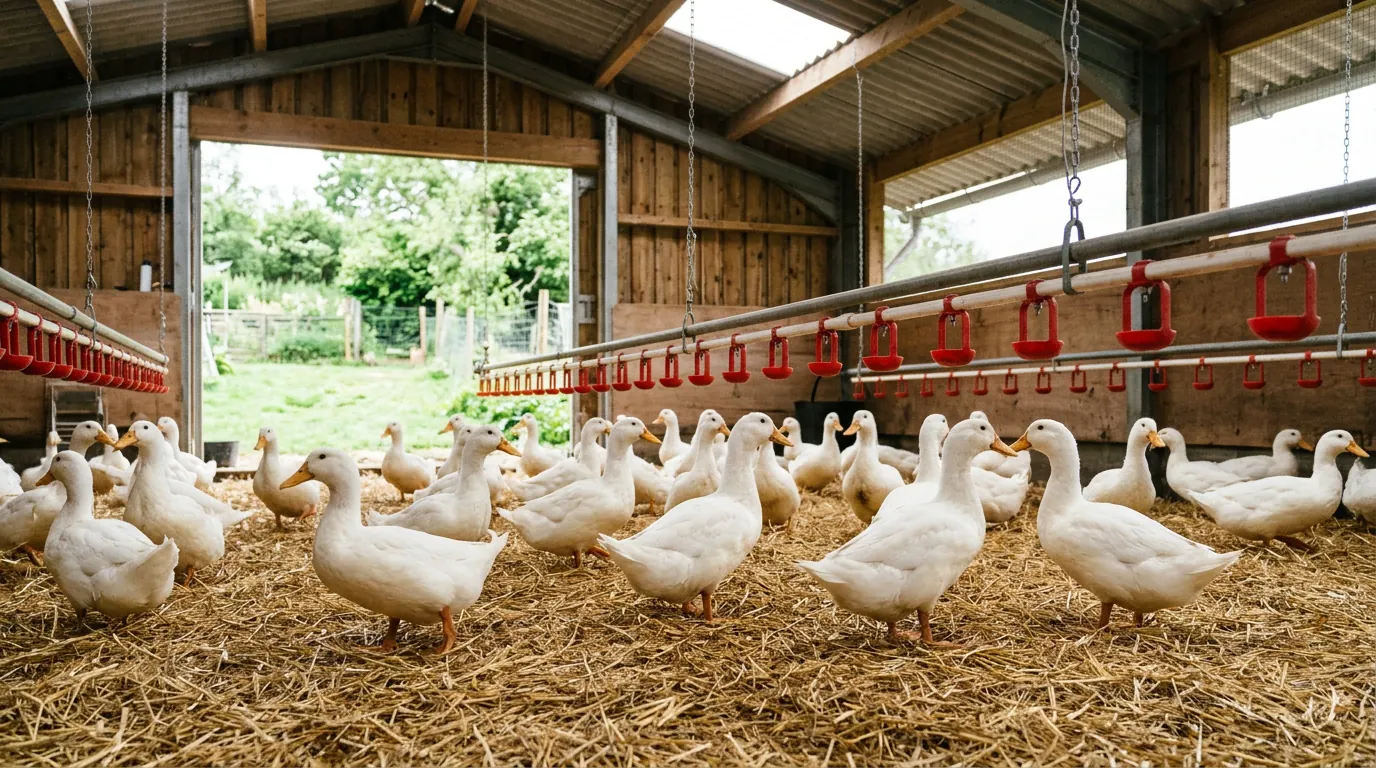
The Aylesbury is an English meat duck, named after the town of Aylesbury in Buckinghamshire. The bird has fully white plumage, a pale flesh-colored bill and orange legs. It was bred for carcasses for the market, not for eggs. In the production types of poultry we describe on the page about poultry production types, the Aylesbury is a meat breed.
Where the name "Aylesbury" in shops comes from
The name "Aylesbury" is used more widely in trade than in breeding. The pure, pedigree breed is rare in Britain today and is kept mostly by conservation breeders. A white meat duck on the market often comes from other lines, such as the Pekin. If you buy ducklings under this name, ask about the pedigree and the breeding line.
Who this breed suits
Choose the Aylesbury if you want a large white meat duck with pale skin. The breed suits a small farm with access to water and a run. It will not suit anyone counting on high egg numbers. For those birds, look at the breeds described in our article on laying ducks.
How to recognize an Aylesbury duck
Plumage, bill and legs
The Aylesbury has evenly white feathers, with no spots or tint. The bill is pale, flesh-colored or pinkish, without dark marks. Legs and feet are orange. The carcass skin is white, which many buyers see as an advantage. This combination sets the breed apart from Rouen ducks, described in our article on the Rouen duck, which have colored feathers like the wild Mallard. If you see a yellow or orange bill, the bird most likely comes from another line.
Body shape
The body is long, deep and carried horizontally, with a clear keel under the belly. The trunk is massive and the neck is of medium length. This is the typical build of a meat breed: the bird should be heavy and well muscled in the breast. Runner ducks have a different, upright stance, as described in our article on Indian Runner ducks. Check the current breed standard for exact target weights, as they differ between countries and editions.
Meat production and egg laying
Meat
The breed was shaped for meat. The birds grow fast for ducks and build a large carcass with pale skin. Exact growth rate depends on the line, the feed and the conditions, so we give no single figure. Weigh the ducklings at regular intervals and write the results down. That way you can judge for yourself whether a line meets your expectations. For a comparison of ducks and geese on profitability, see duck vs goose: profitability.
Egg laying
Aylesbury egg production is moderate and lower than in laying breeds such as the runners. The ducks lay mainly in spring and summer. If eggs matter to you, consider dual-purpose breeds, for example the Silver Appleyard duck or the Saxony duck. Meat breeds are often poor sitters, so some keepers use an incubator or put the eggs under a broody hen.
Rearing and housing
Ducklings
Ducklings need warmth, dry litter and constant access to fresh water. They splash a lot from the drinker, so litter gets damp fast. Change it often and keep ventilation going without drafts. Temperatures in poultry textbooks are given for chicks, and ducklings have their own needs. So do not copy broiler rearing tables one to one, and check the recommendations for ducks with an animal science institute. With a small number of ducklings, record weights and behavior in your poultry house records.
Adult birds
The adult Aylesbury is a heavy bird that cannot fly and copes poorly on hard, frozen ground. It needs a dry, sheltered place for the night and a grassy run. Water for swimming is not essential, but a deep drinker where the duck can dip its whole bill is. If you want to keep ducks together with chickens, read about the risks in our article on chickens and ducks together.
The Aylesbury next to other breeds
Other meat and dual-purpose breeds
Among dual-purpose breeds, which give both meat and eggs, people mention the Pomeranian duck (kaczka pomorska) and the Old Polish duck (kaczka staropolska). They are smaller, better suited to the Polish climate and easier to rear. The Aylesbury gives a bigger, whiter carcass but lays fewer eggs. Mulard ducks are a cross used for foie gras and meat. We describe them in our article on Mulard ducks.
A similar story among chickens
English meat chicken breeds have followed a similar path. One example is the Dorking, described in our article on the Dorking chicken. Old meat breeds now lose to industrial lines on growth rate, and conservation breeders keep them for heritage and flavor. For an overview of such breeds, see our list of meat chicken breeds.
Where to look for ducklings and how to check the birds
Buying ducklings and hatching eggs
Purebred Aylesburys are hard to find in Poland. Look for them with breeders in poultry associations and at shows. When buying ducklings, ask about the parents and check the color of the bill and skin. Buying rules, age of ducklings and prices are covered in our article on where to buy geese, ducks and guinea fowl. We give no prices, because they depend on the line, the age and the season. Ask breeders directly.
Records and rules
Poultry keepers in Poland have registration duties toward the veterinary services and ARiMR (Agency for Restructuring and Modernisation of Agriculture). The scope depends on the number of birds and the way they are kept. Check the current rules with your county veterinary office (powiatowy inspektorat weterynarii) and on the websites of the Chief Veterinary Inspectorate (Główny Inspektorat Weterynarii) and ARiMR. Keep a record of purchases, losses and sales. In a farm management program you can keep all of it in one place.
Frequently asked questions
What is an Aylesbury duck?add
It is an English meat duck breed with white plumage, a pale bill and orange legs. The name comes from the town of Aylesbury in Buckinghamshire. The breed was kept for meat, not for eggs.
How do you tell an Aylesbury from a Pekin duck?add
The Aylesbury has a pale, flesh-colored bill and a horizontal body with a clear keel. The Pekin has a yellowish or orange bill and a more upright stance. The bird's pedigree and a comparison with the breed standard give certainty.
Are Aylesbury ducks good layers?add
Laying is moderate and lower than in laying breeds. The ducks lay mainly from spring to summer. For eggs, choose laying or dual-purpose breeds.
Do Aylesbury ducks need water to swim in?add
A pond is not essential, but ducks need a deep drinker where they can dip the whole bill. Access to water improves welfare. Wet litter spoils fast, so change it often.
Where can you buy Aylesbury ducks in Poland?add
Look with pedigree breeders, at poultry shows and in breeders' associations. The pure breed is rare, and white meat ducks from other lines are also sold as "Aylesbury". Always ask about the parents' pedigree.
Can you keep Aylesbury ducks with chickens?add
You can, but it takes good organization: ducks wet the litter and drinkers, while chickens need a dry house. Many keepers prefer separate housing. We cover the details in our article on chickens and ducks together.
Sources & resources
- linkInstitute of Animal Science PIB (Instytut Zootechniki) — izoo.krakow.pl
- linkChief Veterinary Inspectorate (Główny Inspektorat Weterynarii) — gov.pl/web/wetgiw
- linkARiMR — gov.pl/web/arimr
- linkMinistry of Agriculture and Rural Development — gov.pl/web/rolnictwo
Prepared by: DlaFerm Team based on data from the sources listed · Publisher: INSTA-TECH sp. z o.o.
Keep your duck and chicken records in one place
The poultry house records module in DlaFerm.pl lets you log placements, losses and sales for different poultry species. Create a free farm account or get in touch with us.
Phone
+48 796 258 151