Saxony duck: a large dual-purpose breed
The Saxony duck (kaczka saksońska) was bred in Germany and is valued for good egg laying and a meaty carcass. We describe its origin, looks, performance and needs, so you can decide if it suits your farm.
verifiedFrom the team that has organised work on poultry farms for years.
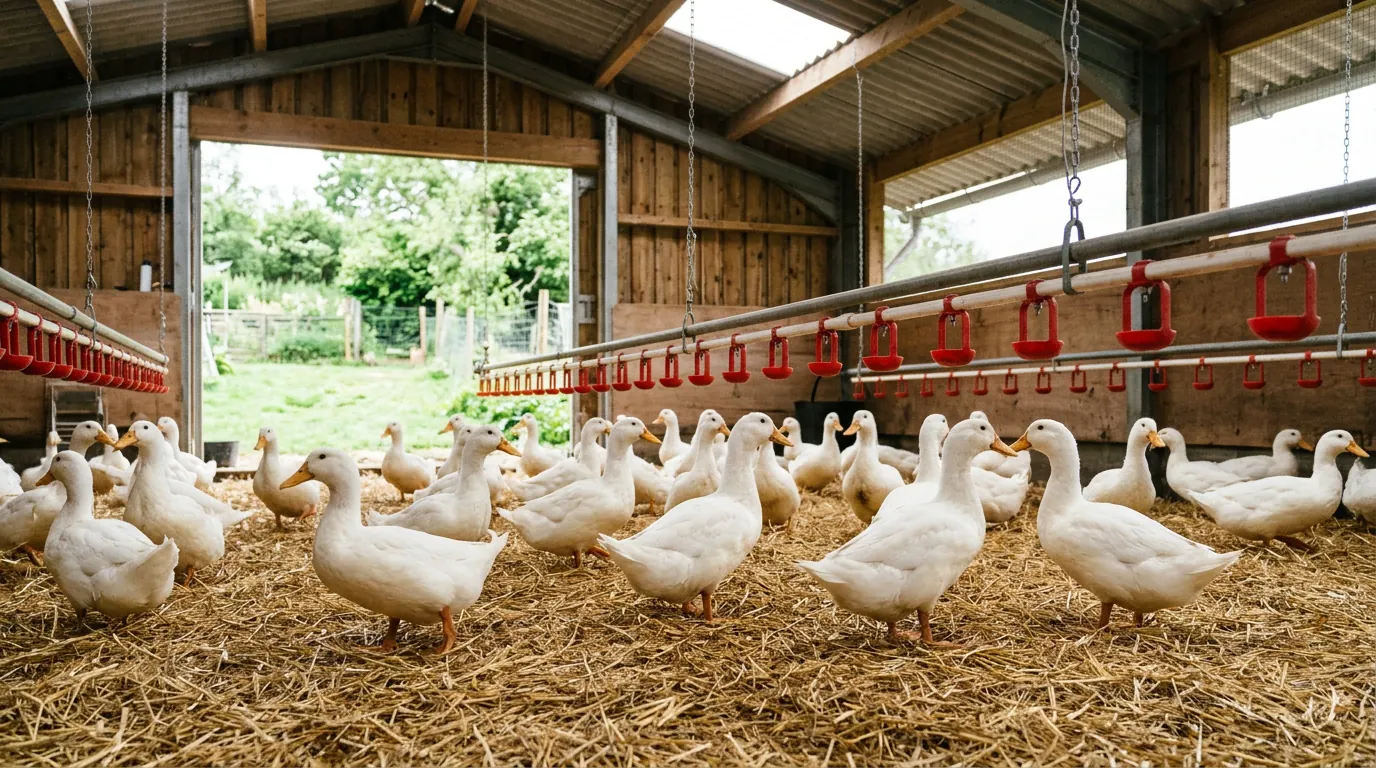
The Saxony duck is a large dual-purpose breed: one flock gives you both eggs and meat. It was bred in Germany in the first half of the 20th century. The birds are calm and forage well on a run. They do not need a pond, although water for swimming improves their condition. If you want ducks for a backyard or a small farm, the Saxony is a sensible choice next to the breeds in our overview of poultry production types.
Who this breed is for
The Saxony works well if you want ducks for your own table and eggs at the same time. It is neither a purely meat breed nor a strict laying breed, so it will not beat specialized lines on either count. It wins on balance, good looks and a gentle nature. For comparison, see the Silver Appleyard duck and the Orpington duck, which have a similar purpose.
Where the Saxony comes from and how to recognize it
Origin
According to breed descriptions, the German breeder Albert Franz created the Saxony duck in Saxony in the 1930s. Breeding work used, among others, Rouen and Pomeranian ducks, which we cover in the guides to the Rouen duck and the Pomeranian duck (kaczka pomorska). The aim was a big, strong bird that lays well and gives a decent carcass. For the exact dates of breed recognition and the current standard, check the documents of the breeders' association.
Looks and plumage color
The Saxony has a massive, fairly long body and carries its trunk upright. The duck's plumage is warm, buff to cream, with lighter stripes on the head. The drake has a blue-gray head and neck, a rusty-brown breast and light flanks. This coloring makes the breed stand out in a mixed flock. When buying, check conformity to the standard: bill color, leg color and the feather pattern. Color faults do not affect performance, but they lower the value of a breeding bird.
Egg laying and meat of the Saxony duck
Egg laying
Saxony ducks are considered good layers among large dual-purpose breeds. The number of eggs per year depends on the line, feeding, day length and the age of the birds, so we do not give one figure for all flocks. Ask the breeder you buy ducklings from for approximate data on their line. Laying improves with constant feed access for layers and good lighting in spring. The eggs are large and suit both eating and hatching.
Meat and carcass
With its large body mass, the Saxony gives a full carcass with a well-developed breast. It grows more slowly than typical meat ducks, so do not expect fast fattening in a few weeks. Plan slaughter after growth has finished and the muscling is good, and outside molting, because pin feathers remain then. If maximum weight gain matters most to you, consider a meat breed; the Saxony wins where egg laying and the look of the flock count too.
How it compares with other breeds
Among the dual-purpose breeds we describe, the Saxony is closest to the Silver Appleyard in weight and versatility. It is larger and heavier than the Old Polish duck (kaczka staropolska), but the Old Polish can be less demanding to keep. The choice depends on whether you care more about the carcass or about hardiness and simple management.
Temperament and farm requirements
Temperament
Saxonies are calm and tame easily. They tolerate people well and rarely panic during daily handling. They also forage well, so they readily use a run with grass and greens. If you keep them with other poultry species, use separate drinkers and feeders, because ducks splash water over everything around them.
Water, run and shelter
Ducks do not need a pond, but they need water deep enough to dip the whole bill and rinse the eyes and nostrils. The run should be dry and the bedding in the pen changed often, because ducks produce a lot of liquid droppings. Give them shelter from wind, rain and predators at night. A closed house with good ventilation is enough; it does not need to be insulated like a house for hens.
Feeding
Feed dual-purpose ducks a complete feed matched to age and production phase, and add a calcium source to layer feed. Greens and a run cut costs but do not replace the feed mix. Set the ration and composition with a feeding adviser or follow the feed maker's recommendations. Keep water available next to the feeder, because a duck washes its food down as it eats.
Hatching and rearing ducklings
Choosing the breeding flock
For breeding, choose healthy ducks and drakes that match the standard, with correct legs and bills. Do not mate closely related birds, because the risk of defects and lower hatchability rises. A well-built breeding flock has drakes in a suitable ratio to ducks; the line's breeder gives the exact number. Buy ducklings from reliable breeders; we collected buying information in the article on where to buy geese, ducks and guinea fowl.
Hatching and the first weeks
You can set eggs under a broody hen or hatch them in an incubator, following the maker's instructions. In the first days, ducklings need warmth, dry bedding and easy access to water and starter feed. Water that is too deep in the drinker is dangerous for the youngest birds. Watch their behavior: huddling under the heat source means too cold, spreading out to the edges means too hot. If disease strikes, a vet always chooses the medicine and dose and also sets the withdrawal period.
Flock records and biosecurity
Keeping ducks comes with registration duties and biosecurity rules, especially during avian influenza risk periods. Check current requirements with the Chief Veterinary Inspectorate (Główny Inspektorat Weterynarii) and with Poland's ARiMR (Agency for Restructuring and Modernisation of Agriculture), because the rules change with flock size and the disease situation. The legal state we refer to is 23.11.2026, but always confirm it with your county veterinarian. Record bird numbers, losses, egg laying, treatments and feed in one place: poultry house records help with that, and you can prepare your protection plan in the biosecurity plan generator.
Frequently asked questions
Is the Saxony duck a meat breed or a laying breed?add
It is a dual-purpose breed: it gives both eggs and meat. It does not match specialized meat lines for growth rate or pure laying breeds for egg numbers. Its value lies in combining both traits.
How many eggs does a Saxony duck lay?add
Laying depends on the line, feeding, light and the age of the duck, so we do not give one number. The breed is among the good layers of large dual-purpose ducks. Ask the breeder for approximate data on your line.
Does a Saxony duck need a pond?add
A pond is not necessary. The duck must still have water where it can dip its bill and rinse its eyes and nostrils. With more water, remember dry shelter and frequent bedding changes.
How do you tell a Saxony drake from a duck?add
The drake has a blue-gray head and neck and a rusty-brown breast. The duck is buff, without such contrasts. You can also hear the difference: the duck quacks loudly, while the drake is quieter and hoarse.
Where can you buy Saxony ducklings?add
Best from reliable breeders in a pedigree poultry breeders' association or breed clubs. Ask about the line's origin, vaccinations and the age of the ducklings. We cover buying in a separate article on goslings, ducklings and guinea fowl chicks.
Are Saxony ducks suitable for a small farm?add
Yes, they are calm and easy to handle. They need dry shelter, a run and constant access to water. With a few birds you can manage without special infrastructure, but remember the duties for records and biosecurity.
Sources & resources
- linkInstitute of Animal Science PIB — izoo.krakow.pl
- linkChief Veterinary Inspectorate — gov.pl/web/wetgiw
- linkARiMR — gov.pl/web/arimr
- linkMinistry of Agriculture and Rural Development — gov.pl/web/rolnictwo
Prepared by: DlaFerm Team based on data from the sources listed · Publisher: INSTA-TECH sp. z o.o.
Keeping ducks next to other poultry? Record everything in one place
DlaFerm's poultry house records let you log flock numbers, losses, feed and treatments for each group of birds separately. Create a free farm account or get in touch, and we will show you how it works in practice.
Phone
+48 796 258 151