Orpington duck (buff): a dual-purpose breed
The Orpington duck is a dual-purpose breed with solid buff plumage. It gives a decent number of eggs and a good carcass, so it suits a small farm. We cover its origin, looks, performance and care needs.
verifiedFrom the team that has organised work on poultry farms for years.
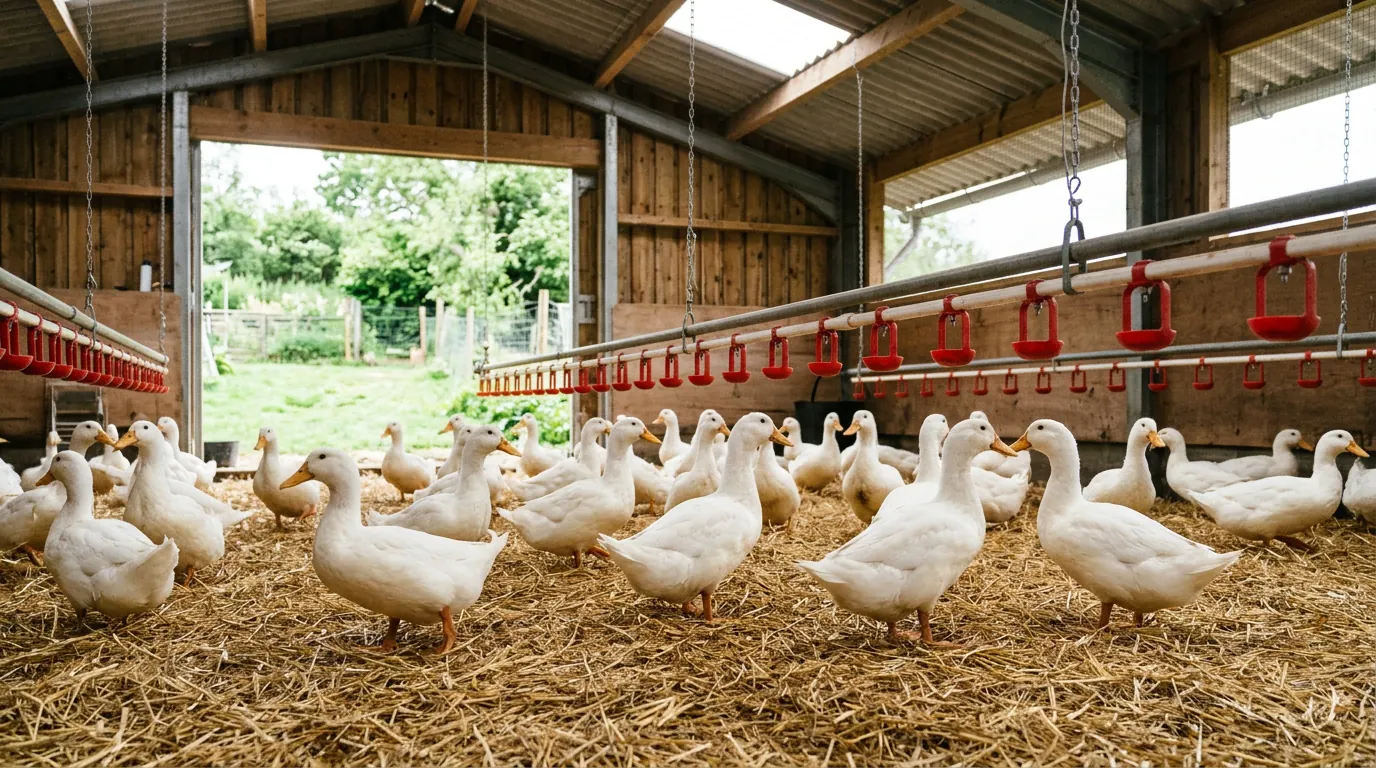
The Orpington duck, also called the buff duck, is a dual-purpose breed: one flock gives you eggs and meat. It has solid buff plumage, a warm yellow-brown color. It is medium-heavy, calm and copes well with free-range keeping. In Poland it is seen less often than the Rouen or the Saxony duck, but it is an interesting choice if you want one type of duck for eggs and for the table.
Where the Orpington duck comes from
William Cook bred the duck in England in the late 19th century, the same breeder who gave his name to the Orpington chicken. Breed descriptions say it came from crossing several duck breeds, with the aim of a bird of even, light color that lays well and gives tasty meat. The name "buff" refers to the plumage color. For exact standard details (body weight, shades, bill and leg color), check the current breed standard or a breeders' association, because rare breeds differ between lines.
How to recognize an Orpington duck
Plumage and build
Buff feathers cover the whole body, from pale cream to warm yellow-brown. In drakes the head and neck can be a little darker. The body is broad and carried horizontally or slightly slanted, without the upright bottle-shaped outline of a runner duck. As a rough guide a drake weighs about 3 kg and a duck a little less. That is close to medium breeds such as the Silver Appleyard. The breed standard gives the exact weight limits.
Telling drakes from ducks
You can tell drakes by the curled tail feathers and by voice. The duck quacks loudly, while the drake makes a quiet, hoarse sound. This shows only in older ducklings, because young buff ducks look very much alike. Check sex by plumage and voice once the birds are a few weeks old, before you split the flock into groups for rearing and breeding.
Eggs and meat from the Orpington duck
Egg laying
The Orpington is regarded as a good layer, though it does not match specialized laying ducks. The yearly egg count depends on the line, age, feeding and lighting, so we give no single figure. It is best to count it in your own flock. Ducks lay mainly from early spring to summer, and a clear break in winter is normal. The eggs are large, with a white or slightly cream shell.
Meat and carcass
The buff duck gives a carcass with pale skin and good meat cover, and the birds grow more slowly than typical meat hybrids. Young ducks can go to slaughter once they reach a suitable weight, but do not expect the results of fattening lines. The breed fits when you sell a few carcasses and eggs from the same flock. You can compare production types in Poultry production types.
Hatching and rearing ducklings
Broodiness and incubation
Ducks of this breed can be good mothers, but the brooding instinct is not the same in every bird. If you do not want to rely on a broody duck, use an incubator or a broody hen of another breed. Duck eggs take 28 days to hatch, longer than chicken eggs. For breeding choose healthy birds of typical color and build, and collect eggs regularly to keep shells clean.
The first weeks of life
Ducklings need warmth, dry litter and constant access to drinking water deep enough to dip their bills. They splash water around the drinkers, so change litter more often than for chicks. Buying ducklings is a separate topic. For purchase age and suppliers see Where to buy geese, ducks and guinea fowl.
Care requirements
House, run and water
The buff duck does not need a pond, but it gladly uses water. A shallow tub or trough where the bird can dip its head is enough. At night give it a dry, lockable house with deep litter, because a damp bed harms feet and plumage. Ducks produce a lot of wet droppings, so add litter more often than for hens. Fence the run to protect the birds from foxes and martens.
Feeding
Adult ducks get a complete feed mix, greens and cereal grain. Laying ducks in season need feed with enough protein and calcium, and you should set the amounts by the feed maker's or a nutrition adviser's guidance. Ducks eat wet feed, but moisten it only lightly and serve it in a feeder the bird can clean easily. Clean water next to the feed is essential, because the bird sips with every bite.
The Orpington compared with other breeds
Other dual-purpose breeds
If you want a breed with a similar profile, compare the Orpington with the Old Polish duck (staropolska), the Pomeranian duck (pomorska) or the Swedish Blue. The Cayuga has dark plumage and a different use. When choosing, check the availability of ducklings, because the buff duck is less popular in Poland than local breeds.
Keeping flock records
Even in a small flock it pays to note daily egg count, losses, feed use and hatch results. The Ross handbook for chicken parent stock lists such figures as the basis for judging a flock: eggs per day, hatchability, fertility, mortality and feed use. The same principle holds for ducks. Records help you see which line in your flock lays best and choose birds for further breeding. A poultry house record program makes this easier.
Frequently asked questions
Is the Orpington duck the same as the buff duck?add
Yes. In Polish breeding the name "kaczka płowa" (buff duck) means the Orpington duck with buff plumage. The name refers to feather color.
How many eggs does an Orpington duck lay?add
The Orpington is a dual-purpose breed with good laying, but the exact number depends on the line, age and feeding. The most reliable data comes from egg records in your own flock.
Is the Orpington duck good for meat?add
Yes, it gives a carcass with pale skin and good meat cover. It grows more slowly than fattening lines, so it works for small-scale production, not intensive fattening.
Do Orpington ducks hatch their own eggs?add
They can be good broody mothers, but not every bird has the instinct. If you do not want to risk it, use an incubator. Duck eggs take 28 days to hatch.
Does an Orpington duck need a pond?add
No. A shallow tub or trough where the bird can dip its head is enough. A dry house with deep litter and constant access to clean drinking water matter more.
Where can I buy Orpington ducks?add
The breed is less popular in Poland, so look for breeders of rare poultry breeds and breed shows. Check where the birds come from and whether the breeder has a healthy flock.
Sources & resources
- linkInstitute of Animal Science (Instytut Zootechniki PIB) — izoo.krakow.pl
- linkRoss Parent Stock Management Handbook 2023 (Interactive)
- linkChief Veterinary Inspectorate (Główny Inspektorat Weterynarii) — gov.pl/web/wetgiw
- linkMinistry of Agriculture and Rural Development (Ministerstwo Rolnictwa i Rozwoju Wsi) — gov.pl/web/rolnictwo
Prepared by: DlaFerm Team based on data from the sources listed · Publisher: INSTA-TECH sp. z o.o.
Keep your duck flock records in the program
The <a href="/program-do-ewidencji-kurnika">poultry house records</a> module in DlaFerm lets you log egg counts, losses and feed use for each group of birds. Create a free farm account or get in touch, and we will show you how it works in practice.
Phone
+48 796 258 151