Cayuga duck: breed, looks and uses
The Cayuga is a duck breed from the USA, known above all for its dark, glossy plumage. It is kept for meat and eggs, though it is not bred for top laying numbers. We explain what it needs and what to check before you buy birds.
verifiedFrom the team that has organised work on poultry farms for years.
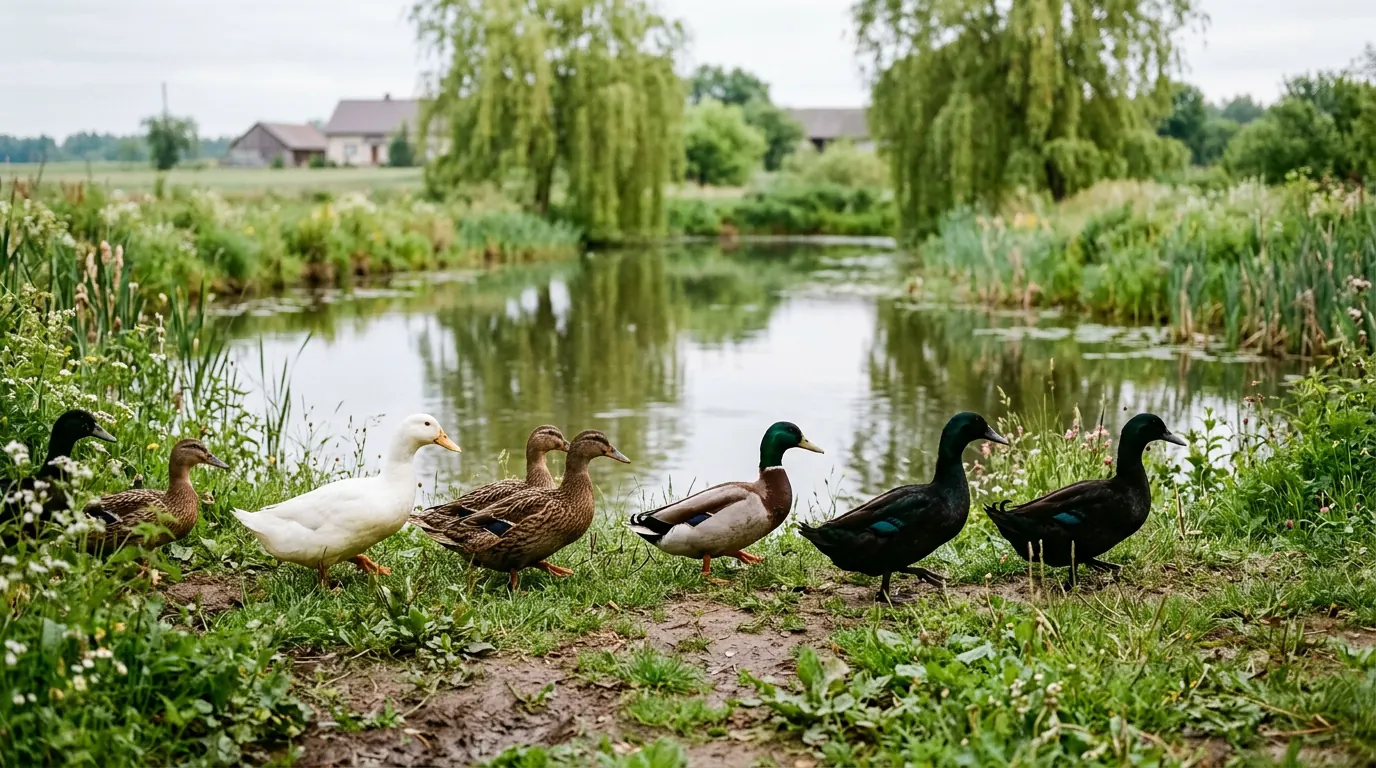
The Cayuga is a duck breed from the USA, named after Cayuga Lake in New York State. It is easiest to recognize by its dark, black plumage with a greenish sheen, and by its dark bill and legs. It is a utility breed, kept for meat and eggs, but it is not bred for maximum egg numbers. If you keep flock records, add the species and group in the farm management software.
Where the name comes from
The breed is tied to the region around Cayuga Lake, where it was developed from local birds. Birds from this line later went to breeders in other countries, including Europe. In Poland you mostly find Cayuga ducks on small farms and with keepers of ornamental utility poultry. When you buy, ask the breeder where the birds come from and whether the line has been kept purebred.
Plumage and build of the Cayuga duck
Plumage
Cayuga plumage is dark: with good selection it is black or very dark with a green or blue sheen. The shade depends on the breeding line and on how the breed was kept in earlier generations. Do not judge a bird from a single photo. Look at the young birds together with their parents, because that shows whether the line holds the breed standard. Light feathers in black plumage do occur and are typical of crossbreds.
Bill, legs and build
The bill and legs of Cayuga ducks are dark, usually blackish or dark gray. The bird has a compact, full body, which sets it apart from lighter laying breeds. When you check health, look at whether the bird stands steadily, whether it limps and whether the feathers around the vent are clean. Changes in plumage and posture are often the first sign of a problem, before clear symptoms of disease appear.
Differences between the sexes
Drakes and ducks differ mainly in voice and in behavior in the flock. The duck quacks loudly, the drake makes quieter, shorter sounds. In a larger flock, sex is most reliably set after several weeks of observation, not from the look of the duckling. If you need certainty about the sex ratio in a breeding flock, ask the breeder to check it and write down the result in your records.
Meat and eggs from the Cayuga duck
Meat production
Cayuga ducks are fairly heavy for utility poultry breeds and grow more slowly than broiler birds. Body weight depends on sex, age, line and feeding quality. Birds raised for slaughter need a longer rearing period than chickens, so work out the profit for a specific cycle, including feed cost and the time the building is occupied. There is no universal figure here, because results depend heavily on conditions.
Egg production
Cayuga duck eggs usually have a dark shell, and the color can be grayish or bluish-green, depending on the bird. Laying depends on the line, the season, light and feeding. Keepers who count on the maximum number of eggs per year do not usually choose this breed. If you want eggs for sale, record daily laying so that after a few weeks you can see the real result of the flock.
Choosing the goal of your flock
Before you buy birds, decide whether you want meat, eggs or breeding birds. Feeding plans and stocking density differ for rearing for slaughter and for a laying flock. If you keep ducks in several groups at once, separate them in the system so that results and settlements do not get mixed.
Keeping Cayuga ducks on your farm
Access to water
Ducks need water to rinse their nostrils and eyes, and to take in feed. Without water near the sleeping area, the risk of dirt and eye problems goes up. Drinkers and bowls must be high and stable enough that water does not flood the litter around them. Wet litter is the most common cause of foot skin problems and poor feather hygiene.
Run and protection
Cayuga ducks cope well with a run, but they need fencing and a roof over part of it. Predators, including foxes and birds of prey, are a real threat, especially to young birds. Shut the flock in a building or a secured pen at night. Check the fencing and record losses, because that helps you judge whether your protection works.
Litter and ventilation
Dry, deep litter protects birds from cold and damp. Replace it partly when it starts to cake and soak up water. Ventilation must remove moisture without creating drafts at bird level. Record litter changes and the state of the building, because damp affects the health of the whole flock, not only the ducks.
Prevention and contact with wild birds
Biosecurity
Ducks often stay near water where wild birds land. This raises the risk of disease reaching the flock. Limit access for strangers and equipment, change footwear at the entrance to the flock area and keep a log of entries. Guidance on poultry health protection is published by the Chief Veterinary Inspectorate (Główny Inspektorat Weterynarii). You can prepare a ready plan in the biosecurity plan generator.
Symptoms and treatment
Report any change in behavior, a drop in laying, diarrhea or deaths to your vet without delay. The medicine and dose are always chosen by the vet, not by the keeper on the basis of other people's opinions. For every treatment, write down the product name, the date given and the withdrawal period. For eggs and meat, the withdrawal period decides when the product can be sold, so skipping it is a serious mistake. Keep these records in the treatment and withdrawal module.
Flock records and notifications
Records in the poultry house
Keep flock records from the day birds arrive: number of birds, losses, laying, feed use and water. That way you see trends before a problem appears. Make your entries in the poultry house records, where each group has its own card. Comparing results between cycles shows whether a change in feed or stocking density made a difference.
Notifications and legal status
Notifications of the flock's premises and of changes in numbers are made in IRZplus, the online animal register run by Poland's ARiMR (Agency for Restructuring and Modernisation of Agriculture). Check the legal status as of 22.11.2026 in the Internetowy System Aktów Prawnych (Poland's online database of legal acts), because rules on farm animals change from time to time. Before you notify, compare the requirements with the current text of the act. If in doubt, ask the district veterinarian (powiatowy lekarz weterynarii). You can link IRZplus data to your records through the IRZplus integrations.
Frequently asked questions
What is a Cayuga duck?add
The Cayuga is a utility duck breed from the USA, named after Cayuga Lake in New York State. It stands out for its dark, glossy plumage and its dark bill and legs. It is kept for meat and eggs on small and medium farms.
Are Cayuga ducks good for meat?add
Yes, Cayuga ducks are raised for meat, but they grow more slowly than broiler birds. The result depends on sex, age, line and feeding. Before you decide, work out feed cost and the time the building is occupied for a specific cycle.
Do Cayuga ducks lay a lot of eggs?add
The Cayuga is not bred for maximum laying. Eggs usually have a dark shell, and the number depends on line, season, light and feeding. Record daily laying for a few weeks to learn the real result of your flock.
Do Cayuga ducks need water?add
Yes, ducks need water to rinse their nostrils and eyes and to take in feed. Place drinkers so that water does not flood the litter. Wet litter raises the risk of foot skin problems and poor feather hygiene.
How do you protect Cayuga ducks from disease?add
Limit contact between the flock and wild birds, control entry of people and equipment, and keep a log. Report any change in behavior or a drop in laying to your vet. Do not choose medicine or dose yourself, and record the withdrawal period for every treatment.
How much does a Cayuga duck cost?add
The price depends on the line, the age of the bird, its origin and whether you buy ducklings, young birds or breeding birds. Prices change over time, so we do not give amounts. Check current offers with breeders, at poultry fairs and in classified ads, and ask for information on origin when you buy.
Do Cayuga ducks have to be registered in IRZplus in Poland?add
Notifications of the flock's premises and of changes in numbers are made in IRZplus. Check the legal status as of 22.11.2026 in the Internetowy System Aktów Prawnych. If you are unsure about your duties, contact the district veterinarian.
Sources & resources
- linkChief Veterinary Inspectorate (Główny Inspektorat Weterynarii) — gov.pl/web/wetgiw
- linkNational Research Institute of Animal Production (Instytut Zootechniki PIB) — izoo.krakow.pl
- linkMinistry of Agriculture and Rural Development (Ministerstwo Rolnictwa i Rozwoju Wsi) — gov.pl/web/rolnictwo
- linkInternetowy System Aktów Prawnych (online database of Polish legal acts) — isap.sejm.gov.pl
Prepared by: DlaFerm Team based on data from the sources listed · Publisher: INSTA-TECH sp. z o.o.
Do you keep ducks next to other poultry?
The DlaFerm.pl farm management software lets you keep records of bird species and groups in one place. Create a free farm account and see how it works in practice.
Phone
+48 796 258 151