Pomeranian duck (kaczka pomorska): a breed from Pomerania
The Pomeranian duck is a Polish local breed covered by Poland's genetic resources conservation program for farm animals. You raise it for meat and eggs, and you help keep a native breed alive. We cover its origin, looks, uses and care.
verifiedFrom the team that has organised work on poultry farms for years.
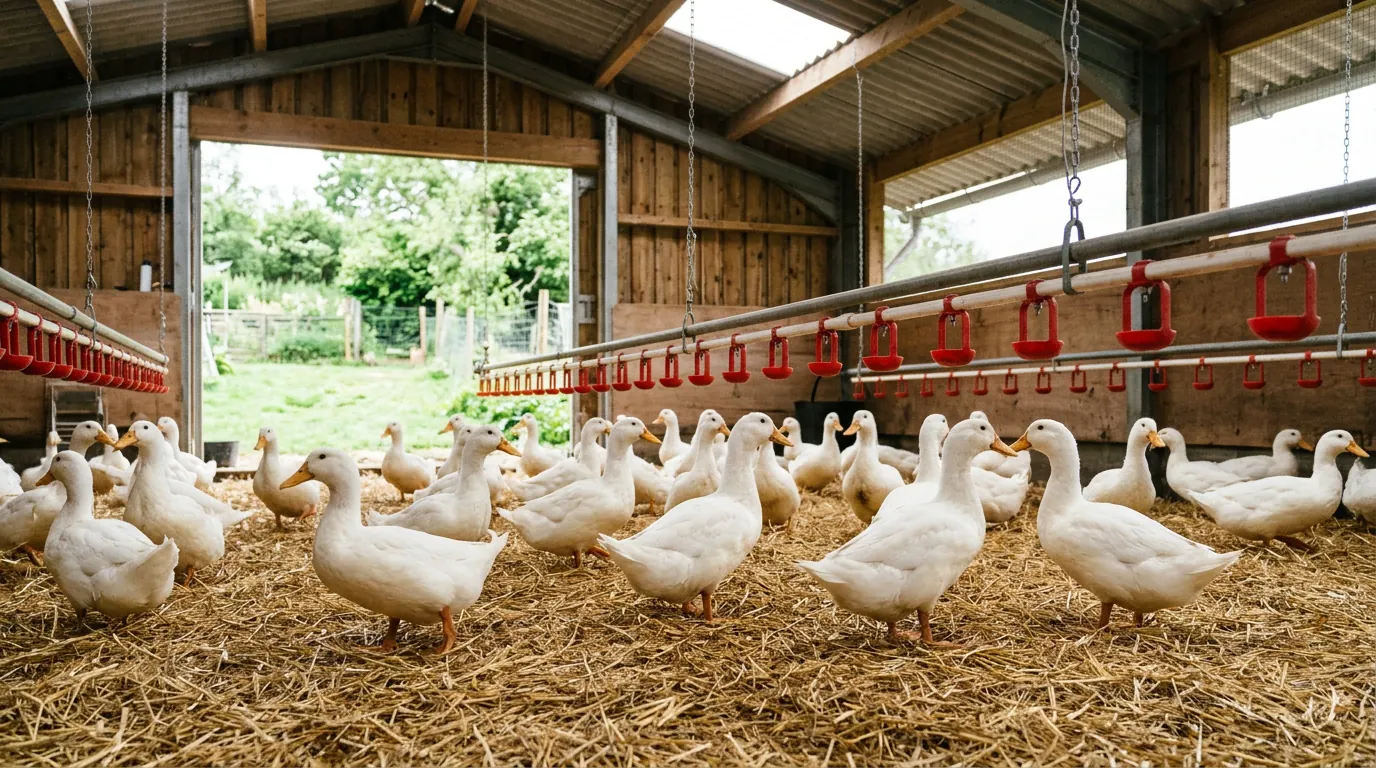
The Pomeranian duck (kaczka pomorska) is a native duck breed from Pomerania, a region in northern Poland. Farms there traditionally kept it. It is a dual-purpose breed: it gave meat, eggs and feathers, and it did well on a range with access to water and grass. Today it belongs to the breeds covered by a genetic resources conservation program run by the Institute of Animal Science (Instytut Zootechniki PIB).
Who this breed suits
Keepers choose the Pomeranian duck when they want a small, hardy flock that suits the Polish climate. It is not a breed for intensive large-scale fattening. Its strengths are its origin, simple husbandry and its role in preserving native stock. If you are weighing other duck breeds, compare it with the Staropolska duck and the Saxony duck.
Where the Pomeranian duck comes from
A local breed
The Pomeranian duck developed on farms in Pomerania. Over many years, keepers selected the birds that coped best with the damp, cool local climate. They chose hardy birds that foraged well and gave meat and eggs for the household. Nobody built the breed at a breeding center to a single standard, so you will see some variation within flocks. That is typical of local breeds shaped by family farming.
Genetic resources conservation
Local breeds pushed out by modern hybrids go into genetic resources conservation programs, and the Pomeranian duck is one of them. The Institute of Animal Science (Instytut Zootechniki PIB) runs the program together with Poland's Ministry of Agriculture and Rural Development. Check the rules, required documents and any financial support directly with ARiMR (Agency for Restructuring and Modernisation of Agriculture) and the national program coordinator. Conditions change from year to year, so we give no amounts or deadlines here.
What the Pomeranian duck looks like and what it is for
Build and color
The Pomeranian duck is a medium-sized bird with a compact, fairly deep body. Breed descriptions point to dark plumage with a pale patch, called a bib, on the breast. For the exact standard, accepted color varieties and body weights of ducks and drakes, check the Institute of Animal Science publications, because birds in the conservation program are judged against them. When you buy, compare the birds with the standard, not only with the seller's description.
Meat and eggs
As a dual-purpose breed, the Pomeranian duck gives tasty meat and eggs that suit the kitchen and hatching. It grows more slowly than commercial hybrids and reaches a lower weight, but it needs less intensive feeding. Laying rate and growth depend on the line, the feed and the range, so write down your own results in your flock records. After a few seasons you will see which ducks lay the most, and you can base your breeding choices on them.
Comparison with other breeds
If you want a larger meat duck, read about the Silver Appleyard duck or the Rouen duck. For colorful birds that are both ornamental and useful, look at the Swedish Blue duck. The Pomeranian stands out because it is a native breed, so keeping it is about conservation as well as production.
Keeping Pomeranian ducks in practice
Range and water
Ducks like to forage, so they need a grassy range, ideally with access to shallow water. You do not need a lake. A drinker deep enough for the duck to dip its bill and eyes is enough, plus a trough or small pond that is easy to clean. Wet ground around the drinker quickly turns to mud, so place it on a firm or drained spot and change the bedding regularly. Ducks tolerate cold well, but they need a dry shelter at night.
Feeding
Adult Pomeranian ducks make good use of greens, grain and farm extras. During laying and when raising young, give a complete duck feed or a well-balanced mix to avoid deficiencies. Do not give ducklings feed made for other species without checking the ingredients, especially feed that contains medicines. Agree exact amounts with a feeding adviser or a vet, because they depend on age and production purpose.
Raising ducklings
In the first weeks, ducklings need a dry, warm spot without drafts, and constant access to clean water and feed. Thin bedding and wet drinkers are the most common cause of losses, because young ducks chill fast. Check the bedding daily and stand the drinkers on a grid or tray. You will find a more detailed guide to raising young birds in the article on the Rouen duck, as the rules are similar for most dual-purpose breeds.
Flock health and keeper duties
Avian influenza and biosecurity
Water ducks are exposed to avian influenza risk because they meet wild birds and open water. When outbreaks occur, the county veterinary officer (powiatowy lekarz weterynarii) imposes bans and orders, for example a ban on letting poultry outside. You can check the current situation in your region on the pages about avian influenza in Pomorskie voivodeship and Kujawsko-Pomorskie. You can prepare a flock protection plan with the biosecurity plan generator. Legal state as of: 23.11.2026. Always ask a vet before you decide.
Treatment and withdrawal periods
Treat sick ducks only after a vet has diagnosed them. The vet chooses the medicine and dose. Remember the withdrawal period: while it runs, you must not use the meat or eggs for food. Write down the end date straight away, ideally in the treatment and withdrawal records, so you do not mix up dates when you sell.
Records and registration
Even a small duck flock needs tidy records: bird numbers, placements, deaths, treatments and sales. The duty to register the flock and make reports to the system depends on the number of birds and how you use them. Ask at your county ARiMR office or the county veterinary officer. For good order, also keep poultry house records, where you note every change in the flock.
How to buy and keep Pomeranian ducks
Where to find birds
Buy Pomeranian ducks from keepers in the conservation program, or from people recommended by agricultural advisory centers and the Institute of Animal Science. Ask about the birds' origin and lines, so you avoid inbreeding. Prices depend on age, origin and whether you buy ducklings, young birds or breeding stock, so agree them directly with the keeper. We give no amounts because they change between seasons.
Planning breeding
For breeding, choose unrelated ducks and drakes, and each season keep the birds closest to the standard and the best layers. Note which parents each youngster comes from, because this is the basis for keeping the breed pure. As your flock grows, placement and cycle planning helps. It shows when housing is free and when hatching falls.
Frequently asked questions
Is the Pomeranian duck a heritage breed?add
Yes. It is covered by the genetic resources conservation program for farm animals, run by the Institute of Animal Science (Instytut Zootechniki PIB). Check the conditions for joining and any support with ARiMR.
What is the Pomeranian duck used for?add
It is a dual-purpose breed: it gives meat and eggs, and on farms it was also a source of feathers. It grows more slowly than commercial hybrids but copes well with free-range housing.
What does a Pomeranian duck look like?add
It has a medium, compact build and dark plumage with a pale bib on the breast. Check the exact standard and body weights in the breed description from the Institute of Animal Science.
Does a Pomeranian duck need a pond?add
No pond is required, but the duck needs water where it can dip its bill and eyes. A deep drinker or a small trough on firm ground is enough.
How do I buy Pomeranian ducks?add
Look for keepers in the conservation program or ones recommended by agricultural advisory centers. Ask about the birds' origin and lines to avoid inbreeding. You agree the price directly with the seller.
How do I protect ducks from avian influenza?add
Limit contact between your flock and wild birds, secure feed and water, and follow the orders of the county veterinary officer. You can prepare a protection plan in the DlaFerm biosecurity generator.
Sources & resources
- linkInstitute of Animal Science (Instytut Zootechniki PIB) — izoo.krakow.pl
- linkMinistry of Agriculture and Rural Development — gov.pl/web/rolnictwo
- linkARiMR — gov.pl/web/arimr
- linkChief Veterinary Inspectorate (Główny Inspektorat Weterynarii) — gov.pl/web/wetgiw
Prepared by: DlaFerm Team based on data from the sources listed · Publisher: INSTA-TECH sp. z o.o.
Keep your duck flock in DlaFerm poultry house records
In the poultry house records module you log placements, deaths, treatments and sales, even for a small flock of local breeds. Create a free farm account or get in touch with us.
Phone
+48 796 258 151