Rouen duck: breed facts and rearing
The Rouen duck is a large, heavy breed of domestic duck from France, kept mainly for meat. It grows more slowly than the Pekin duck and lays fewer eggs, so you need to plan rearing over a longer period. We explain rearing, feeding, flock health and paperwork.
verifiedFrom the team that has organised work on poultry farms for years.
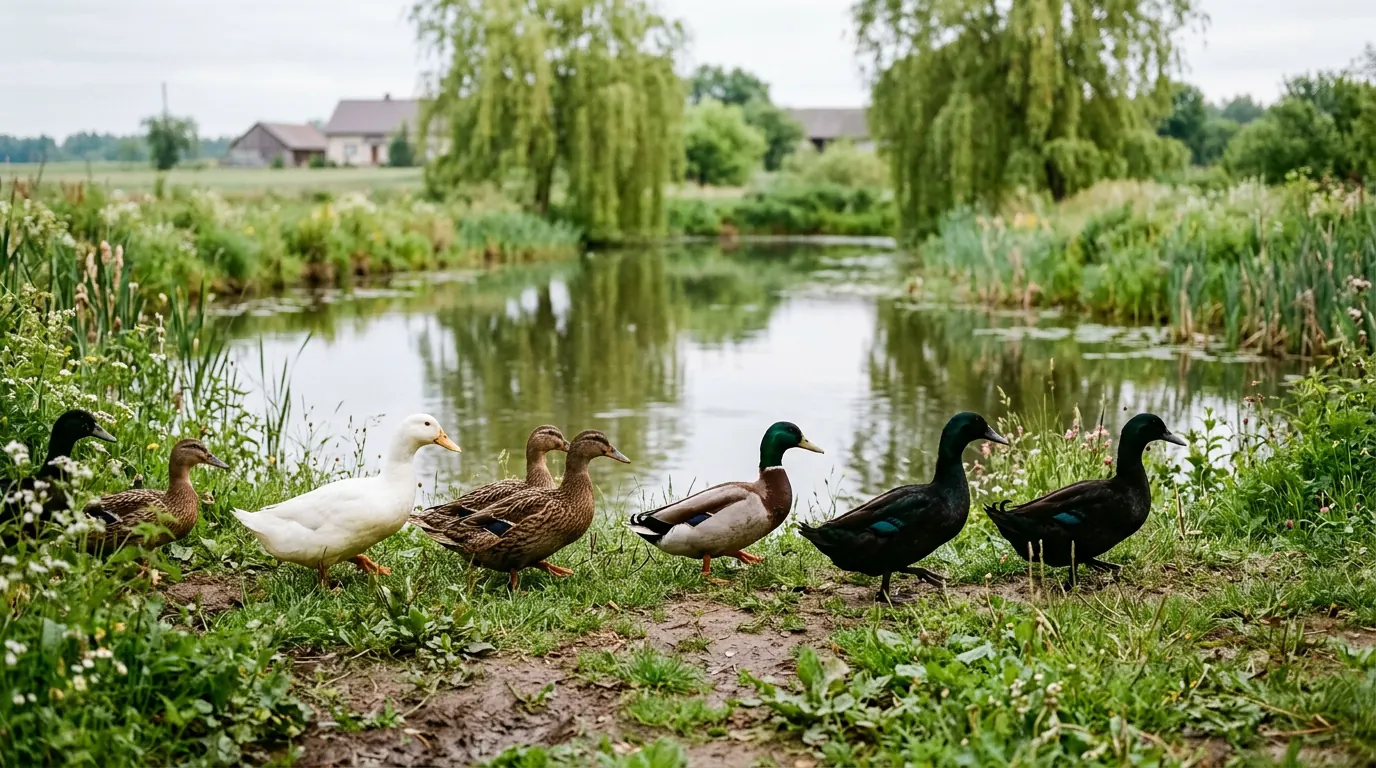
The Rouen duck is a large, heavy breed of domestic duck from France, from the area around the city of Rouen in Normandy. We keep it mainly for meat, not as a layer. It grows more slowly than the Pekin duck, takes longer to reach slaughter weight and lays fewer eggs. So base your rearing and cycle plan on a longer timeline than for typical broiler poultry. Below we describe the look of the breed, duckling rearing, feeding, health and paperwork.
Who this breed suits
The breed suits small farms that want to sell duck from their own flock, and pasture-based farms where birds have access to water and grass. It is not for a keeper who counts on a quick flock turnover in a few weeks. Before you buy ducklings, check that you have room for a run with water, a channel or a small pond for swimming, and time for a longer rearing period. A good start is to save your plan in the system, for example through placement and cycle planning.
Looks and traits of the breed
Plumage and build
The Rouen duck has a strong, compact build and a broad, deep body. The drake is clearly darker than the duck: it has a greenish head and neck and grayish body plumage with lighter patches. The duck has brown, speckled plumage, close to that of the wild mallard. This color helps when ducks forage on a meadow. Sexing ducklings is harder than sexing adult birds, so when you sell a flock, it helps to have the sexes written in your records.
Growth rate and weight
Rouen is a meat breed that matures late. It reaches body weight more slowly than Pekin ducks, so rearing takes longer, and the birds usually use feed less efficiently than fast-growing broiler breeds. We give no specific weights, because they depend on the line, the sex and the feeding. Check them in the description of the breeding line from your duckling supplier or in materials from a breeders' club. According to the EFSA scientific opinion on duck welfare, local breeds such as Rouen derive from the green-headed wild mallard, while most commercial ducks come from China and are called Pekin.
Rearing ducklings step by step
Incubation and hatching
By common norms for domestic ducks, egg incubation takes about 28 days, a little longer than for chicken eggs. Store eggs in a cool, clean place before you put them in the incubator, and do not dry-wipe them. Keep ducklings hatched at one time apart from later hatches, so you do not mix batches of different ages. The incubator maker and the duckling supplier give the detailed incubator settings.
Heating and the first days
Ducklings need a warm, dry pen with good ventilation and no drafts. Set the temperature higher in the first days, then lower it step by step. The flock's behavior shows whether it is right: birds spread evenly are content, and birds huddled in one corner are cold. Litter must stay dry, because damp raises the risk of disease. Place the drinker so that water does not spill onto the litter.
Water and swimming
Ducks need water to drink and to clean their nostrils, but in the first weeks they should not have access to large bodies of water, where they can drown or chill. Add a run with a pond or channel gradually, once the birds are hardy and fully feathered. Watch the flock each time you let them into the water, so you quickly spot weaker birds.
Feeding Rouen ducks
Starter and grower feed
Feed ducklings a duck starter feed or a complete poultry feed with high protein, matched to their age. When you switch to grower feed, change the mix gradually over several days, not in one day. A animal nutrition specialist or your feed supplier sets the feed composition and feeding method. The system helps you keep records of feed use and gains; it does not replace feeding decisions.
Access to feed and water
Ducks eat often and like to use water to swallow feed. Put drinkers and feeders on level ground, without mud. Grass in the run adds to the diet and can lower feed cost, but it will not replace a complete feed mix during intensive growth.
Tracking feed use
Record feed use daily or weekly. That lets you compare batches and spot a sudden drop in appetite, which is often the first sign of a health problem. Calculating FCR (feed conversion ratio) is faster when the data sits in one place, for example in FCR and EPEF online.
Flock health and biosecurity
Prevention
The cheapest protection for a flock is prevention. Limit visitors, keep the flock apart from other poultry and from wild birds, and change footwear at the pen entrance. Limit water in the run to one source that you can clean. You can build a plan for these steps in the biosecurity plan generator.
Treatment and withdrawal periods
A vet always chooses the medicine and the dose, knowing your flock and the situation in your region. After treatment you must keep the withdrawal period, which is the time from the last dose to slaughter or egg collection. Record each treatment with the date and batch number, so you know when birds can be sold. Keep these records in the treatment and withdrawal records.
Observation and losses
A daily walk-through is the best early warning. Look for a drop in appetite, a huddled flock, watery droppings and listlessness. Record deaths with the cause, if it is known. If you see worrying signs, call your vet, and report a suspected infectious disease to the county vet (powiatowy lekarz weterynarii) as well.
Flock records and formalities
Flock records
Your flock records should hold the placement date, number of ducklings, sex, source, feed use, deaths and treatment. Keep hatchery and supplier documents together with the batch records. Keeping this data in the poultry house records makes it easier to prepare for an inspection.
Rules and registration
Requirements for registering poultry and selling products come from legislation. Check the current rules in ISAP, Poland's online database of legal acts (Internetowy System Aktów Prawnych), and on the website of the Chief Veterinary Inspectorate (Główny Inspektorat Weterynarii). We give the legal state as of 22.11.2026, but verify every rule at the source before you decide, because acts change. If you sell meat directly, ask the county vet about the requirements.
Price and sales of Rouen ducks
What drives the price
The price of ducklings and adult birds depends on the line, age, sex, season and region. Rouen duck meat often goes to direct sales and specialist buyers, not mass trade. Prices change every week, so we give no amounts. Check current prices with local breeders, slaughterhouses and breeders' clubs.
Data for a sale
Before you sell, check the withdrawal dates and treatment records. Batch, age and weight data should be ready in one place. A poultry farm management program helps, as it collects flock information in one system.
Frequently asked questions
Is the Rouen duck good for meat?add
Yes, Rouen is a meat breed, but it grows more slowly than Pekin ducks. Rearing takes longer, so your production plan needs a longer cycle. Specific weights depend on the line and the feeding.
Do Rouen ducks lay many eggs?add
Rouen laying is lower than in Pekin ducks, and eggs come seasonally. Ask your line supplier for the egg numbers, because they depend on the birds' origin. Record laying so you can compare seasons.
How long does a duck egg take to hatch?add
By common norms for domestic ducks, incubation takes about 28 days. The incubator maker gives the exact settings. Store eggs in a cool, clean place before you set them.
Do Rouen ducks need water for swimming?add
Ducks need water to drink and to clean their nostrils, and a pond or channel lets them swim. In the first weeks, though, they should not reach large bodies of water. Introduce water access gradually once the birds are hardy.
Who gives medicine to ducks and how do I count the withdrawal period?add
A vet always chooses the medicine and the dose. The withdrawal period is the time from the last dose to slaughter or egg collection, and you must keep to it. Record each treatment with the date and batch number.
How much does a Rouen duck cost?add
The price depends on the line, age, sex, season and region, and prices change every week. So we give no amounts. Ask local breeders, slaughterhouses and breeders' clubs for current rates.
Sources & resources
- linkChief Veterinary Inspectorate (Główny Inspektorat Weterynarii) — gov.pl/web/wetgiw
- linkNational Research Institute of Animal Production (Instytut Zootechniki PIB) — izoo.krakow.pl
- linkEFSA — efsa.europa.eu
- linkInternet System of Legal Acts (ISAP) — isap.sejm.gov.pl
Prepared by: DlaFerm Team based on data from the sources listed · Publisher: INSTA-TECH sp. z o.o.
Do you keep ducks together with other poultry?
The DlaFerm <a href="/program-do-zarzadzania-ferma-drobiu">poultry farm management program</a> keeps records of poultry flocks, treatment and placements in one place. Create a free farm account and see how it looks in your poultry house, or get in touch with us about setting it up.
Phone
+48 796 258 151