Kaczka staropolska: a native Polish duck breed
Kaczka staropolska (literally "old Polish duck") is a native Polish utility duck. Farms keep it for its hardiness and easy care. We explain what to expect from laying and meat, what housing it needs and what to record. Where reliable data is missing, we say so.
verifiedFrom the team that has organised work on poultry farms for years.
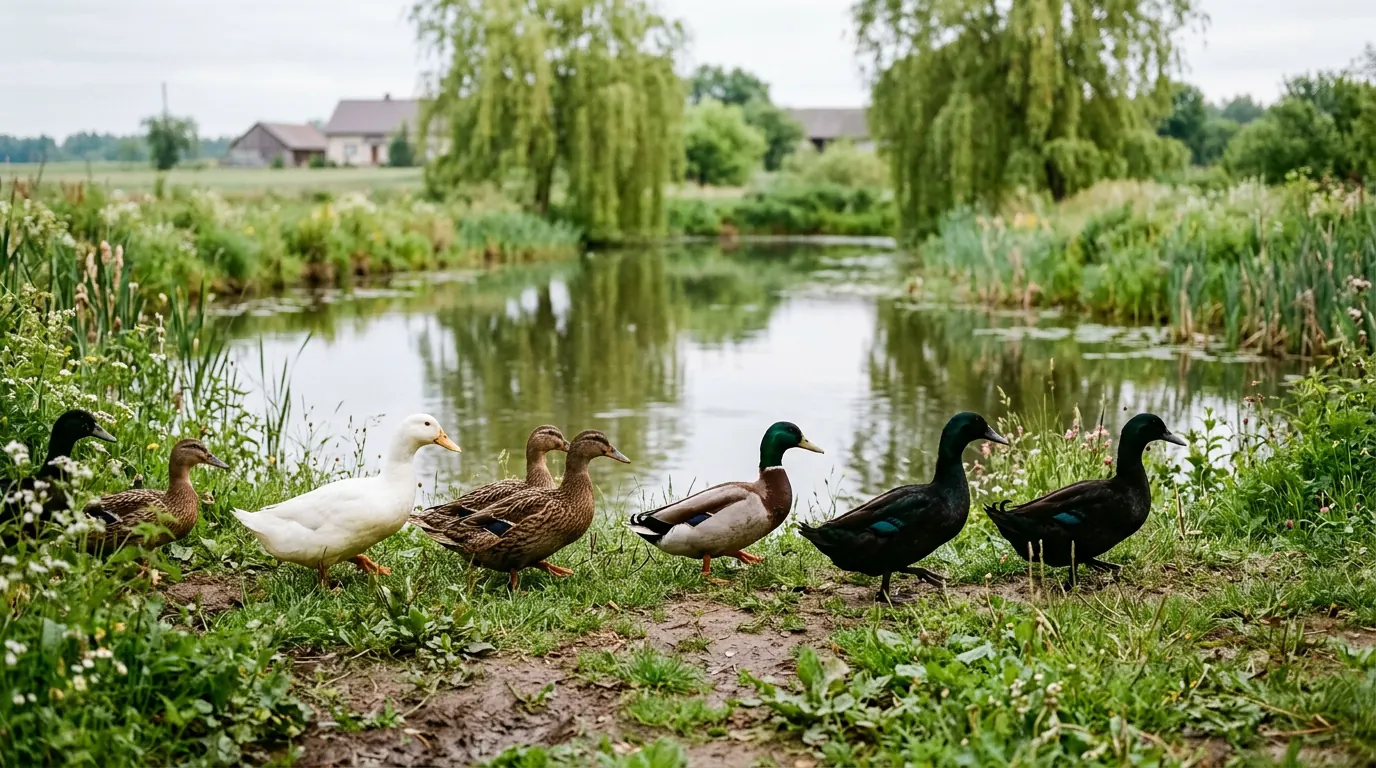
Kaczka staropolska is a native Polish utility duck, kept on rural farms for a long time. Keepers value it for hardiness, independence on range and easy handling. Below we cover the breed's origin and looks, laying, housing, breeding and flock records.
Why a native breed matters
Research institutes take an interest in native breeds because they keep traits suited to local conditions. The National Research Institute of Animal Production (Instytut Zootechniki PIB) describes the state of genetic resources and conservation programs. Current rules on keeping animals are in Poland's online legal database, the Internetowy System Aktów Prawnych (ISAP). Before you buy a flock, check whether the breeder keeps a pedigree or a record of the birds.
Looks and breed traits
Build and plumage
The breed standard sets exact measurements and colors. Plumage can differ between lines, so a color difference alone does not mean the bird is not purebred. When buying, judge live birds: body build, behavior and feather condition. Compare them with the current breed description from the Institute (IZ PIB) and with the standard kept by the breeders' association.
Origin
The breed comes from local duck populations kept on Polish farms. Like the kaczka's relative, the indyk staropolski (old Polish turkey), it is a native breed, so its history is often less well documented than that of imported breeds. When buying, ask the breeder where the flock comes from and how the birds were selected.
Laying and meat production
Laying
Kaczki staropolskie lay eggs, but they are not a breed specialized in egg production. The number of eggs per year depends on the line, the bird's age, the season and feeding. Reliable figures for this breed are scarce, so we give no value here. Ask the breeder for laying records from several seasons and compare them with your own expectations.
Meat and carcass
Some keepers also choose the breed for meat. Carcass weight and fattening time depend on sex, age and feeding. Record weight and feed use every week and compare results between batches. A poultry farm management program collects this data in one place.
Housing conditions
Water and range
Ducks need water for bathing and cleaning their bills. The pond or tank should be big enough that the water does not foul feed and drinkers. A fenced range protects against predators and makes it easier to keep an eye on the flock. When choosing a site, make sure water can drain away and the ground is easy to clean.
House and litter
A duck house should be dry, airy and free of drafts. Change the litter regularly: a wet floor encourages disease and dirty eggs. Set the stocking density according to welfare requirements and the law; the Institute (IZ PIB) and Poland's Chief Veterinary Inspectorate (Główny Inspektorat Weterynarii) publish guidance. Record the number of birds in your poultry house records.
Breeding and reproduction
Choosing breeding stock
Pick healthy birds in good condition with no build faults. Avoid mating related birds without a plan, because it weakens the flock. Record the origin of every duck and the result of each season. After a few years you will see which lines do best on your farm.
Incubation and hatching
Store hatching eggs in a cool, clean place and set them in the incubator as soon as you can. Temperature and humidity settings depend on the machine, so follow the manufacturer's instructions. Record the lay date, the setting date and the hatch result. This data is the basis for judging the flock.
Prevention and withdrawal periods
Biosecurity
Limit access by strangers and animals to the flock area. Keep newly bought birds apart during an observation period and record every arrival. You can prepare a protection plan in the biosecurity plan generator and keep a log of visitors in the farm entry and exit book.
Treatment and withdrawal periods
Always discuss treating ducks with a vet, who chooses the medicine and the dose. After a drug is given, a withdrawal period applies: the time during which you must not sell eggs or meat. The leaflet and the treating vet give its length. Record the treatment and the end of the withdrawal period in the treatment and withdrawal records.
Prices and profitability
What sets the price
The price of a live bird depends on age, sex, origin, condition and season. Birds with documented origin cost differently from birds of random breeding. Current breeders' offers are collected in the guide how much a hen, duck or goose costs. Amounts change weekly, so check them before you buy.
Profitability check
Count the cost of feed, water, litter, labor and veterinary care. Set it against income from eggs, meat or birds sold. Record feed use as you go, because without it you cannot work out the real cost per unit of output. Without this data, every decision about flock size rests on guesswork.
Frequently asked questions
Is the kaczka staropolska a good laying duck?add
Kaczka staropolska lays eggs, but it is not a breed specialized in egg production. Results depend on the line, age and feeding. Before you buy a flock, ask the breeder for laying records from several seasons.
How many eggs does a kaczka staropolska lay per year?add
We give no number, because reliable data for this breed is scarce and results differ between flocks. The most dependable figures come from the records of a specific flock kept over several seasons. Ask the breeder for them and check the materials of the Institute of Animal Production (Instytut Zootechniki PIB).
How much does a kaczka staropolska cost?add
The price depends on age, sex, origin and season. Quotes change often, so we give no amounts. Check current offers with breeders and in the live poultry price guide.
How do you keep kaczki staropolskie on a small farm?add
You need a dry house without drafts, clean litter, access to water and a fenced range. Record stocking numbers, weight gain and treatment. A biosecurity plan makes it easier to control who enters the site.
Do you have to register a duck flock in Poland?add
Registration duties depend on flock size and the rules. Details come from Poland's Chief Veterinary Inspectorate (Główny Inspektorat Weterynarii) and the ISAP legal database. Before you start, check the current legal position and talk to your county veterinarian (powiatowy lekarz weterynarii).
Sources & resources
- linkInstitute of Animal Production (Instytut Zootechniki PIB) — izoo.krakow.pl
- linkChief Veterinary Inspectorate (Główny Inspektorat Weterynarii) — gov.pl/web/wetgiw
- linkMinistry of Agriculture and Rural Development — gov.pl/web/rolnictwo
- linkInternetowy System Aktów Prawnych (online legal database) — isap.sejm.gov.pl
Prepared by: DlaFerm Team based on data from the sources listed · Publisher: INSTA-TECH sp. z o.o.
Do you keep ducks alongside other species?
The DlaFerm poultry farm management program lets you record flocks, stocking and events in one place. Create a free farm account and see how it works on your farm.
Phone
+48 796 258 151