Old Polish turkey (indyk staropolski): a native breed
The Old Polish turkey is a native Polish breed that has been kept in Poland for a long time. It grows more slowly than modern meat hybrids, reaches a lower weight and needs a different rearing plan. We explain how the breed differs, how to feed it, where to house it and how to keep flock records.
verifiedFrom the team that has organised work on poultry farms for years.
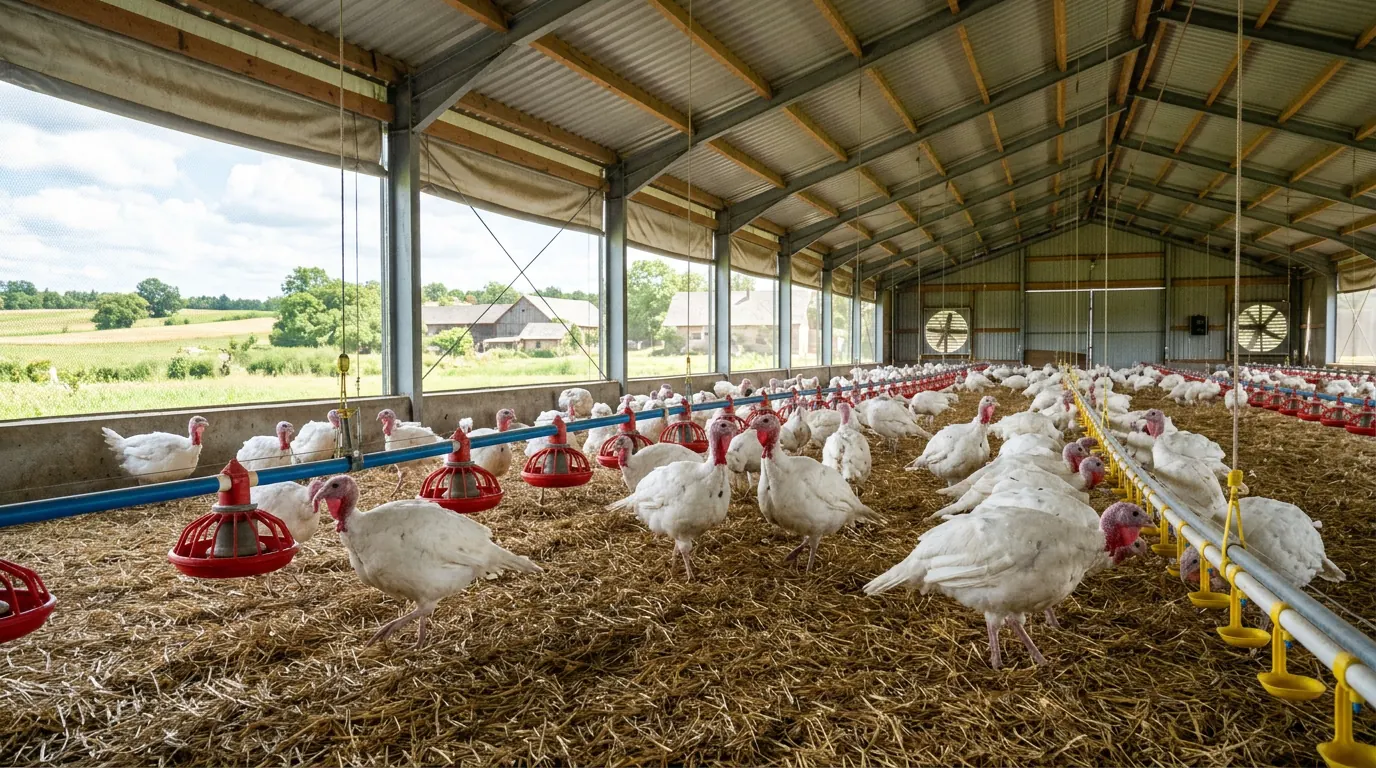
The Old Polish turkey (indyk staropolski) is a native breed that has been kept in Poland for a long time and is often described as a bird that copes well with free-range keeping. Compared with modern meat hybrids, it grows more slowly, reaches a lower weight and gives a different meat yield. Keeping it therefore follows a different plan from keeping commercial turkeys. It is a conservation breed: keeping it makes sense mainly when you want to preserve native traits and sell products from a slow-growing bird.
How it differs from a commercial turkey
Commercial turkeys, for example those from breeding programs for meat hybrids, were selected for fast gain and slaughter yield. The Old Polish turkey grows more slowly and needs a longer rearing period. For you, that means different placement planning, a different sales schedule and different feed cost expectations. Before you decide, work out the profitability on paper, not from what you see at the market. Our guide to turkey farming profitability describes what drives the financial result.
Appearance and production traits
Build and plumage
The Old Polish turkey has a slimmer build than broad-breasted turkeys. Plumage can vary, and its color depends on the breeding line. When you buy birds, ask the seller about their origin and any pedigree documents. The breed standard describes the outward traits. You can check its current version with bodies that handle animal genetic resources, for example Poland's Institute of Animal Science (Instytut Zootechniki PIB). Do not judge from a single bird: compare whole age groups.
Growth rate and weight
The main difference is the growth rate. A native breed reaches slaughter weight more slowly than meat hybrids, so the time from placement to sale is longer. A longer rearing period means the house is occupied for longer and more feed is used per unit of final weight. Before you take the first poults, plan the cycle in your records, including the pick-up date and your sales options.
Feeding the Old Polish turkey
Feed matched to the stage
In the first weeks, turkeys need high-protein starter feed, and later grower and finisher feeds. Plan the switches between mixes by the birds' age, not by the sales calendar. We cover turkey nutrition standards in a separate guide: turkey feeding. If birds grow more slowly than planned, first check feed quality and how it is offered, and only then change the ration.
Water and access to feed
Turkeys use a lot of water, especially in hot weather and on high-protein mixes. Drinkers must be available to all birds at the same time, and their height must be adjusted to age. Too little space at the feeders means weaker birds eat less and grow unevenly. Check water and feed use in the flock regularly, because a sudden change in intake is one of the first signs of a health problem.
House and range for a native breed
House requirements
A turkey house must be dry, well ventilated and free of drafts. Litter needs regular replacing or drying, because damp encourages respiratory disease and parasites. Set stocking density by the weight and age of the birds, not by the maximum number the house could theoretically hold. We describe the equipment in our guide: turkey house requirements.
Range and predator protection
Native breeds usually use a range, so the fence must protect birds from foxes, hawks and dogs. Rotate the range on a schedule to limit soil contamination. Covered areas on the range give birds shade and shelter from rain. Remember that the rules on welfare and keeping poultry apply whatever the system. You can find their current text in ISAP (Poland's online database of legal acts).
Prevention and gut health
Gut health and biosecurity
Gut problems are a common cause of lower gain in turkeys. The risk rises with sudden feed changes, wet litter and poor hygiene when handling the flock. We describe how to limit infections in our guide: gut health in turkeys. Everyone entering the house should use separate footwear or overshoes, and cleaning equipment should not move between buildings without disinfection.
Zoonotic diseases and treatment
Salmonella in poultry also matters for human health. Testing and surveillance are run by the Chief Veterinary Inspectorate (Główny Inspektorat Weterynarii), and it is worth knowing the monitoring results before you sell live birds. A vet always chooses the treatment, including the medicine and dose. You are responsible for recording every administration and for observing the withdrawal period. Keep this in your treatment and withdrawal records so you have everything in one place during an inspection.
Records, rules and sales
Flock records
Keep a flock of native turkeys as a separate group, with the placement date, number of birds, losses, feed use and weighing dates. This lets you compare results with earlier cycles and see whether a change of line or feed made a difference. We describe the tools for this in the poultry farm management software module, which collects data from the whole farm in one place.
Rules and sales
Rules on poultry, animal records and sales can change, so check their current wording in ISAP. The legal position described in this guide is as of 22.11.2026. Turkey prices depend on weight, season, buyer and sales method, and you can check current quotes with buyers and in trade publications. Do not give a buyer results or parameters you cannot confirm from your own records.
Frequently asked questions
What is the Old Polish turkey?add
The Old Polish turkey (indyk staropolski) is a native Polish breed that has been kept in Poland for a long time. It grows more slowly than modern meat hybrids and reaches a lower weight. It is counted as a conservation breed.
Does the Old Polish turkey grow faster than a commercial turkey?add
No. Native breeds grow more slowly and need a longer rearing period. For exact figures for a given line, ask the breeder or check the breed standard.
Where should you keep Old Polish turkeys?add
Ideally in a dry, well-ventilated house with access to a range that is secured against predators. Litter must stay dry and stocking density must match the birds' age.
How do you keep flock records for turkeys?add
Record the placement date, number of birds, losses, feed use and weighing results. Compare the data between cycles. Keep treatment records together with the withdrawal dates.
Who decides how to treat turkeys?add
A vet always chooses the medicine and dose. You are responsible for recording each administration and for observing the withdrawal period before slaughter or selling eggs.
Sources & resources
- linkChief Veterinary Inspectorate — gov.pl/web/wetgiw
- linkInstitute of Animal Science PIB — izoo.krakow.pl
- linkEFSA — efsa.europa.eu
- linkOnline System of Legal Acts (ISAP) — isap.sejm.gov.pl
- linkMinistry of Agriculture and Rural Development — gov.pl/web/rolnictwo
Prepared by: DlaFerm Team based on data from the sources listed · Publisher: INSTA-TECH sp. z o.o.
Keeping a flock of native turkeys?
The poultry farm management module lets you record cycles, feed use and weighing results in one place. Create a free farm account in DlaFerm.pl and see how it works on your own farm.
Phone
+48 796 258 151