Keeping Chickens and Ducks Together in One Coop
You can, but only in a small backyard flock and under a few conditions: plenty of space, separate drinkers and dry bedding. With more birds, it is better to keep the species apart. We explain where the problems come from and how to limit them.
verifiedFrom the team that has organised work on poultry farms for years.
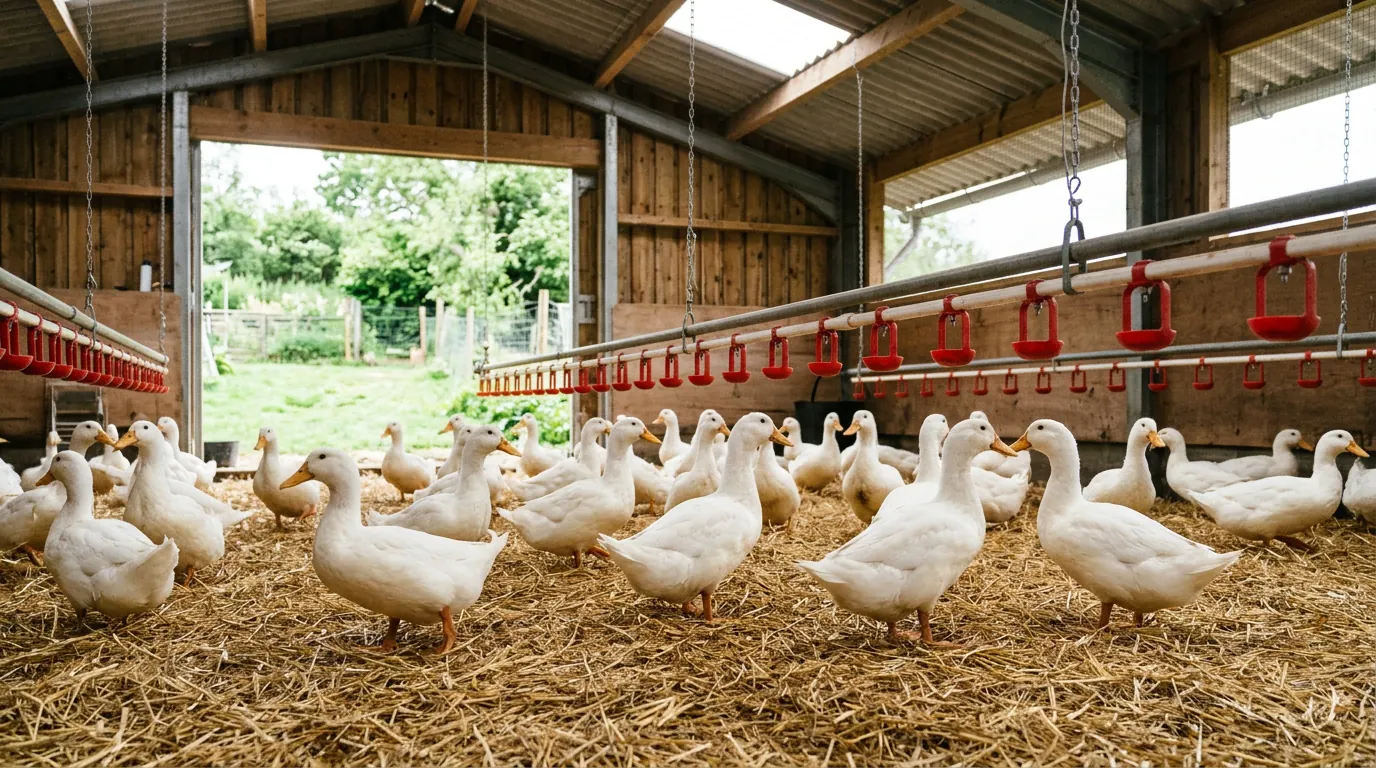
Chickens and ducks can live together in a small backyard flock if you give them enough space and keep the bedding dry. On a commercial farm, we advise against a shared building. The two species have different needs: chickens like a dry, warm coop and a perch, while ducks need a lot of water and produce wet droppings. To see what each species needs on its own, read laying hen housing requirements and duck housing requirements.
When a shared coop makes sense
Keeping them together works with a few hens and a few ducks that grew up together or were introduced slowly. The outdoor run matters too: the bigger it is, the fewer fights and the less dirt around the drinkers. As the flock grows, problems with damp and health grow faster than the benefit of saving space.
How chickens differ from ducks
Water and damp
Ducks drink, rinse their bills and nostrils in water, splash around the drinkers and produce loose, wet droppings. Chickens prefer a dry floor. Wet bedding encourages mold, coccidiosis and ammonia. So a shared coop needs its bedding changed more often than a chicken-only coop. Good ventilation helps, as we describe in coop ventilation, along with checking humidity and ammonia in the building.
Perch, nests and floor
Chickens sleep on a perch and lay eggs in raised nests. Ducks usually sleep on the bedding and lay eggs on the floor, often early in the morning. Heavy ducks cannot get onto a high perch. In a shared coop, provide a perch for the hens and a separate dry, straw-covered corner for the ducks. The entrance should be low or have a ramp.
Pace and temperament
Roosters can be aggressive toward ducks, especially small breeds. Drakes, in turn, may trample hens when trying to mate, which can cause serious injuries. The sex ratio matters: one rooster per group of hens, and a drake only if you keep several ducks. At the first sign of injuries, separate the birds.
Feed and water for both species
Drinkers and feeders
A duck must be able to dip its whole bill into the drinker to clear its nostrils. Narrow chicken drinkers are not enough, and chickens will quickly foul wide containers meant for ducks. Set out separate drinkers and feeders, ideally in different places and away from the nests. Watch how much water the flock uses: water meters in the coop can help, because a sudden rise or drop often signals trouble.
Feed composition
Laying hens and ducks have different nutrient needs. Set the specific values for ducks and chickens with a nutrition adviser or from data of Poland's National Research Institute of Animal Production (Instytut Zootechniki PIB), because they depend on age, production type and breed. We give no numbers here so that nobody is tempted to mix feeds by eye. Remember that what is healthy for one species may harm the other. Also check the list of foods you should not give chickens.
Feed and access
With one shared feed, the stronger birds eat more. Put out several feeders so weaker birds can eat enough. Watch body condition: birds that lose weight are a sign they cannot reach the feed.
Disease and biosecurity
Avian influenza and other threats
Ducks can be infected with avian influenza virus without clear symptoms and still shed the virus. For chickens, the same infection usually ends in a quick collapse of the flock. So during an outbreak risk, notices from Poland's Chief Veterinary Inspectorate (Główny Inspektorat Weterynarii, GIW) come before the keeper's convenience. Check current orders, including housing of birds indoors, on the GIW website and with the county veterinarian (powiatowy lekarz weterynarii). A biosecurity plan generator makes it easier to set up your safeguards.
Parasites and coccidiosis
Wet bedding encourages parasites and fungi. The rule is simple: the wetter it is, the higher the risk. Replace wet spots as you go and do not allow puddles. A vet always chooses the treatment, the medicine and the dose. Remember the withdrawal period: you can sell eggs and meat from treated birds only after it has passed. The treatment and withdrawal period module helps with record keeping.
Ammonia and air
Wet bedding raises the ammonia level, which irritates birds' airways. You can read more about reducing ammonia in our text on yucca and saponins. First, though, improve ventilation and bedding changes.
How to set up a shared coop
Space and layout
Give each species its own zone. Hens get a perch and nests in the dry part; ducks get a straw bed by the entrance and constant access to the run. You can divide the zones with a wire mesh partition. That way the birds can see each other but cannot hurt each other. Do not overcrowd the flock: crowding is the first cause of fights and disease.
Bedding
Bedding for a mixed flock should be thick and absorbent, for example straw or wood shavings. Change it more often around the drinkers. Dry bedding means less mold and fewer foot problems. For winter, think about whether the ducks should go outside, as we discuss in whether to let chickens out in winter.
Run and water for ducks
Ducks do not need a pond, but they need a shallow tub or trough where they can dip their heads. Place it away from the coop and on ground that drains, so mud does not reach the hens. A fence protects against foxes and martens.
What about other birds
Similar questions come up with other species. We cover keeping chickens with guinea fowl and quail in a separate text: can you keep chickens, guinea fowl and quail together. Geese, turkeys and broilers have different requirements again, described in housing for geese and turkey housing requirements.
Frequently asked questions
Can chickens and ducks live together?add
Yes, in a small backyard flock, if they have enough space, separate drinkers and dry bedding. With more birds, it is better to separate them. Start by introducing the birds through a wire fence.
Can ducks and chickens sleep in the same coop?add
They can, as long as each species has its own zone: hens a perch, ducks a straw bed close to the ground. Divide the zones with a wire partition and watch the damp.
Can ducks give chickens diseases?add
Yes, both species can carry the same pathogens, including avian influenza virus. Ducks can be carriers without symptoms. When there is a threat, follow notices from GIW (Poland's Chief Veterinary Inspectorate) and the county veterinarian.
Are drakes dangerous to hens?add
They can be, because a drake's attempts to mate hens sometimes end in injuries. Keep drakes in a group with several ducks and watch the birds. If injuries occur, separate the species.
Do chickens and ducks eat the same feed?add
Not always. Their needs differ with age and production type. Choose feed with a nutrition adviser and set up separate feeders.
Do ducks need a pond next to the coop?add
No pond is needed, but they need a container of water where they can dip their whole bill. Place it away from the coop so the bedding stays dry.
Sources & resources
- linkChief Veterinary Inspectorate (Główny Inspektorat Weterynarii) — gov.pl/web/wetgiw
- linkNational Research Institute of Animal Production (Instytut Zootechniki PIB) — izoo.krakow.pl
- linkEFSA — efsa.europa.eu
- linkMinistry of Agriculture and Rural Development — gov.pl/web/rolnictwo
Prepared by: DlaFerm Team based on data from the sources listed · Publisher: INSTA-TECH sp. z o.o.
Manage several species in one record
The <a href="/program-do-ewidencji-kurnika">coop records</a> module in DlaFerm lets you log flock numbers, mortality and treatments separately for each species. Create a free farm account or get in touch.
Phone
+48 796 258 151