Can you keep chickens, guinea fowl and quail together?
You can, but it is not always a good idea. Guinea fowl and quail differ from chickens in behavior, feed needs and stress tolerance, and a shared run raises the risk of escapes and disease spread. We explain when mixing species makes sense and how to do it safely.
verifiedFrom the team that has organised work on poultry farms for years.
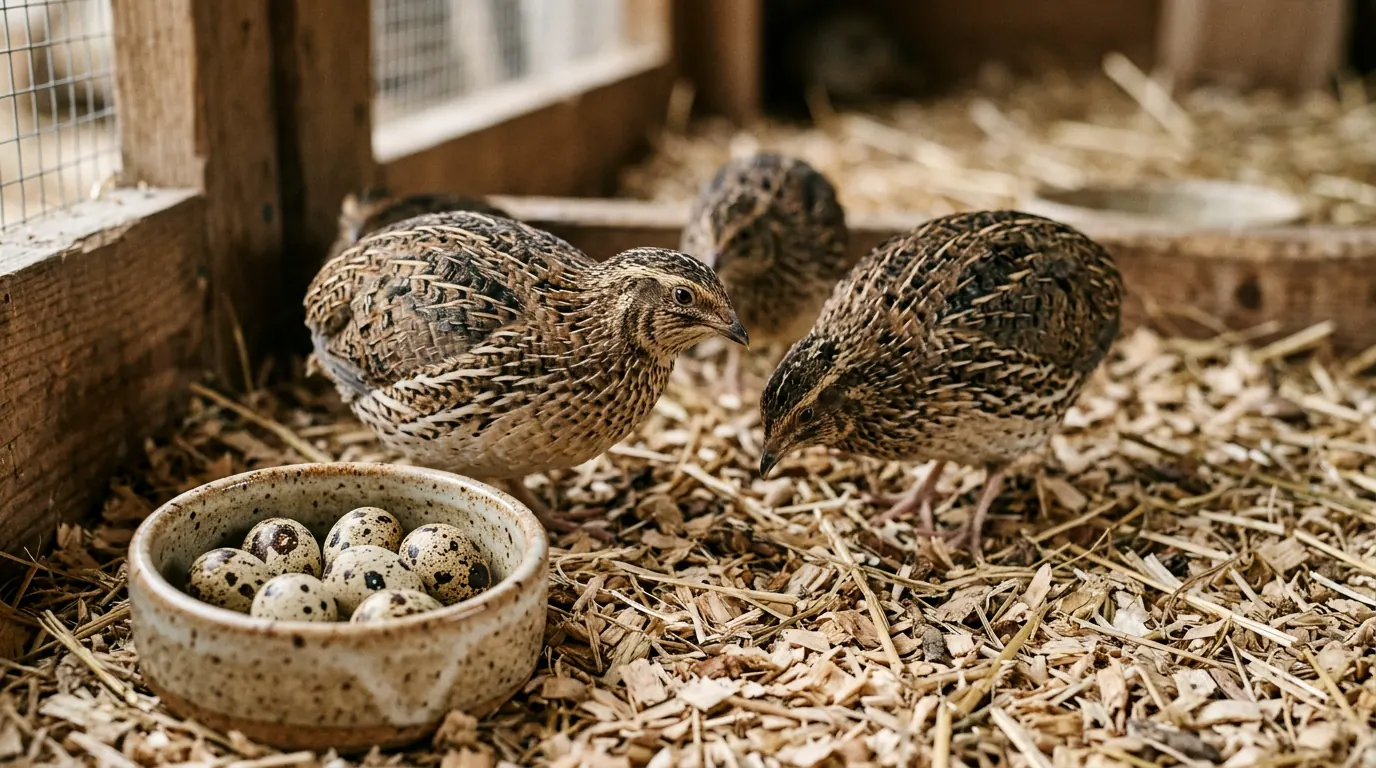
You can keep chickens, guinea fowl and quail together, but it takes planning. These are different species with different behavior, feed needs and stress tolerance. Mixing only works when every bird has access to feed, water and safe shelter, and you can see what is going on in the flock day to day.
Why the question keeps coming back
Keepers combine species to use one coop and one run. Problems usually start in specific situations: guinea fowl fly over the fence, and quail get hurt in the crowd at the feeder. Below we cover each species on its own, then the rules for separating them and keeping records for a mixed flock.
The short answer
Chickens and guinea fowl can share space if the run is high and secure. Keep quail apart where you can, because they are small, nervous and easily injured or pushed away from feed. If you must combine species, give each its own feeders, drinkers and resting places. Have a vet assess the conditions on your farm.
Can guinea fowl live with chickens?
Guinea fowl temperament
Guinea fowl are nervous and loud. Their calling can unsettle chickens, and they react sharply to any movement nearby. Tension builds easily in a mixed flock, especially at feeding time and when you add new birds. A steady, calm daily routine reduces the problem.
Flying and escapes
Guinea fowl can fly up and clear a low fence. If the run is low and the chickens have no access to the ground, the guinea fowl will leave quickly. Before letting them out together, check the height of the netting and close off any spots they could fly out. We cover their needs separately: coop requirements for guinea fowl.
When mixing makes sense
Keeping chickens and guinea fowl together works best with a large, secure run and separate sleeping places. If the run is small, keep the species in separate pens, even if they sit next to each other behind netting.
Quail in a chicken flock
Size and stress
Quail are small and nervous. Chickens, especially while they sort out the pecking order, can peck them and push them away from the feeder. Stress shows up as lower feed intake, weakness and greater susceptibility to disease. Watch whether all quail eat and drink equally.
Feeding differences
Quail and guinea fowl have different nutritional needs than chickens, and chicken feed is not always right for the other species. Before you combine feeding in one place, check the recommendations for each species: feeding quail and feeding guinea fowl.
Disease and parasites when species share space
Salmonella and other infections
Different poultry species can carry the same bacteria, and a shared run makes spread easier. We describe the risk for each species separately: Salmonella in quail. Testing and any treatment are decided by a vet who knows the disease situation in your area.
Parasites
Worms and bird lice can affect many poultry species and pass easily between birds on shared ground. Watch the condition of the whole flock and do not assume one species is safe. Typical signs and prevention are covered in our material on worms in quail. The vet always chooses the drug and the dose.
Avian influenza and people
Any poultry species can be infected with avian influenza virus, so mixing birds does not change biosecurity rules. We explain the risk to people and hygiene rules here: avian influenza and humans. Report dead birds to a vet; do not leave them in the flock.
How to separate species on the farm
Separate pens and runs
The simplest solution is to divide the coop and run so each species has its own feeders, drinkers and resting place. Quail need the most sheltered zones, because in an open run they are exposed to attacks and stress. Guinea fowl need high fences or netting that stops them flying out.
Entry and cleaning
Each species should have its own boots, tools and bedding, and moving between zones calls for disinfection. Prepare the plan in advance, writing down entry and hygiene rules for each group. The biosecurity plan generator helps organize these steps.
Counting birds
In a mixed flock it is easy to lose a quail hiding in the bushes or miss a guinea fowl outside the run. Keep separate records for each species, noting numbers, losses and deaths. You can do this in the coop records module, where each group has its own entry.
What the rules and inspectors say
Rules on keeping poultry
The rules on keeping poultry and welfare are set out in legal acts available in ISAP (Poland's Internet System of Legal Acts), and we describe the legal state as of 22.11.2026. Before you change your stocking, check the current wording of the rules. Supervision is carried out by the Chief Veterinary Inspectorate (Główny Inspektorat Weterynarii) and county veterinary officers.
Records in practice
In practice, inspectors check whether the keeper knows how many birds of each species are in the flock, what the housing conditions are and who is responsible for treatment. Missing records make an inspection harder, even when conditions are good. Keep numbers, treatments and vet visits in one place.
When to combine and when to keep apart
Chickens and guinea fowl
You can combine chickens and guinea fowl with a large, secure run and separate sleeping places. Without these, separate the species: guinea fowl will try to escape, and chickens will push them away from feed.
Quail
Quail are best kept apart. If you still keep them with chickens, give them sheltered zones, separate feeders and regular condition checks. Any departure from this rule needs a vet's advice.
Frequently asked questions
Can guinea fowl live with chickens?add
Yes, but only with a large, secure run and separate sleeping places. Guinea fowl are nervous and loud, so in a small pen they can get stressed and look for a way out.
Can quail live with chickens?add
Best avoided. Quail are small and easily lose access to feed around bigger chickens. If you combine them, give the quail sheltered zones and separate feeders.
How do I stop guinea fowl from flying over the fence?add
A high, secure fence and closing off any spots they can fly out of work best. Also limit startling the birds and keep a steady daily routine, because calm guinea fowl try to escape less often.
Can chickens and quail share one coop?add
They can, if each species has its own feeders, drinkers and resting place. Without that, chickens may push quail aside and they eat less, which lowers their condition.
Can a mixed flock spread disease?add
Yes. Different poultry species can carry the same infections and parasites, and a shared run makes spread easier. Biosecurity rules are the same for every species. A vet always decides on treatment.
How do I keep records for a mixed flock?add
Keep a separate entry for each species, with bird numbers, losses, treatments and vet visits. Such records make inspections easier and help you spot a problem in one group sooner.
Sources & resources
- linkChief Veterinary Inspectorate (Główny Inspektorat Weterynarii) — gov.pl/web/wetgiw
- linkMinistry of Agriculture and Rural Development — gov.pl/web/rolnictwo
- linkNational Research Institute of Animal Production (Instytut Zootechniki PIB) — izoo.krakow.pl
- linkEFSA — efsa.europa.eu
- linkInternet System of Legal Acts (ISAP) — isap.sejm.gov.pl
Prepared by: DlaFerm Team based on data from the sources listed · Publisher: INSTA-TECH sp. z o.o.
Do you keep several poultry species on one farm?
DlaFerm.pl's farm management software and coop records let you track each group of birds separately in one place. Create a free farm account and see how it works in practice.
Phone
+48 796 258 151