Can chickens eat bread? What not to feed chickens (list)
Chickens can eat bread only now and then, in small amounts. Bread is mostly starch with almost no protein or minerals, and wet or moldy bread easily sits in the crop. Complete feed is the base of the diet, and below we list what not to feed chickens.
verifiedFrom the team that has organised work on poultry farms for years.
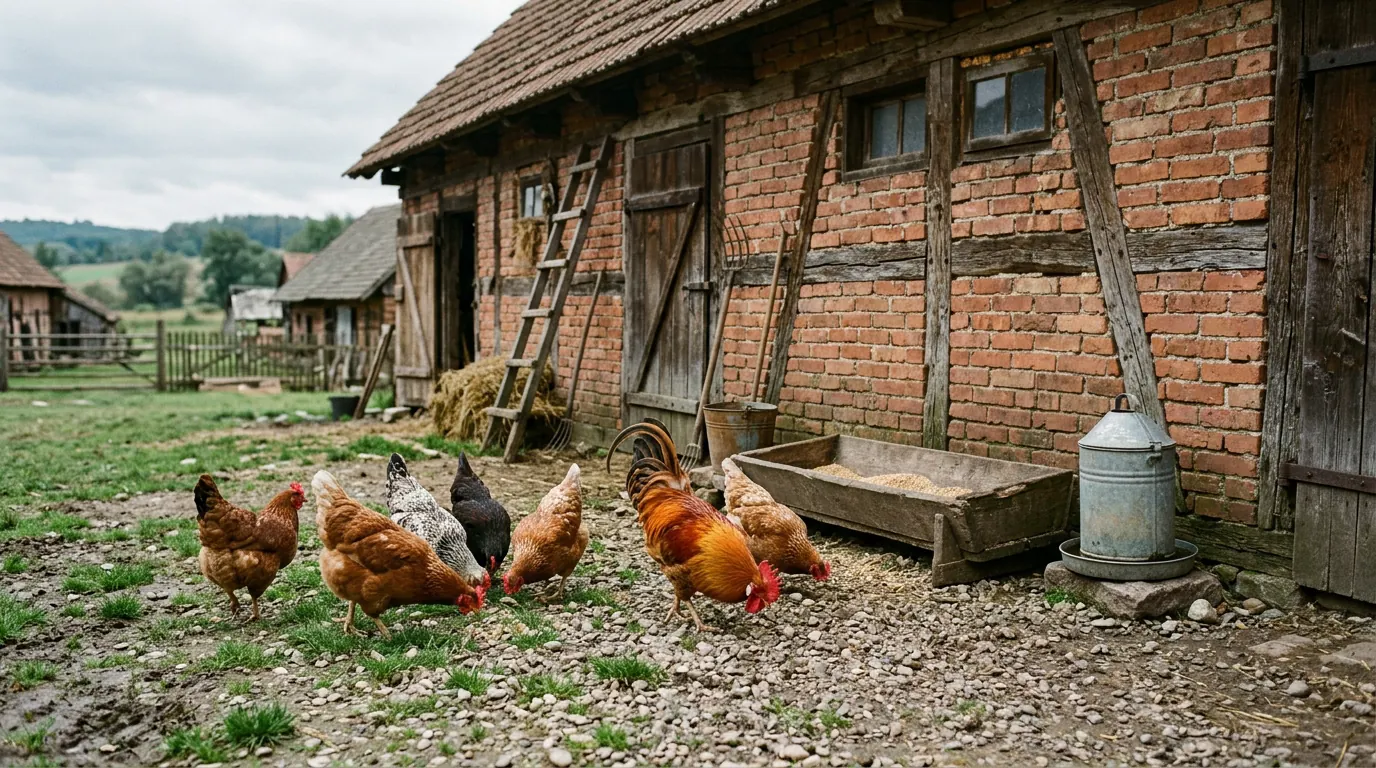
Chickens can eat bread, but only now and then and in small amounts, as a treat and not as the base of the diet. Bread is rich in carbohydrates and often contains salt, yet it provides almost none of the protein, vitamins or minerals birds need. A complete feed balanced for the birds' age and purpose covers the flock's needs, and table scraps stay an extra. Below we explain why bread is a problem and what not to feed chickens at all.
Bread in a chicken's diet
In practice, people most often toss bread to chickens on the run as a reward, in place of part of the feed ration. A hen that has filled up on bread eats less complete feed, and that upsets the nutrient balance. For young, growing birds this swap is especially harmful, because growth rate depends on the feed supplying enough protein and minerals. If your chickens get bread, write it in a feeding log so you know how many scraps reach the flock.
Why bread is not a good feed
Carbohydrates without nutrients
Bread and baked goods are mostly starch and water. Chickens need protein, amino acids, calcium, phosphorus and vitamins, and bread has few of them. Starchy foods fill the crop and make the bird feel full before it eats the feed that actually nourishes it. With more bread, the flock eats less complete feed, and you see the effect in growth rate and laying. The difference is clearest in productive breeds, which have high nutritional needs.
Dough in the crop
Wet, soaked bread packs into a lump in the crop and stays there a long time. Moldy or soured bread can ferment, which shows up as a sluggish bird with a poorer appetite. If a hen stands with a drooping wing, has a swollen crop or does not eat, do not diagnose it yourself. Contact a vet and note the symptoms in your treatment and withdrawal period records so you can show them to the vet.
What not to feed chickens
Harmful foods
Do not give chickens raw potatoes or their green parts, because they contain substances toxic to poultry. Raw beans, chocolate, coffee and alcohol are harmful to birds, and avocado skins are not suitable as feed. Avoid foods high in salt, sugar and fat, such as chips, salty sticks, cured meats or leftovers from frying. They give nothing useful, and too much of them burdens the bird's body.
Spoiled and moldy food
Mold on bread, and rotten fruit and vegetables, are a common source of health problems in backyard flocks. Mycotoxins that form on moldy bread do not disappear when you cut off the spoiled crust. The rule is simple: if it is not fit for you, it is not fit for chickens. Judge freshness the same way you would for human food, and take spoiled scraps out of the run.
What you can give as an extra
Chickens eat fresh leafy greens, carrots, apples without seeds and boiled potatoes without salt. Give extras in small amounts, alongside complete feed and never instead of it. Check greens and fruit before serving to make sure they are not rotten or moldy.
How to replace bread with complete feed
Balanced feed
A complete feed chosen for the birds' age and purpose gives chickens the protein, amino acids, calcium and phosphorus they need to grow and lay. The 2022 Ross 308 nutrition specifications, written for broilers, show that a diet is designed for a specific production goal and built on digestible amino acids, not on random additions. The same balance principle applies to hens. Extras from outside the recipe can upset that balance, even when they are cheap and at hand. We cover feed for laying hens in How to raise chickens for eggs.
How many extras are too many
There is no universal number, because it all depends on the birds' age and how much complete feed they eat. A practical rule: treat extras as extras, not a replacement for feed and not something you give regularly in large amounts. If the flock stops eating feed, watch what it does eat and write it in the log. Talking to a vet helps you decide whether the diet needs to change.
Table scraps and biosecurity
Wild birds and rodents
Bread scraps scattered on the run attract pigeons, sparrows and rats. Wild birds can carry diseases, including avian influenza, so feeding the flock only in an enclosed place is part of biosecurity. Poland's Veterinary Inspection (Główny Inspektorat Weterynarii) also notes that pigeons can carry Newcastle disease and may threaten chicken flocks. You can build a farm protection plan in the biosecurity plan generator, which suggests the next steps.
Recording feeding
Write down what and how much you give your chickens, especially when you introduce new foods. When the flock gets sick or laying drops, it is easier to find the cause if you know what it ate in recent weeks. In the poultry farm management software you keep flock and feeding records in one place. We cover drops in laying and their causes in Why chickens stop laying eggs.
Symptoms that need action
Warning signs
A hen that stops eating, stands with ruffled feathers, has watery droppings or a bluish comb and face needs a quick check. A blue comb can signal many problems, not only a poor diet, as we explain in Blue comb in chickens. Do not give medicines on your own. A vet chooses the drug and dose, and any drug has a withdrawal period you must observe.
What to do after accidental eating
If a hen has eaten something harmful, separate her from the flock, remove leftover food from the run and call a vet. Say what she ate, when, and how many birds are in the group. The sooner the vet has this information, the easier it is to judge the risk to the rest of the flock.
Frequently asked questions
Can chickens eat bread every day?add
No, bread should not be a daily food. It is low in protein and minerals, and the starch fills the crop and cuts appetite for complete feed. If you do give bread, do it only now and then and in small amounts.
Can chickens eat stale bread?add
Dry, stale bread without mold can be a small extra. Do not give bread with mold, even after cutting off the spoiled part. Better not to give soaked bread at all, because it packs into a lump in the crop.
Can chickens eat rolls, pasta or oats?add
A dry roll and pasta cooked without salt are in the same category as bread: starchy foods that do not replace feed. Rolled oats in small amounts are not a problem, but they are still an extra. Do not give salty or fried foods.
What should you never feed chickens?add
Do not give raw potatoes, raw beans, chocolate, coffee, alcohol, moldy scraps or foods high in salt. The list is not complete, so if you are unsure, do not give the food and ask a vet.
Do chickens stop laying after eating bread?add
Bread alone is rarely the only cause of a drop in laying, but swapping feed for snacks can lower it. Watch the flock, log the menu and also check light, stress and bird health. If laying drops clearly, talk to a vet.
What kitchen foods can chickens eat?add
Fresh leafy greens, carrots, apples without seeds and boiled potatoes without salt are typical extras. Always give them alongside complete feed, in small amounts. Check before serving that the food is fresh and not spoiled.
Sources & resources
- linkChief Veterinary Inspectorate (Główny Inspektorat Weterynarii) — gov.pl/web/wetgiw
- linkNational Research Institute of Animal Production (Instytut Zootechniki PIB) — izoo.krakow.pl
- linkRoss 308 / 308 FF Broiler Nutrition Specifications 2022
- linkEFSA — efsa.europa.eu
Prepared by: DlaFerm Team based on data from the sources listed · Publisher: INSTA-TECH sp. z o.o.
Want to keep flock feeding records in one place?
DlaFerm.pl poultry farm management software lets you record feeding, flock status and laying in one register. Create a free farm account and see how it works in practice.
Phone
+48 796 258 151