Rare pig breeds: Saddleback, Large Black, Gloucester Old Spot
The Saddleback, Large Black and Gloucester Old Spot are British pig breeds that grow more slowly and lay down more fat than commercial breeds. They do well on pasture and in a small herd. We explain how to recognize them, what they suit and what you must sort out before buying.
verifiedFrom the team that has organised work on poultry farms for years.
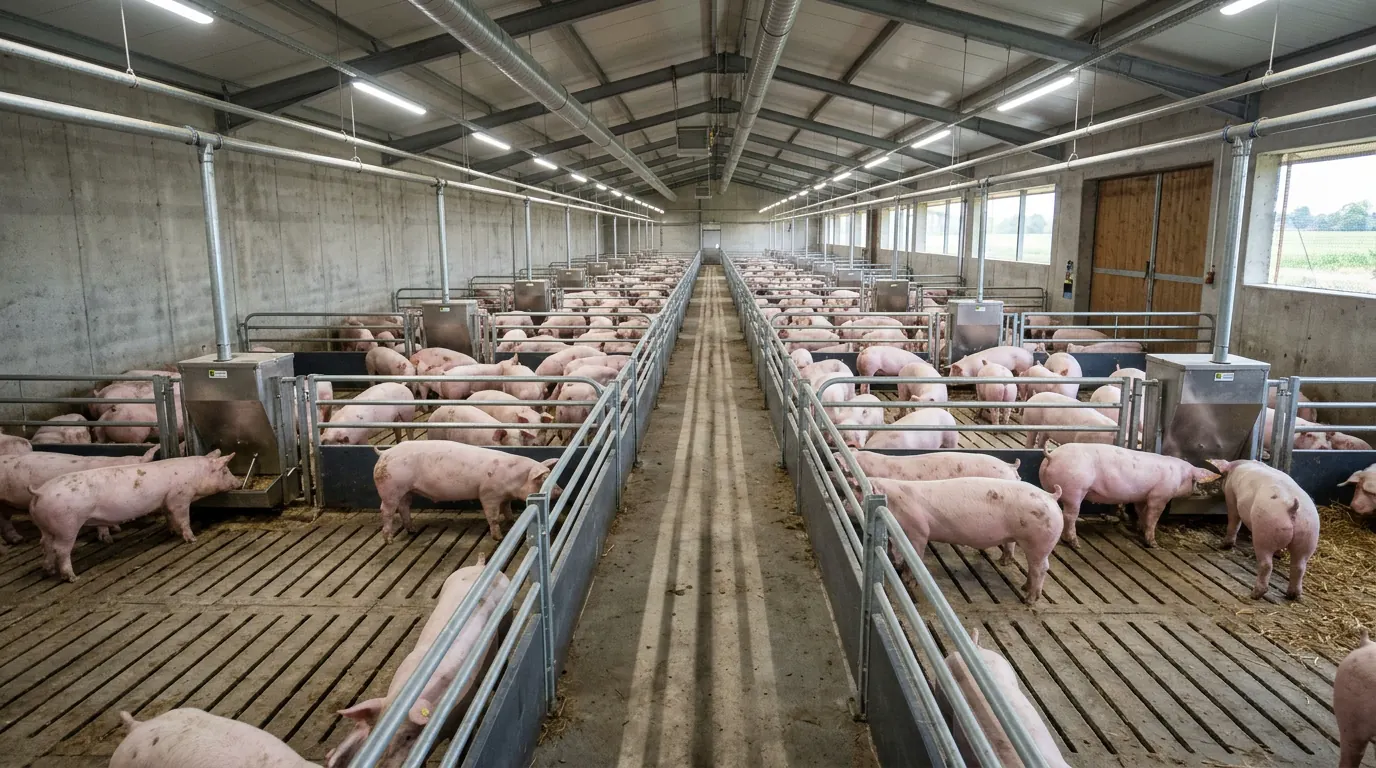
Rare pig breeds are the ones that commercial pig houses pushed aside in favor of lean meat lines such as Pietrain and Hampshire. The Saddleback, Large Black and Gloucester Old Spot come from Great Britain. They grow more slowly, fatten faster and cope with living outdoors. In return they give meat with clear fat marbling, valued by craft processors and by customers who buy directly from the farmer.
Who these breeds suit
These breeds are not for intensive fattening aimed at feed conversion. Choose them if you have pasture, an orchard or a run, keep a few to a dozen or so animals, and sell the meat or processed products yourself. Against large slaughterhouses and contracts for lean finishing pigs, they cannot compete with commercial breeds. For a general overview, see our article on pig breeds in Poland.
Where to look for Polish equivalents
Before you buy animals from abroad, check the native Polish breeds covered by genetic resources conservation, such as the Złotnicka pig and the Puławska pig. The National Research Institute of Animal Production (Instytut Zootechniki PIB) describes them in its album of farm animals under conservation programs, and the "Rasy rodzime" (native breeds) label helps you sell the meat. We cover breeds from other countries in our text on European native pig breeds.
Large Black: the black pasture pig
Looks and temperament
The Large Black has uniformly black skin and coat and large ears that hang over the eyes. Black skin tolerates sun better than pale skin, so the breed suits open pasture. The animals are described as docile, which makes work with a small herd easier. Drooping ears limit the field of view, so plan fences and run paths so the pigs do not struggle to find their way.
Performance
The Large Black makes good use of grass, green forage and bulky feeds, and the meat has clear fat marbling. The breed does not match the growth rate of commercial pigs, so fattening takes longer and feed use per kilogram of gain is higher. Exact figures depend on the line and the feeding, so use your own weighing results for calculations. We write about using grass in feeding in our text on pasture and green forage for pigs.
Saddleback: black with a white belt
Looks
The Saddleback is black with a wide white band running over the shoulders and front legs. The ears fall forward. The band is its trademark and helps you tell it from the Large Black. When you buy, check the pedigree and origin documents, because recognizing the breed by eye is not enough to document that it is pure.
What it is good for
The Saddleback is considered a hardy breed and a good mother, so free-range keepers often choose it. It grows well on pasture and in organic keeping, and the meat has relatively more fat than that of commercial breeds. Feeding requirements on such farms are described in the IZ PIB guide to organic pig keeping, together with example feed mixes.
Gloucester Old Spot: the orchard pig
Looks
The Gloucester Old Spot has pale skin with a few large black spots and drooping ears. In Great Britain the breed is linked to orchards, where pigs ate the windfall fruit. Pale skin sunburns more easily, so provide shade and covered lying areas. Pick a spot with trees or a shelter that protects against heat.
Meat and sales
Old Spot meat has clear fat marbling and reaches the market as a niche product. The price depends on how you sell, travel costs, losses at slaughter and batch size. Before you set a price, work out your own feed and labor costs, and compare offers with your neighbors. Buyers may also be interested in Mangalica and Iberian pigs, so see how other keepers present them.
Pasture, feeding and health
Feeding
Fat-type breeds fatten easily, so set the ration by body weight and condition, not by record fattening results. Grass and green forage supplement the grain and protein mix but do not replace it entirely. The recipes in the IZ PIB guide are based on wheat, maize, oilseed cakes and peas, with a mineral-vitamin mix added. Discuss the choice of ingredients with a feed adviser.
Parasites
On ground where pigs stay all the time, the number of parasite eggs builds up. According to AHDB Pork, a burden of the large roundworm (Ascaris suum) can cut daily gain by up to 10% and feed utilization by 13%. Agree a worming plan with your vet. The vet chooses the medicine and dose, and the withdrawal period before slaughter follows the product leaflet. You can read about other parasites in our text on tapeworms in animals.
ASF and biosecurity in a small herd
Why small herds are at risk
According to an EFSA analysis from 2026, 91% of African swine fever (ASF) outbreaks in domestic pigs in the European Union occurred on farms with fewer than 100 animals. In 83% of cases the outbreak was detected thanks to a report of clinical suspicion. So report every death and any symptoms to your vet. An outdoor run calls for special care around wild boar.
What the rules say
ASF control measures are set by the Regulation of the Minister of Agriculture and Rural Development of 12.03.2026 (Dz.U. 2026 poz. 344, Poland's Journal of Laws), as of 23.11.2026. Requirements depend on the zone where your farm lies, so check the current list of areas with your county veterinary officer (powiatowy lekarz weterynarii). In practice, inspectorates also expect a fence and a disinfection mat at the entrance. You can prepare your protection plan in the biosecurity plan generator. We describe the rules for small herds in our text on keeping pigs for your own use.
Frequently asked questions
What is the difference between a Large Black and a Saddleback pig?add
The Large Black is entirely black, while the Saddleback has a white band over the shoulders and front legs. Both have drooping ears and cope well with pasture keeping. A pedigree confirms the breed better than looks do.
Is the Gloucester Old Spot a good breed for a beginner?add
The breed is docile and grows well on pasture, but its pale skin needs shade. Before you buy, sort out fencing, water and a place to lie down. Ask the breeder about their experience in conditions similar to yours.
Where can I buy rare pig breeds?add
Start with associations and breeders in genetic resources conservation programs, and with the Instytut Zootechniki PIB. If you buy from abroad, veterinary documents and a pedigree are required. Check the details with your veterinary inspectorate.
How much does a weaner of a rare breed cost?add
The price depends on the breed, origin, age and paperwork, and the niche market has no single price list. Ask several breeders and compare what is included in the price: pedigree, vaccinations, transport.
Can I keep these pigs for my own use?add
Yes, but you must meet the requirements for registration, identification and biosecurity, depending on your ASF zone. We describe the rules in our article on keeping pigs for your own use. Confirm the current requirements with your county veterinary officer.
Do rare breeds cope with pasture better than commercial breeds?add
These British breeds have been kept outdoors for generations, so they usually cope with it better than lean meat lines. That does not remove the need for worming and for care of welfare under Directive 2008/120/EC.
Sources & resources
- linkIZ PIB — Album of farm animals covered by genetic resources conservation programs in Poland
- linkKPODR / IZ PIB — Advantages of keeping native pig breeds and the RASY RODZIME label (presentation, M. Szyndler-Nędza, P. Radomski)
- linkIZ PIB — Guide to organic pig keeping (ed. E.R. Grela)
- linkAHDB Pork (UK) — Regular worming in pigs (Health 2 — Action for Productivity, factsheet 1)
- linkEFSA — Epidemiological analysis of African swine fever in the European Union during 2025
- linkMinistry of Agriculture / Journal of Laws — Regulation of 12.03.2026 on measures to control African swine fever (Dz.U. 2026 poz. 344)
Prepared by: DlaFerm Team based on data from the sources listed · Publisher: INSTA-TECH sp. z o.o.
Keeping a small herd of pigs? See the app for pig farmers
The DlaFerm app for pig farmers helps you keep herd records, and the biosecurity plan generator organizes your farm's protective measures. Create a free farm account or get in touch.
Phone
+48 796 258 151