Tapeworms in Chickens, Pigs and Cattle: Signs and Deworming
Tapeworms look different in each species. Chickens carry adult worms in the gut, while pigs and cattle most often carry larvae in the muscles, called cysticerci. We describe what you will see in the flock or herd, how to confirm it and how to reduce infection.
verifiedFrom the team that has organised work on poultry farms for years.
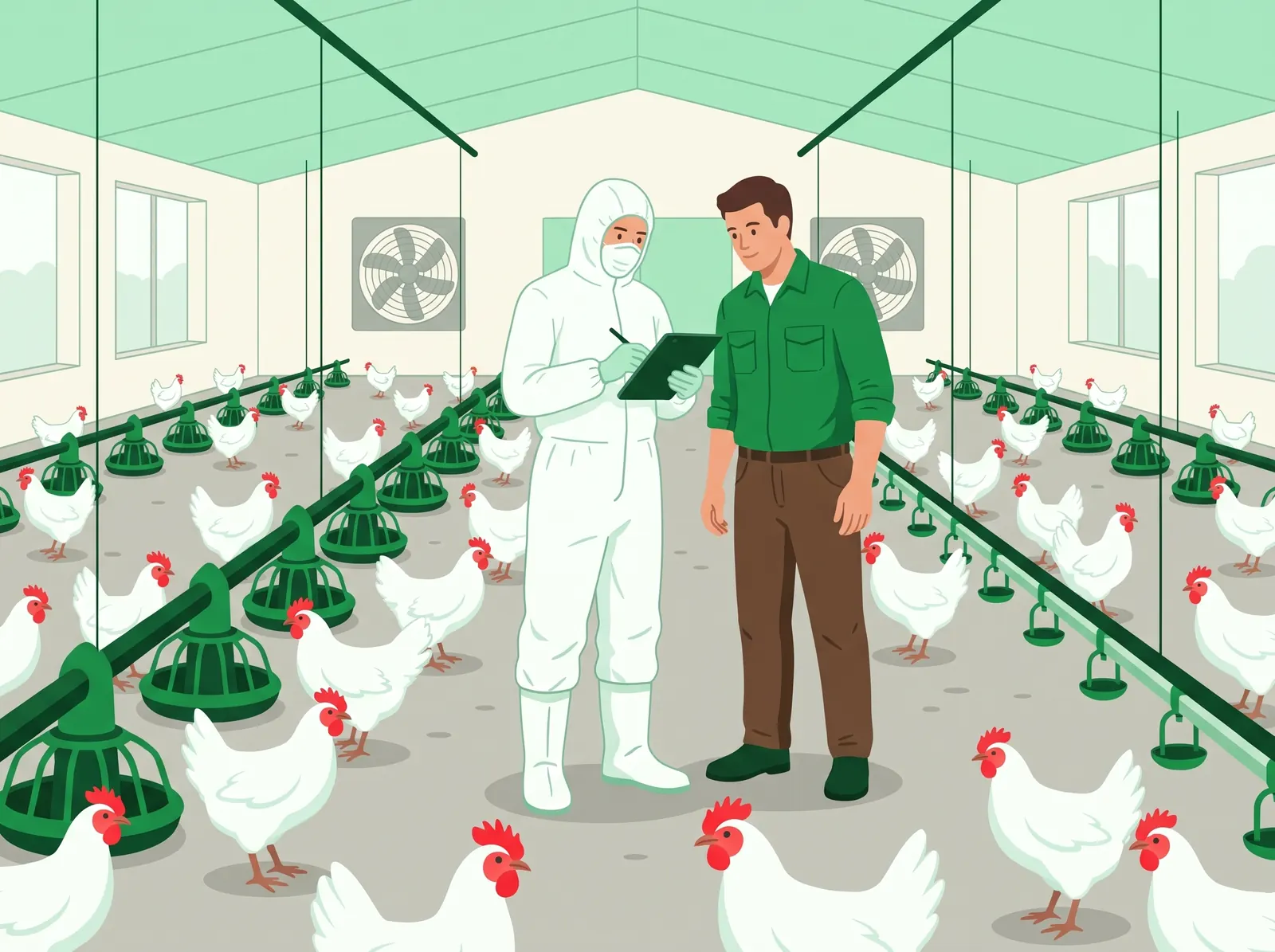
Tapeworms occur in chickens, pigs and cattle, but in different forms. In chickens, adult tapeworms live in the small intestine. In pigs and cattle you find larvae, called cysticerci, in the muscles and organs, while the adult tapeworm lives in the human gut. Young cattle (calves) can also carry the intestinal tapeworm of the genus Moniezia. Deworming therefore depends on the species, and your vet chooses the product and the timing.
How to recognize tapeworms
According to the disease factsheet from CFSPH at Iowa State University, taeniasis is diagnosed by finding tapeworm segments (proglottids) or eggs in feces or in samples taken around the anus. If you suspect worms, collect fresh droppings and send them for a fecal examination. Segments look like small, flat, whitish pieces in the droppings or on the litter. Looking at the animals is not enough, because some infected animals show no visible signs.
Tapeworms in chickens
How they spread and what the signs are
Chickens get infected by eating an intermediate host that carries the tapeworm larva. These are most often beetles, ants, snails and flies, so free-range birds are at higher risk than birds in a closed house. With a heavy burden you will see weight loss despite a good appetite, dull feathers, weakness, diarrhea and a drop in laying. In broilers, weight gain and flock uniformity get worse. A few tapeworms often cause no signs, so for any unexplained drop in performance, order a fecal test.
Deworming chickens
Your vet decides the product and the length of the break after dosing. With laying hens, check the egg withdrawal period carefully, because it decides when you can sell eggs again. We describe the procedure in our guide to deworming chickens, and cover products that need no egg withdrawal in deworming chickens without a withdrawal period. After treatment, remove litter and droppings, because birds reinfect themselves from them.
Tapeworms in pigs
Pig cysticercosis
In pigs, cysticercosis matters more than the adult worm. The pig is the intermediate host of the pork tapeworm (Taenia solium): it eats eggs passed in the feces of an infected person, and the larvae settle in the muscles and other organs. There are usually no signs, and cysticerci are found only when the meat is inspected after slaughter. Pigs with cysticerci are not fit for consumption, which is a loss for the farmer. The source of infection is access to human waste, so provide a staff toilet that pigs cannot reach.
Worms in pigs and the deworming program
Pig deworming programs mainly target roundworms and other nematodes, not tapeworms. The UK's AHDB Pork recommends that for finishing pigs you worm all weaners and growers every 5 weeks, and worm sows and boars of the whole herd at the same time at least 2 times a year, ideally 3 times. Gilts and boars brought into the herd are treated on arrival and in isolation, and again when they enter the main herd. According to AHDB, the program improves growth and feed use and reduces the number of livers condemned. We cover timing and products in deworming pigs, and other conditions are in our table of pig diseases.
Tapeworms in cattle
Bovine cysticercosis
Cattle are the intermediate host of the beef tapeworm (Taenia saginata). A calf or an adult animal eats eggs from feed, water or pasture contaminated with human feces, and the larvae move to the muscles. There are usually no signs, and the vet finds cysticerci during post-slaughter inspection. You reduce the risk by protecting pastures and water from sewage and human waste, and by keeping the area around the barn and staff toilets clean.
Intestinal tapeworm in calves
In calves and young cattle, the Moniezia tapeworm can live in the intestine. With a heavy burden the animals grow poorly, have diarrhea and a rough coat, and segments are visible in the droppings. Adult cattle are usually more resistant. You diagnose it with a fecal test, and your vet decides on treatment. We describe the full picture of gut parasites in worm infections in cattle.
Tapeworms and human health
Humans are the final host of the tapeworms linked to pigs and cattle. People get infected by eating raw or undercooked meat with cysticerci. CFSPH points out that T. solium infection is especially dangerous for people, because its eggs can cause cysticercosis, meaning larvae developing in human tissue. Careful meat inspection at the slaughterhouse, slaughter in approved plants and thorough cooking break the cycle. A worker who notices tapeworm segments in stool should see a doctor, not wait for the symptoms to pass.
How to reduce worm infection on the farm
Hygiene and breaking the cycle
The organic pig farming guide from IZ PIB (Poland's National Research Institute of Animal Production) lists rules that break parasite life cycles: regular removal of manure from buildings and runs, paddock grazing with rotation between paddocks, fencing off water bodies in meadows, and destroying intermediate hosts. Manure from buildings where animals were dewormed is stored in high heaps to get a biothermal deworming effect. In poultry, the equivalent is controlling beetles, flies and snails in and around the house.
Herbs do not replace treatment
The same guide mentions plants with antiparasitic action, for example thyme, and also male fern. It warns, however, that male fern is toxic and can cause poisoning if eaten in excess. Do not give animals your own herbal decoctions instead of the medicine your vet prescribed. You will find rules for keeping germs off the farm in our biosecurity plan generator.
Record treatments and withdrawal periods
Record every deworming: date, animal group, product, batch number, vet's name and end of the withdrawal period. For laying hens there is an egg withdrawal period, and for pigs and cattle a meat withdrawal period. Without a record, it is easy to send animals to slaughter before it ends. In the treatment and withdrawal module in DlaFerm.pl you enter the treatment and see when the period for keeping products off the market ends.
Frequently asked questions
What do tapeworms look like in chickens?add
They are flat, whitish worms made of segments, living in the small intestine. In the droppings you see detached segments that look like grains of rice. A vet's fecal test gives a sure diagnosis.
Are pig tapeworms dangerous to humans?add
Yes. People get infected by eating raw or undercooked meat with cysticerci. According to CFSPH, T. solium infection is especially dangerous because it can lead to cysticercosis in people. Meat with cysticerci is not fit for consumption.
Do tapeworms in cattle cause signs?add
Bovine cysticercosis usually shows no signs. Cysticerci are found only after slaughter. In calves, the intestinal tapeworm can cause poorer weight gain and diarrhea.
How often should you deworm pigs?add
AHDB Pork recommends worming finishing pigs every 5 weeks, and sows and boars of the whole herd at least 2 times a year, ideally 3. The program mainly covers intestinal and liver worms. Agree the plan with your vet.
Can you sell eggs after deworming chickens?add
It depends on the product. Each medicine has its own egg withdrawal period, given on the leaflet or by your vet. You must not put eggs on the market until it ends.
Can you deworm with home remedies?add
Herbs such as thyme can support prevention, but they do not replace medicine. Some plants, for example male fern, are toxic. Your vet chooses the medicine and the dose.
Sources & resources
- linkCFSPH, Iowa State University — Taeniasis, Cysticercosis and Coenurosis (disease factsheet)
- linkAHDB Pork (UK) — Regular worming in pigs (Health 2 — Action for Productivity, factsheet 1)
- linkIZ PIB — Organic pig farming guide (ed. E.R. Grela)
- linkChief Veterinary Inspectorate (Główny Inspektorat Weterynarii) — gov.pl/web/wetgiw
Prepared by: DlaFerm Team based on data from the sources listed · Publisher: INSTA-TECH sp. z o.o.
Record deworming and track withdrawal periods in one place
The Treatment and Withdrawal module in DlaFerm.pl records every treatment, product and withdrawal end date for an animal group. Create a free farm account or get in touch with us.
Phone
+48 796 258 151