Deworming chickens: signs of internal worms, treatment and prevention
Deworming chickens means giving a wormer on a regular schedule to clear parasites living in the bird's gut. It is a different problem from mites that feed on feathers and skin. We explain where chicken worms come from, how to spot them and what is used to treat them.
verifiedFrom the team that has organised work on poultry farms for years.
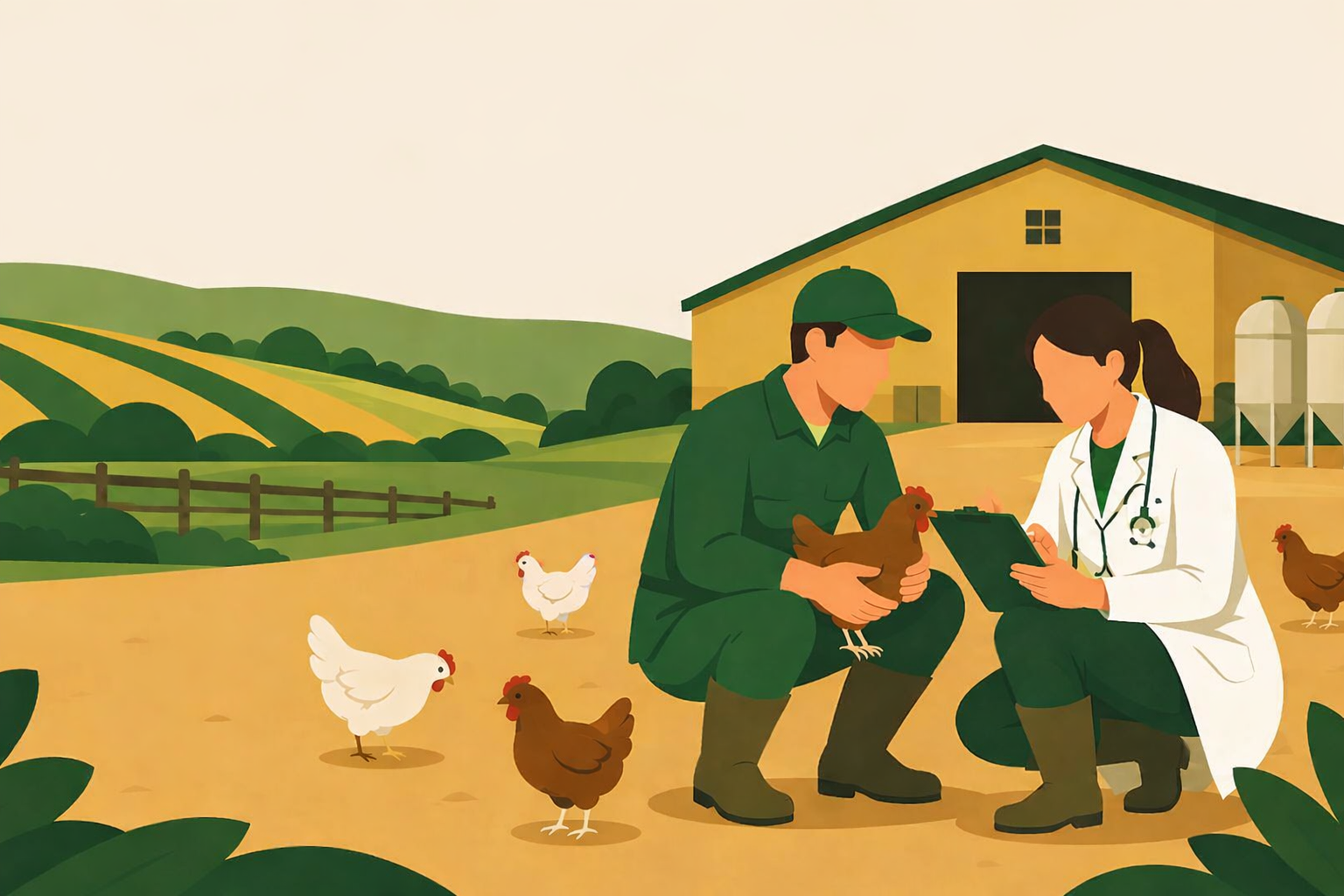
Internal worms (intestinal parasites) live in a chicken's digestive tract. The most common are roundworms (Ascaridia), tapeworms and capillary worms (Capillaria). They feed at the bird's expense: they take part of the digested feed and damage the gut lining. With a few worms a bird usually shows no signs. With a heavy burden, the competition for nutrients shows in condition: body weight drops, egg laying gets worse, and feathers and the general look of the flock decline. That is why deworming, giving an antiparasitic drug (an anthelmintic), is a standard part of flock health care.
Internal worms are not the same as "chicken mites"
Two very different problems often get mixed up in everyday talk. Internal worms, the topic here, live in the gut and are removed with an oral wormer. What keepers often call "chicken worms" is usually the poultry red mite: a tiny mite that feeds on feathers and skin from the outside and hides in cracks in the coop. You fight it differently, by cleaning the house and using products for the birds and the building, not an oral drug. If that is your problem, read our guide on red mite in laying hens.
Where chicken worms come from
Hens usually pick up worms by pecking at soil, litter or grass contaminated with parasite eggs passed by other birds. The eggs of some species survive for months in soil and damp litter. Some species, such as certain tapeworms, also need an intermediate host. The hen is infected by eating an earthworm, snail or insect that carries the parasite larva. This is why flocks on a free-range run with open access to soil are statistically more exposed than birds kept only in clean, closed houses. That does not mean you should avoid range. It means you should monitor the flock more often and keep to a regular deworming routine.
Signs of worms in chickens
What to look for
Typical warning signs are weight loss despite a normal or even increased appetite, fewer eggs, dull and ruffled feathers, and general weak condition in the flock. In a heavier infestation the comb and wattles may turn pale. This points to anemia caused by parasites that feed on blood or damage the gut lining. In extreme, neglected cases the worms themselves can be seen in droppings with the naked eye.
Signs alone are not a diagnosis
The same signs, such as poor condition, lower laying and weakness, can have many other causes: poor feeding, other diseases or stress. Worms in droppings are a sure signal, but with a lighter infestation birds can look almost normal and still carry parasites. So watching the flock is a starting point, not a final diagnosis. If you are in doubt, ask a vet.
Treatment and prevention
What you use to deworm chickens
Internal worms in poultry are treated with antiparasitic products (anthelmintics). Most are based on fenbendazole, a substance widely used in backyard poultry. Products containing it are sold under various trade names depending on your country. The choice of product and how to give it, including the dose and the egg withdrawal period, must always come from the manufacturer's label or your vet. These details differ between products and cannot sensibly be generalized in one article. For more on this topic, see deworming chickens without a withdrawal period and worm infections in laying hens.
Prevent, don't just treat
You can lower the risk of a heavy infestation by rotating the run so the soil does not build up parasite eggs over the years, by not overcrowding the house (see stocking density) and by keeping litter dry and changing it regularly. If you want a more precise approach, a vet clinic can run a fecal test for parasite eggs (flotation or a fecal egg count). It is more accurate than deworming by guesswork. For most small backyard flocks, regular preventive deworming is enough. Good records help, and a clean water supply from an automatic drinker also cuts contamination.
Frequently asked questions
What can I give chickens to deworm them?add
Use an antiparasitic product sold for poultry, most often based on fenbendazole. Check the exact dose and method on the label of the specific product or agree it with your vet. They differ between products and depend on the age and weight of the birds.
How do I know if my chickens have worms?add
The most common signs are weight loss despite a good appetite, fewer eggs, dull feathers and weak condition. With a heavier infestation you may see a pale comb (anemia) or worms in droppings. The signs can be vague, so if you are unsure, talk to a vet.
How can I deworm chickens naturally?add
With a confirmed worm infestation there is no proven home remedy that replaces a wormer. Diatomaceous earth and garlic are often mentioned online, but there is no solid evidence they treat an active infestation, though people mention them as part of general prevention. Real prevention means a clean run, rotating grazing areas and regular deworming with a product made for the job.
How often should you deworm chickens?add
Preventive deworming a few times a year is widely recommended, more often for flocks with access to a run than for birds kept indoors only. The exact schedule depends on housing, flock size and local risk. It is best to agree a plan with your vet instead of following one universal calendar.
Sources & resources
- linkESCCAP — guidelines on internal parasites of animals
- linkWOAH (World Organisation for Animal Health) — parasitic diseases of poultry
- linkMerck Veterinary Manual — Internal Parasites of Poultry
Prepared by: DlaFerm Team based on data from the sources listed · Publisher: INSTA-TECH sp. z o.o.
Want deworming and treatment dates under control?
The DlaFerm treatment and withdrawal module keeps a record of treatments and preventive jobs and reminds you of due dates. Create a free farm account or get in touch and we will show you how it works.
Phone
+48 796 258 151