Pig diseases: symptoms and prevention table
The most common pig diseases show up first as changes in behavior, breathing and appetite. This guide groups the symptoms and links them to prevention: ventilation, biosecurity and record keeping. Talk to your vet about every suspicion.
verifiedFrom the team that has organised work on poultry farms for years.
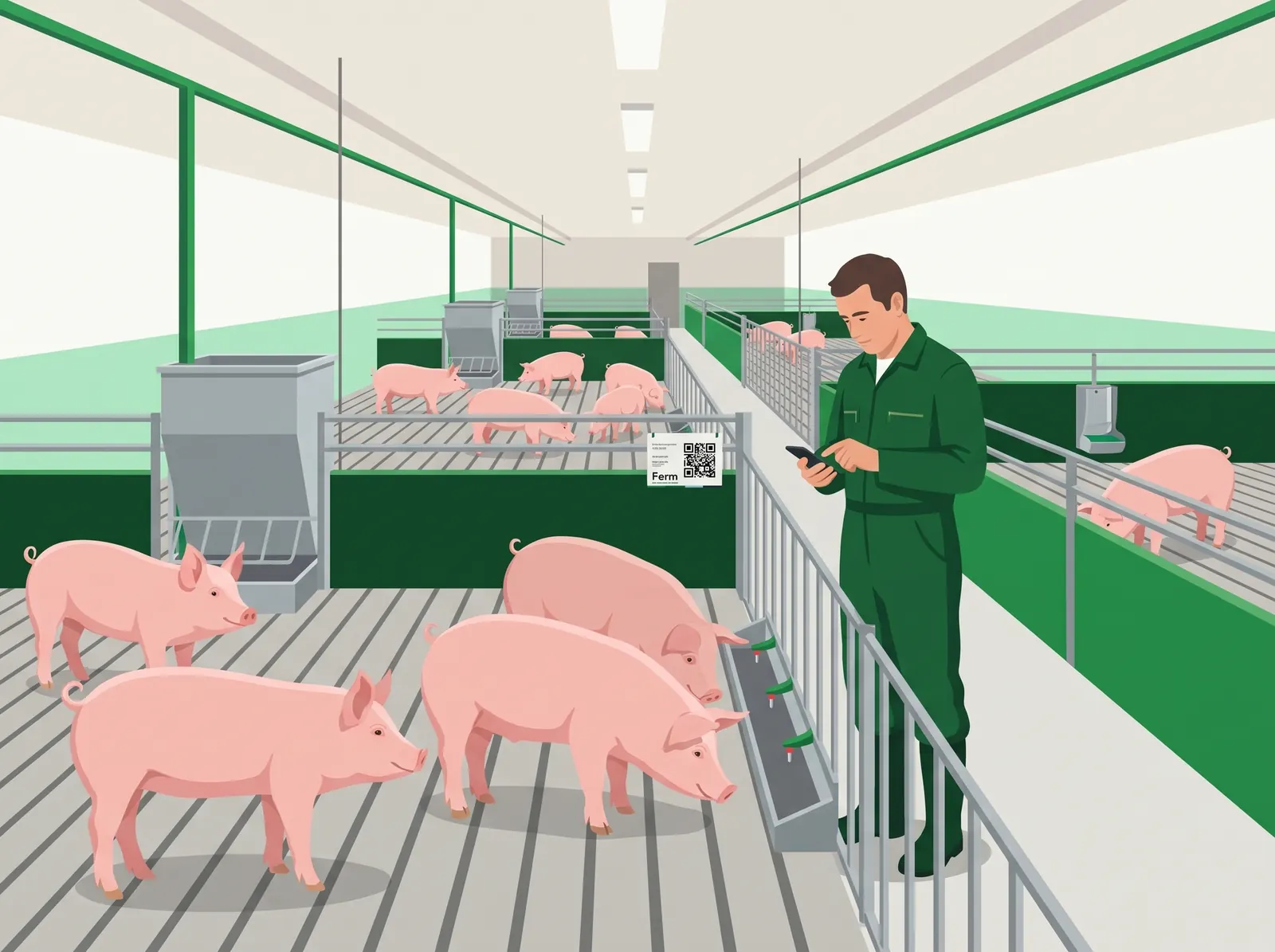
You usually recognize pig diseases by a few signals: coughing, nasal discharge, lower appetite, apathy, changes in droppings and stunted growth. Most of these have several causes, because they depend not only on the pathogen but also on conditions in the pig house. So we link symptoms to prevention: ventilation, biosecurity and record keeping. Talk to your vet about any suspicious situation, because the vet makes the diagnosis and chooses the treatment.
How to read the symptoms table
We group symptoms because in the pig house the first signal is usually a change in behavior, not the name of a disease. Write down which animals show the symptom, since when, how many animals are affected and whether the condition is getting worse. Your vet will ask for this first. Use a fixed format: symptom, age group, first occurrence, number of animals. That lets you compare later checks and see whether the problem is growing.
Respiratory system: cough, nasal discharge, labored breathing
What you see in the pig house
Respiratory diseases mainly affect weaners and finishers. The main signs are sneezing, nasal discharge, red conjunctiva, coughing and labored breathing. When the disease becomes chronic, animals grow more slowly and stunted pigs, known as runts, appear in the herd. Check all pens, not only the one where the signal was clearest, because a symptom often affects more than one animal. Also note whether coughing happens at rest, after getting up or after feeding. Your vet will ask about this during the visit.
Conditions that favor infections
According to a study by IZ PIB (Poland's National Research Institute of Animal Production), infections are favored by too much humidity, too much air flow, excess dust and high concentrations of ammonia and hydrogen sulfide. Humidity indoors should be within 60–80%, depending on temperature. The smell of ammonia in the pig house, or irritated eyes and nose in the people working there, is a signal to check ventilation and manure removal. Do not wait for symptoms in the pigs. Smell and measurement warn you earlier than coughing.
General signs: appetite, apathy, droppings
Lower appetite, weakness, huddling in piles instead of lying out in the group, and unusual behavior at feeding or drinking can go with many diseases. On their own they do not point to a specific one. So compare animals: does one pig eat less than the rest of the pen, and does it eat as much today as yesterday? Note the feeding time and the result of your check, and take a photo if droppings change. We describe how to do this and when to take a sample in our guide to unusual droppings.
Worsening in one pen
If symptoms appear first in one pen or one age group, record it separately. The difference between pens helps your vet judge whether the problem is local or affects the whole house. Watching behavior at fixed times makes it easier to catch changes before everyone can see them. For judging behavior, footage from cameras mounted above the pen helps, as described in our research on pen video recordings.
ASF: what to do if you suspect it
African swine fever (ASF) is not a disease you treat in the herd. Under Commission Implementing Regulation (EU) 2018/1882, ASF is on the list of category A, D and E diseases affecting suids, and Regulation (EU) 2023/594 sets special measures to control it. In Poland the rules are set by the Ministry of Agriculture and Rural Development (MRiRW) regulation of 12.03.2026 (Dz.U. 2026 poz. 344, Poland's Journal of Laws), legal status as of 22.11.2026. If you suspect ASF at all, report it immediately to your vet and to the county veterinary officer (powiatowy lekarz weterynarii). Do not move animals or samples off the farm without instructions from the authority.
Signs that require a report
Fever, loss of appetite, weakness, bluish skin or pinpoint hemorrhages on the skin, and the sudden death of many animals must be reported at once. Do not assume it is another disease. The authority clarifies the diagnosis based on tests. EFSA carries out epidemiological analyses of ASF in the European Union, so rules and recommendations are sometimes updated. Check the current legal status in the Journal of Laws (Dziennik Ustaw) and on the website of the Chief Veterinary Inspectorate (Główny Inspektorat Weterynarii).
Ventilation and microclimate in the pig house
Air exchange
According to a table in a study by KPODR Minikowo (a Polish agricultural advisory center), the air exchange needed depends on the animal group. For boars, dry sows and pregnant sows (about 180 kg body weight) it is roughly 20 to 100 m³ per animal per hour. For weaned piglets up to 12 weeks of age the value is 8 to 30 m³ per animal per hour. Air movement at animal level should not exceed 0.1–0.2 m/s. Before you change settings, check ventilation at several points, including where the animals lie.
Natural ventilation
Natural ventilation works through differences in temperature and pressure. For it to carry off polluted air effectively, the temperature difference should be at least 5 °C, and the height difference between the air inlets and outlets at least 4 m measured vertically. It is worth insulating exhaust ducts so water vapor does not condense on the walls. Remove manure regularly, because it is the source of ammonia, which irritates the airways. Enter humidity and ammonia readings in the herd log.
New animals and entries to the farm
According to IZ PIB, checking the health of animals brought into the herd from outside, that is testing them before introduction, is an important preventive measure. Before you accept new animals, agree the scope of tests and quarantine with your vet and check the transport documents. People and vehicles entering also need control. Record visits in the entry and exit log, and prepare your protective measures plan in the biosecurity plan generator.
Transport and loading
Animals are more exposed to stress and infection after transport. EFSA has published an opinion on pig welfare during transport, worth reading before you arrange a move. Limit contact between your animals and pigs from other herds, and disinfect vehicles and pens as your vet recommends. Record every transport so you can quickly trace where the animals came from if a problem appears.
Event records and treatment under control
Record every symptom, procedure and drug given: the date, animal group, number of animals, who carried out the procedure and the vet's instruction. For each drug write down the withdrawal period given by your vet or on the leaflet, because the vet decides on treatment and dose. Keep the records in the treatment and withdrawal period module, so you can see when animals can go to slaughter.
Production results as a signal
Lower weight gain, more stunted animals or poorer feed conversion can point to a health problem before any clear symptom appears. IZ PIB notes that long-term exposure to anti-nutritional substances in feed raises susceptibility to disease and reduces animal comfort, so feed quality is part of prevention too. Compare results with earlier batches in the app for pig farmers, not just with your memory.
Frequently asked questions
What are the first signs of illness in pigs?add
The first signs are most often behavior changes: lower appetite, weakness and huddling together. With respiratory disease, sneezing and coughing follow. General signs do not point to one disease, so write down every signal and talk to your vet. Do not start treatment on your own.
How do you recognize respiratory disease in pigs?add
Look for sneezing, nasal discharge, red conjunctiva, coughing and labored breathing. A chronic course leads to stunted growth and runts. Check humidity, ventilation and ammonia levels, because these factors favor infections.
Can ASF be treated on the farm?add
No. ASF is controlled by the authorities, and if you suspect it you must report it immediately to your vet and the county veterinary officer. The authority decides what happens next under the regulations, not the farmer.
What humidity is right in a pig house?add
According to IZ PIB, humidity in pig housing should be within 60–80%, depending on temperature. Air that is too humid favors infections. Measure humidity at several points in the house, not only by the entrance.
How much air per hour does a pig need?add
Guide values from the KPODR Minikowo study are 8 to 30 m³ per animal per hour for piglets up to 12 weeks of age and 20 to 100 m³ for boars and sows (about 180 kg body weight). Air movement at animal level should not exceed 0.1–0.2 m/s. The right ventilation depends on the building and stocking, so discuss it with an adviser.
How should you record treatment and withdrawal periods?add
Record the date, animal group, number of animals, drug name and the withdrawal period given by your vet. The vet sets the dose, not the farmer. Good records show when animals can go to slaughter.
Sources & resources
- linkIZ PIB — Organic pig farming guide (ed. E.R. Grela)
- linkIZ PIB — Pig welfare in a sustainable animal production system (ed. A. Rekiel, G. Żak)
- linkKPODR Minikowo — Pig behavior and welfare (P. Dorszewski et al.)
- linkEuropean Commission / EU Publications Office — Commission Implementing Regulation (EU) 2023/594 laying down special ASF control measures (original version)
- linkMRiRW / Journal of Laws — MRiRW regulation of 12.03.2026 on African swine fever control measures (Dz.U. 2026 poz. 344)
- linkChief Veterinary Inspectorate (Główny Inspektorat Weterynarii) — gov.pl/web/wetgiw
Prepared by: DlaFerm Team based on data from the sources listed · Publisher: INSTA-TECH sp. z o.o.
Want symptoms, treatments and withdrawal periods in one place?
The treatment and withdrawal period module collects event records for your herd, and the app for pig farmers helps you track results. Create a free farm account in DlaFerm.pl and see how it works in practice.
Phone
+48 796 258 151