Worming pigs: products, schedule, withdrawal period
You worm finishing pigs at fixed intervals, and you treat sows and boars as a whole herd at least twice a year. Your vet chooses the product and dose. You keep to the dates, the withdrawal period and clean pens. We describe a schedule based on AHDB and IZ PIB recommendations.
verifiedFrom the team that has organised work on poultry farms for years.
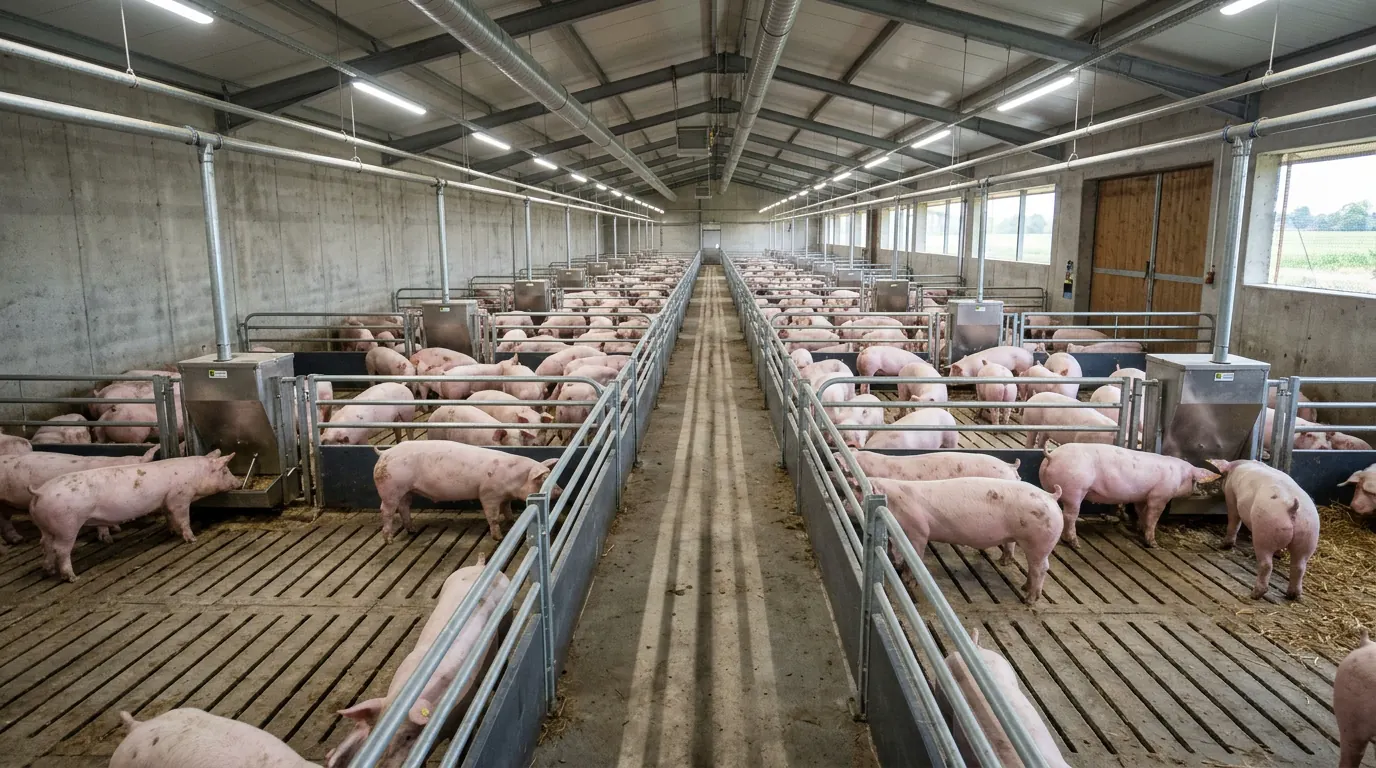
You worm pigs to a plan, not only when you see worms in the dung. According to AHDB Pork (UK), growers and finishers are wormed every 5 weeks, while sows and boars are treated as a whole herd at the same time, at least twice a year and ideally three times. Your vet decides which product and what dose, based on a fecal test and the situation on your farm.
Why worms cost your farm money
According to AHDB, regular worming improves daily gain and feed use, lowers susceptibility to respiratory disease, including pneumonia, and reduces liver condemnations at the slaughterhouse. It also cuts the number of parasite eggs in the animals' surroundings. Similar conclusions come from practice on outdoor runs and pastures, where the risk of reinfection is highest. If the slaughterhouse reports milk spots on livers, contact your vet.
Worming dates in the herd
Worming finishers and growers
The AHDB scheme calls for worming all growers and finishers at 5-week intervals. The first treatment comes after piglets move to the nursery, when maternal immunity fades and the first infection risk begins. Further treatments fall during the grower stage and finishing. All treatments given in feed are meant to stop the animals shedding eggs. Plan the last treatment so that the full withdrawal period from the product leaflet passes before slaughter. Fit the exact dates to the length of your finishing period with your vet, since it depends on the production system and final weight. If you are still setting up finishing, also check what you feed each group in our article on pig feed.
Worming sows and boars
In the breeding herd, AHDB recommends treating the whole herd at the same time, at least twice a year and ideally three times. You worm lactating sows together with dry sows so you leave no source of infection in the herd. It helps to match the date to your breeding plan, so read our article on sow mating and insemination and pick a moment that does not clash with work around mating. Your vet sets the details, meaning the product and dose for pregnant sows. Pregnant sows need particular care when choosing a product.
Gilts and boars bought in
According to AHDB, you worm new gilts and boars on arrival, during isolation. You repeat the treatment when they join the breeding herd, or at the next scheduled worming of the whole herd. This way you do not bring new parasites onto the farm with the animals. If you restock with maternal breeds such as the Wielka Biała Polska, treat isolation and worming the same as with any other breed.
How to choose a product and dose
Who chooses the drug
Your vet chooses the product against nematodes and other parasites. The vet considers the parasite species, the age and weight of the animals, and whether sows are pregnant. In Poland, veterinary medicines are supplied under the rules on veterinary medicinal products, and the leaflet and your vet's advice give the dose and route. We give no doses here. A wrong dose will not only fail to work but can encourage parasite resistance. Record the product name, batch and treatment date, because you will need them for the withdrawal period and for inspections.
Different parasites, different products
Roundworms, whipworms and lungworms call for different products than tapeworms. According to CFSPH at Iowa State University, taeniasis is usually treated with praziquantel or niclosamide, though other antiparasitic drugs also work. This comes from a disease description, not a recommendation for your farm. You can read about tapeworms in pigs in our article on tapeworms in chickens, pigs and cattle. You check whether worming worked with a fecal test ordered by your vet.
Herbs and feed additives
The IZ PIB organic pig farming guide mentions plants with anti-worm action. It lists male fern, which is toxic and can cause poisoning if eaten in excess. It also gives a mix of thyme, lemon balm and purple coneflower used as a 5% feed additive. Such additives may lower worm burdens, but they do not replace a worming plan agreed with your vet. In organic farming, ask your vet and your certification body.
Withdrawal period after worming
How to count the withdrawal period
The withdrawal period is the time from the last dose of a drug to slaughter, during which the meat cannot go to market. The leaflet of the specific product gives its length, and your vet can confirm it if in doubt. You count from the day of the last dose, not from the start of a treatment spread over several feed portions. Record the date, product and group of animals, and only then set the earliest sale date. In finishing, plan the last worming so you do not squeeze the slaughter date. The treatment and withdrawal module in DlaFerm makes this record easier to keep.
Treatment records
Enter every worming in your treatment records. Note the date, the group or pen, the product name and batch, and the name of the person who gave the drug. Such an entry shows up at an inspection and helps you decide when to sell a batch. Records also help you compare slaughterhouse results, such as liver condemnations, with treatment dates.
A clean pen limits reinfection
Changing pens and manure
The IZ PIB guide recommends changing pens when you worm. After treatment you move the pigs to a clean building and leave the previous one empty for the next two weeks. You do the same on pasture. You store manure from buildings where animals were wormed in high heaps, where it heats up and reduces parasites' ability to survive. According to the guide, regular removal of manure from buildings and runs, paddock grazing and destroying intermediate hosts also break the parasites' life cycle.
Pasture and run
On a run, parasite eggs stay in the soil and grass, so animals get infected again and again. So divide pig pasture into paddocks and rotate them to a plan, as we describe in our article on pasture and green fodder for pigs. Fence off water bodies in the meadow, because larvae live there. Biosecurity protects against parasites and infectious diseases, so build your hygiene plan in the biosecurity plan generator.
Worms in pigs: how to spot a problem
Signals in the herd
Worm burdens often show no clear symptoms. You notice them through poorer gain, weaker feed use and more animals with respiratory disease. According to AHDB, worming improves gain and feed conversion, so a drop in either with unchanged feed is a reason to talk to your vet. Other diseases cause similar signs, so check the table in our article on pig diseases. Base the diagnosis on a fecal test and post-mortem, not guesses.
Slaughterhouse data
AHDB advises using slaughterhouse data. Milk spots on the liver are evidence of worms and lead to liver condemnations. If the slaughterhouse reports this problem, contact your vet. Record the results from every batch, and after changing your worming scheme compare them with earlier ones. Feed matters too, because poorly nourished animals cope worse with parasites, as you can read in our article on fermented feed.
Frequently asked questions
How often should you worm pigs?add
According to AHDB Pork, growers and finishers are wormed at 5-week intervals. Sows and boars are treated as a whole herd at the same time, at least twice a year and ideally three times. Agree the exact plan with your vet.
When should you worm sows?add
Treat the whole breeding herd together, with lactating sows wormed at the same time as dry sows. Match the date to the breeding cycle. Your vet chooses the product for pregnant sows.
How long is the withdrawal period after worming pigs?add
It depends on the product and is given in the leaflet. You count it from the day of the last dose to slaughter. If in doubt, ask your vet and record the date in your treatment records.
What are the signs of worms in pigs?add
Often there are none you can see. You notice poorer gain, weaker feed use, more lung disease and milk spots on livers at the slaughterhouse. A fecal test confirms the diagnosis.
Can herbs replace worming?add
No. The IZ PIB guide describes plants with anti-worm action, but male fern is toxic and the herbal mix at a 5% additive is only support. Your vet sets the worming plan.
How do you worm new gilts and boars?add
According to AHDB, you give the product on arrival, during isolation, and repeat it when they join the herd. Or you time it with the next scheduled worming of the whole herd.
Sources & resources
- linkAHDB Pork (UK) — Regular worming in pigs (Health 2 — Action for Productivity, factsheet 1)
- linkIZ PIB — Organic pig farming guide (ed. E.R. Grela)
- linkCFSPH, Iowa State University — Taeniasis, Cysticercosis and Coenurosis (disease factsheet)
- linkPoland's Chief Veterinary Inspectorate (Główny Inspektorat Weterynarii) — gov.pl/web/wetgiw
Prepared by: DlaFerm Team based on data from the sources listed · Publisher: INSTA-TECH sp. z o.o.
Record worming and withdrawal periods in one place
The Treatment and Withdrawal module in DlaFerm stores treatment dates, products and withdrawal deadlines for each group of pigs. Create a free farm account or get in touch, and we will show you how it works.
Phone
+48 796 258 151