Sow breeding and insemination: heat, cycle and calendar
You breed a sow during heat, and you find that moment by watching her and keeping records, not by the calendar alone. The sow's estrous cycle lasts about 21 days on average, so plan every mating ahead and write it down. Below we explain how to spot heat, how to build a breeding calendar and what affects results.
verifiedFrom the team that has organised work on poultry farms for years.
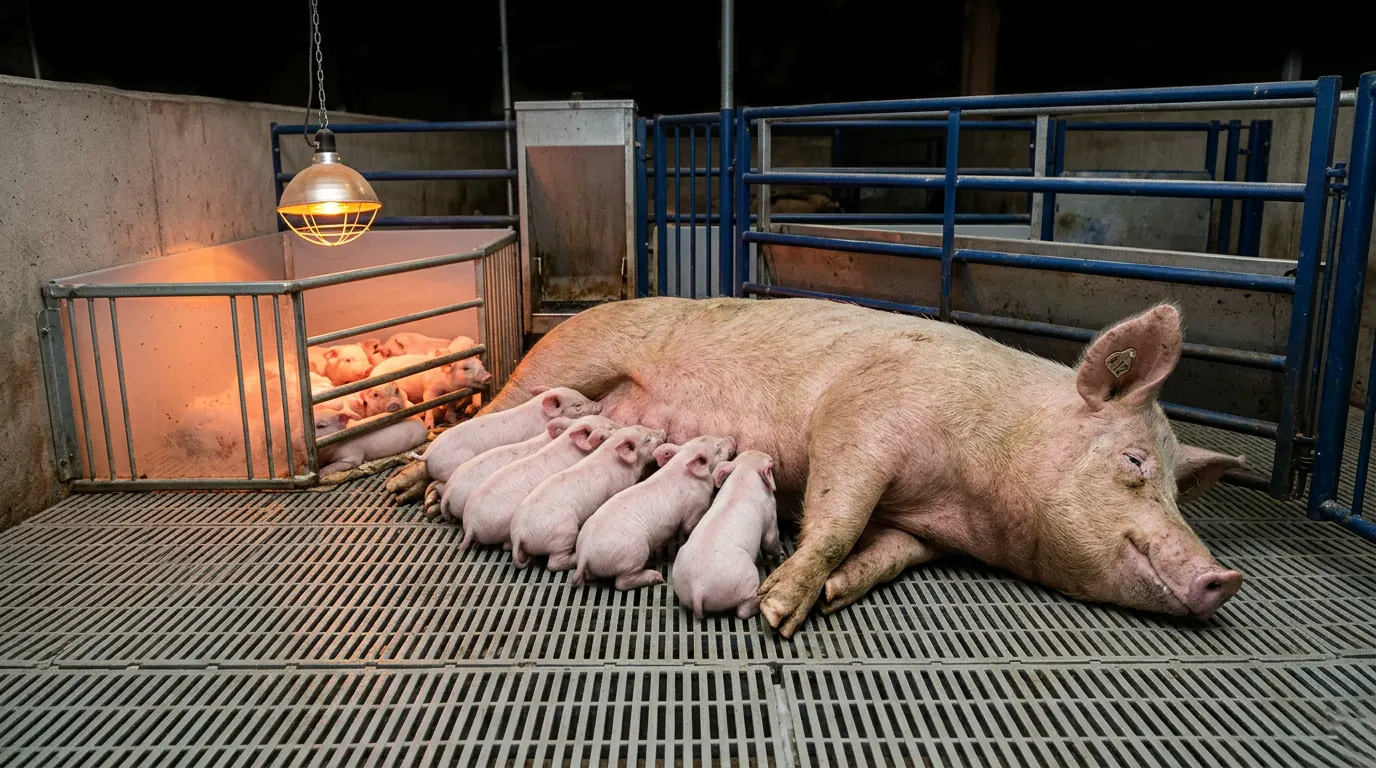
A sow should be bred during heat, ideally in the middle of it. Your vet or advisor helps you set the exact moment. The estrous cycle lasts about 21 days on average, so after every weaning or failed mating, count when the next heat is due. Write records straight away, because they decide farrowing and weaning dates. Keep one card per sow showing mating dates, results and treatments. You can keep breeding data in a system such as the app for pig farmers.
What decides the result of mating
Results depend on the sow's age and weight, her condition in lactation, when you detect heat, and the quality of the semen or the boar. Hygiene during the procedure and calm handling matter too, because stress lowers the sow's readiness to accept the boar. If results drop, check these factors one by one instead of changing everything at once. Recording each mating with date, time and semen batch helps you find the cause.
The sow's estrous cycle and heat detection
How to recognize heat
The sow's estrous cycle lasts about 21 days on average. Heat is the period when the sow accepts the boar or stands to be mated. In practice you recognize it when she freezes under pressure on her back, pricks up her ears and does not move away when someone touches her flanks. Check twice a day, ideally with a teaser boar nearby, because heat can be short and easy to miss. Record every heat you detect so you know when to start counting the next cycle.
Heat after weaning
After weaning, a sow usually returns to heat within a few days, and the timing depends on her condition and feeding in lactation. At weaning, record the date, the number and weight of piglets, the sow's body condition and any problems in the litter, because they shape the next mating plan. You can move this data into placement and cycle planning, which helps you set heat and mating dates for each sow in the herd.
Natural mating and artificial insemination in practice
Timing of mating
Breed during heat, when the sow stands for the boar or for mating. The usual advice is a first mating once you detect heat and, if she is still in heat, a repeat after a dozen or so hours. You set the exact rhythm with your vet or advisor, because it depends on the line, the sow's age and how you observe. Record the time of each mating, the boar number or semen batch, and who did it.
Artificial insemination
Insemination needs clean, skilled work and exact records of semen batches. Check the expiry date, store semen as the supplier advises and agree delivery dates with them so you never run short of doses during heat. Record each insemination separately. After farrowing, comparing results lets you judge how well mating worked for a given sow and batch, not just the herd average.
A gilt's first mating
Age and weight at first mating
Breed a gilt by weight and development, not only by age. According to the PIC Nutrition and Feeding Guidelines (metric, 2022), targets for breeding gilts are puberty before 195 days of age, mating at 200–225 days, body weight of 135–160 kg and mating usually at the second heat. These are the guidelines of one breeding company, so compare them with your own line's requirements and with assessment results in your herd.
Gilt development across her whole life
In its TN70 manual, Topigs Norsvin stresses that a well-developed breeding gilt has at least 16 functional teats and is easy to handle. The manual points out that mistakes in transport, acclimatization, feeding or vaccination of a gilt can lower performance throughout her productive life. So record all procedures from the start. Before first mating, also assess conformation and legs. In Poland, the performance testing of live gilts and boars is run by the National Research Institute of Animal Production (Instytut Zootechniki PIB).
Flushing: feeding before heat
What flushing is
Flushing is a short boost of energy and protein in the sow's ration before mating. According to the KPODR Minikowo manual (Behawior i dobrostan świń, on pig behavior and welfare), it raises the number of piglets born per litter by 1–2. It usually starts after weaning, though some farms begin around 10–14 days before weaning. The same manual describes a simple mix: glucose and fish meal at 1:1, given at 200–300 g a day, with a mineral-vitamin mix for sows.
When to stop flushing
Stop flushing right after mating or insemination. The KPODR manual warns that excess energy in this period can cause embryo death, even though it helps before heat. Choose the mix and dose with your vet or feeding advisor, because they depend on the sow's condition and the feed composition. Assess body condition at weaning and before mating, and record the result in the herd card.
The sow's reproductive tract and assessing results
What happens after mating
The sow's reproductive tract includes the ovaries, oviducts, uterus, cervix and vagina. After mating, embryos develop in the uterus, and their death in the first weeks of pregnancy is one cause of smaller litters. So do not overdo energy after mating, and watch for the sow returning to heat. No heat does not always mean pregnancy, so have your vet confirm it, for example by ultrasound.
Indicators worth tracking
In its 2025 sow reproductive performance assessment, Instytut Zootechniki PIB lists, among others, piglets reared to day 21, the interval between litters and the gilt's age at first farrowing. Calculate the same indicators in your own herd, because they show the effect of each mating. You can also link breeding data with DlaFerm integrations with IRZplus (ARiMR's online animal register) and sensors, which cuts manual retyping.
Breeding calendar and herd planning
How to build a breeding calendar
Build the calendar from farrowing and weaning dates. For each sow, record the last mating date, the planned farrowing and the weaning date, then work out the expected heat. With a few dozen sows, a paper calendar soon drifts, so keep it in a system, for example the placement planning module. A weekly summary shows how many sows come into heat in a given week and whether you run short of pen space.
Treatment around mating
If a sow gets medicine around mating, record each treatment with the product name, the dose given by the vet and the withdrawal period. The vet always chooses the medicine and dose; you only keep to the withdrawal rule before slaughter. Keep treatment and withdrawal records in one place, for example in treatment and withdrawal records, so you do not miss dates.
Frequently asked questions
How do you tell when a sow is in heat?add
A sow in heat freezes under pressure on her back, pricks up her ears and does not move away when someone touches her flanks. Check twice a day, ideally with a teaser boar. Record every heat you detect.
How long is a sow's heat cycle?add
The sow's estrous cycle lasts about 21 days on average. After you detect heat, you can work out the date of the next one. The exact time depends on the sow and housing conditions.
When should you breed a sow after weaning?add
Set the date once you detect heat, not from the calendar alone. A sow usually returns to heat within a few days of weaning, but it depends on her condition. Discuss the breeding plan with your vet or advisor.
Does flushing increase litter size in sows?add
According to the KPODR Minikowo manual, flushing can raise the number of piglets born by 1–2. Use it before mating and stop right after. Choose the mix and dose with your vet or advisor.
What age and weight should a gilt be bred at?add
PIC gives targets of mating at 200–225 days, body weight of 135–160 kg and mating usually at the second heat. These are one company's guidelines, so compare them with your own line's requirements. Decide based on your assessment of the gilt.
How do you check whether a sow is pregnant?add
No heat after mating does not always mean pregnancy, so do not rely on observation alone. Have your vet confirm it, for example by ultrasound. Record the result on the sow's card.
Sources & resources
- linkTopigs Norsvin — Feeding Manual TN70 (open access, GNFRS)
- linkPIC — PIC Nutrition and Feeding Guidelines (metric)
- linkKPODR Minikowo — Pig behavior and welfare (P. Dorszewski et al.)
- linkIZ PIB (National Animal Breeding Center / trzoda.izoo.krakow.pl) — Pig herd status and assessment results in 2025
Prepared by: DlaFerm Team based on data from the sources listed · Publisher: INSTA-TECH sp. z o.o.
Want your sow breeding calendar in one place?
The placement planning module and the <a href="/hodowca-trzody-chlewnej">app for pig farmers</a> in DlaFerm.pl help you set heat, mating and weaning dates. Create a free farm account and try them on your own herd data.
Phone
+48 796 258 151