Bielefelder chicken: autosexing and egg laying
The Bielefelder is a German dual-purpose chicken breed. You can tell the sex of the chicks by down color right after hatching. The hens lay large brown eggs and the cockerels give meat. We explain where this comes from and how to keep the flock laying well.
verifiedFrom the team that has organised work on poultry farms for years.
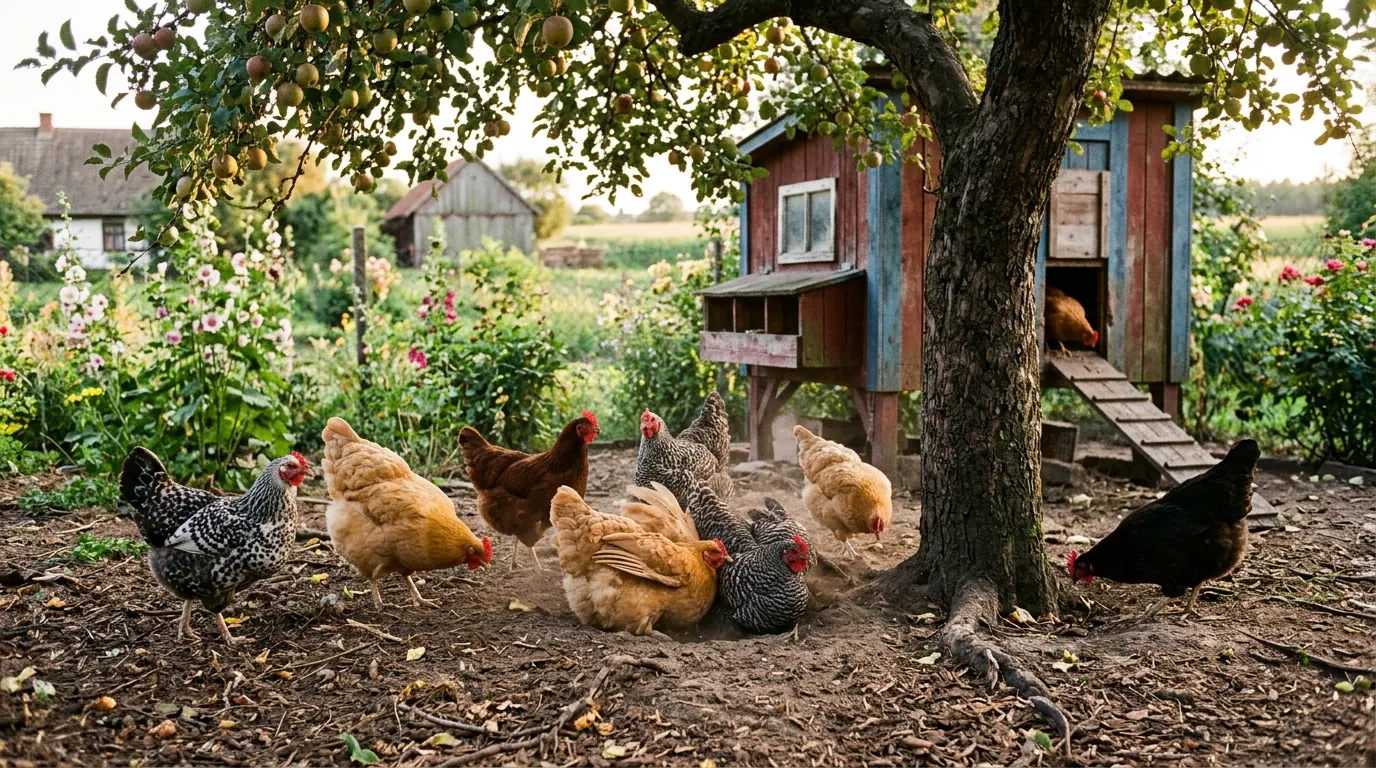
The Bielefelder is a dual-purpose chicken breed developed in Germany, near Bielefeld. It is an autosexing breed: female and male chicks differ in down color on the day they hatch, so you do not need a specialist to sex them. The hens lay large eggs with a brown shell, and the cockerels grow big enough to be raised for meat. For an overview of all production types, see poultry production types.
Why keepers choose the Bielefelder
Keepers usually buy this breed for three reasons: they separate the sexes without mistakes, get decent laying, and have calm hens in the flock. For a small farm or a backyard flock, that is a handy mix. It is not a breed for a high-output commercial egg farm, though. There, laying hybrids count, such as those described in our articles on the Messa hen and Rosa hens.
Where the Bielefelder breed comes from
A breed built by crossing and selection
The Bielefelder was created in Germany in the second half of the 20th century as a dual-purpose breed whose sex can be read from the down. The breeder who made it combined breeds with good laying and body weight, and added the barring trait that makes autosexing possible. The Amrock is often named among its relatives; we cover it in Amrock hen: breed, laying and traits. Breed standards and breed clubs give the exact make-up of the cross, so ask for a pedigree when you buy.
A stable breed that still needs selection
Autosexing works only when the parents carry the right traits. If you buy eggs or chicks from a random breeder, you may get mixed birds whose down does not split clearly by sex. Buy only from a breeder who selects the stock and can show you the parent birds.
How autosexing works in the Bielefelder
A sex-linked trait
In chickens, feather barring is inherited together with sex. The barring gene sits on the sex chromosome. A rooster has two copies of the Z chromosome, a hen only one. So male chicks get a double dose of the gene and are lighter, while female chicks get one dose and are darker. The rule works only with the right parent combination, and that is what breeding autosexing breeds is all about.
How to tell female from male chicks on hatch day
Male chicks have lighter down and a clear light spot on the head. Female chicks are darker, with a dark, often brownish stripe along the back, much like barred chicks. Judge the chicks on the day of hatching, in good light. As they age, down gives way to feathers and the differences fade. Do not sex chicks by touch or behavior; that is unreliable.
A similar idea in meat poultry
Telling the sexes by chick appearance is also used with broilers. According to Ross 308 Performance Objectives 2022, the "sexable" type gives fast-feathering females and slow-feathering males, so the hatchery sexes them by feather development. The mechanism differs from the Bielefelder, where down color decides, but the goal is the same: to separate the sexes without professional sexing.
Laying and eggs of the Bielefelder
How many eggs to expect
The Bielefelder is among the dual-purpose breeds with good laying, but results depend on the line, the age of the hens, light, feed and housing. We give no single figure, because keepers' reports vary widely and depend on how the flock was selected. You can work out real laying from your own records: collect eggs daily and divide the number of eggs by the number of hens. The laying rate calculator helps with this.
Large eggs, brown shell
The eggs are large with a brown shell. Shade varies between individual hens and changes through the season, so do not treat it as a sign of breed purity. More specialized laying breeds, such as the Leghorn in Leghorn hen: laying and husbandry, usually lay more but smaller eggs, without the same meat value.
Start of lay and the drop after a year
A hen lays her first egg when she reaches maturity, and peak laying comes after a few weeks. We describe age and peak in when hens start laying eggs. After the first year of production, laying drops in every breed; what to do with such a flock is explained in laying hens after one year.
Meat and temperament
General production value
The Bielefelder grows more slowly than broilers but reaches a higher body weight than purely laying breeds. Cockerels you do not keep in the flock can be fattened for meat. The result will not match fast-growing broilers: you pay for feed longer and the carcass is tougher. To compare dual-purpose breeds, see the articles on New Hampshire and the Langshan.
Temperament
Bielefelder hens are described as calm and easy to handle, which makes work easier with a small flock and around children. Calm does not mean undemanding: large-breed birds need space, good perches and a run. Cockerels can be confident, so in a larger flock watch how they behave toward hens and people.
Housing and feeding a Bielefelder flock
Coop and run
Provide a dry coop, ventilation without drafts, nests in a darker spot and perch space for every hen. Large birds need more room than light breeds, so do not overcrowd the coop. Fence the run with netting that keeps out predators and wild birds, and close the door at night.
Feed for laying hens
A laying hen needs feed with the right share of protein and calcium, and constant access to water. Set the ration and composition by the age of the flock and its output. We describe the rules in feeding laying hens and feed to boost laying. The Ross Parent Stock Management Handbook stresses that measuring daily egg production and egg weight is the basis for adjusting feeding; this rule also works in a small flock.
When a hen looks listless
Lower activity, no appetite or ruffled feathers can signal disease or stress. Start by checking water, feed, temperature and parasites. You will find typical causes in listless hen: causes. A vet always chooses the medicine and dose, and also sets the withdrawal period for eggs and meat.
How to keep records for a Bielefelder flock
Write down what happens in the coop
With a small flock a notebook is enough, but with several dozen hens you quickly start losing data. Record daily egg numbers, losses, feed use and any treatments. That way you see a drop in laying within the first days, not only after a week. You can keep this data in the coop records module.
Compare lines and year groups
If you keep several groups of hens, record breed, placement date and results separately. After the season you will see which line lays better and how much feed it eats per egg. For more laying breeds to compare, see laying hen breeds.
Frequently asked questions
Is the Bielefelder an autosexing breed?add
Yes. You can tell the sex of chicks by down color on hatch day: males are lighter, with a light spot on the head, and females are darker. This works only in birds from correctly paired parents.
How many eggs does a Bielefelder hen lay?add
Laying is good for a dual-purpose breed, but it depends on the line, age, light and feed. The most reliable figure comes from your own records: count the eggs collected in a week and divide by the number of hens.
What eggs does a Bielefelder lay?add
Large eggs with a brown shell. The shade varies between hens and changes through the season, so it does not show breed purity.
Is the Bielefelder good for meat?add
Yes, you can fatten the cockerels for meat, because the breed is heavier than typical laying breeds. They grow more slowly than broilers, though, and use more feed per kilogram of gain.
How do I start keeping Bielefelder chickens?add
Buy eggs or chicks from a breeder who selects the stock and will show you the parent birds. Prepare a dry coop, a fenced run and layer feed, and record laying and feed use from day one.
Sources & resources
- linkInstitute of Animal Science PIB (Instytut Zootechniki) — izoo.krakow.pl
- linkRoss 308 / 308 FF Broiler Performance Objectives 2022
- linkRoss Parent Stock Management Handbook 2023 (Interactive)
- linkPoland's Ministry of Agriculture and Rural Development — gov.pl/web/rolnictwo
Prepared by: DlaFerm Team based on data from the sources listed · Publisher: INSTA-TECH sp. z o.o.
Track Bielefelder laying in coop records
The coop records module in DlaFerm.pl lets you log daily egg collection, losses and feed use for each group of hens. Create a free farm account or get in touch, and we will show you how it works in practice.
Phone
+48 796 258 151