Biłgoraj goose: a Polish conservation breed
The Biłgoraj goose (gęś biłgorajska) is a native breed from the Biłgoraj area. It is white, hardy and a good grazer. It belongs to the breeds covered by genetic resources protection. We describe its looks, uses and how to keep it.
verifiedFrom the team that has organised work on poultry farms for years.
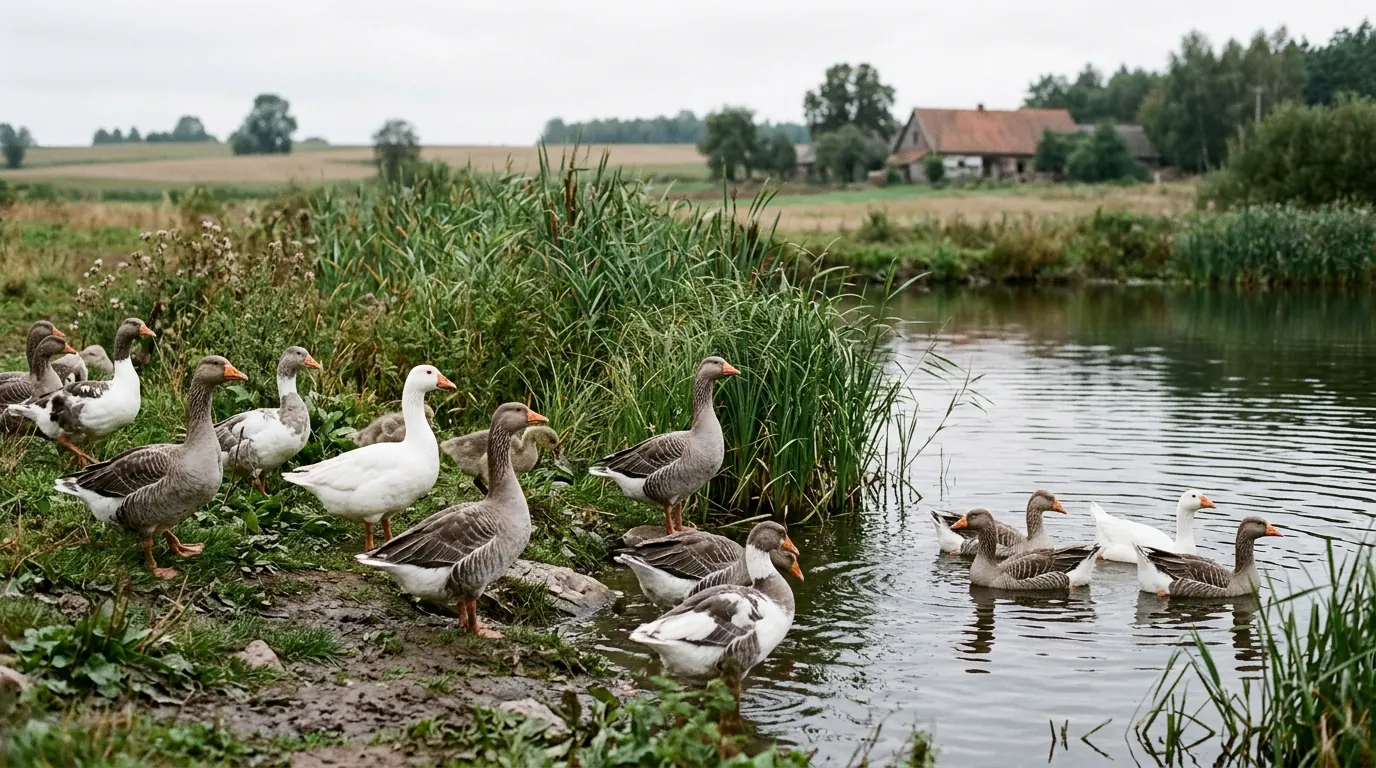
The Biłgoraj goose is a native Polish breed developed around Biłgoraj in the Lublin region (Lubelszczyzna). It has white plumage, copes with changeable weather and makes good use of grass on pasture. Keepers value its low appetite for concentrate feed and its calm nature. The breed is part of the farm animal genetic resources conservation program, coordinated by the Institute of Animal Science (Instytut Zootechniki PIB).
Why keep it
Conservation breeds do not compete with commercial geese on growth rate. Their value lies elsewhere: health, the ability to thrive on free range, and a unique gene pool that cannot be rebuilt once a breed is gone. If you are comparing several Polish breeds, also read about the Pomeranian and Kartuzy geese and the white Kołuda goose. They are the closest to the Biłgoraj goose in their role in conservation.
Where the Biłgoraj goose comes from
Region and history
The breed is named after Biłgoraj and the surrounding Roztocze area. For many generations, farms there kept geese on meadows, wasteland and stream banks. Selection happened in practice: keepers kept birds that were healthy, tolerated cold, led their goslings well and were thrifty with feed. The result is a population well suited to local conditions.
Link to the wild goose
All domestic goose breeds in Europe descend from wild geese. We cover this in the article on the ancestor of the domestic goose. Native breeds such as the Biłgoraj goose kept many primitive traits: vitality, grazing instinct and good rearing of goslings. The conservation program protects exactly these traits.
What the Biłgoraj goose looks like and what it is for
Build and plumage
Biłgoraj geese have white feathers, an orange bill and orange legs. The build is compact, and the birds are agile and active. Compared with typical meat breeds they are lighter and slimmer. You can tell the sex of adult birds by size, head and voice. See our guide on how to tell a goose from a gander.
Meat, feathers and eggs
The Biłgoraj goose is kept for meat and feathers. The meat comes from pasture rearing, so it is leaner and more flavorful than from intensive fattening, but growth is slower. White feathers are a useful extra product. The Institute of Animal Science (Instytut Zootechniki PIB) publishes exact body weight and laying figures for the lines in the conservation program. We give no numbers here because they differ between flocks and years.
Laying and rearing young
Geese lay seasonally, from late winter through spring, and this breed is no exception. Biłgoraj geese are described as good broody mothers that readily sit on eggs and lead their goslings. We cover incubation and brood care in the article on a goose sitting on eggs, and seasonal figures in the text on goose egg laying.
How to keep Biłgoraj geese
Pasture and water
Biłgoraj geese need access to lush grass and to water for drinking and bathing. Divide the range into paddocks and graze them in turn, so the grass regrows and the ground does not turn to mud. Provide shade in summer. Geese graze grass short, so by the end of the season the pasture needs a rest.
Feed and housing
Grass covers most of their needs, but young birds, laying birds and birds in winter need supplementary feed. We describe rations and norms in the article on feeding geese and ducks. For sleeping, a simple, dry building with ventilation and deep litter is enough. We collected the requirements in the text on housing for geese.
A conservation breed: what it means for the keeper
Genetic resources conservation program
Conservation breeds are covered by a program in which the keeper runs the flock under rules set for the breed. This usually means keeping purebred birds, avoiding crosses with other breeds and documenting ancestry. The Institute of Animal Science (Instytut Zootechniki PIB) publishes the current rules and the list of breeds, and payments are handled by ARiMR (Poland's Agency for Restructuring and Modernisation of Agriculture). Conditions and rates change from year to year, so check them directly with these institutions.
Pure blood and pairing
With few birds, relatedness builds up easily and after a few generations lowers health and hatchability. That is why it matters to swap ganders between keepers and to record which geese form a family group with which gander. You can keep flock records, pedigrees and hatch results in the farm management software.
The Biłgoraj goose compared with other breeds
Among Polish conservation breeds, the Biłgoraj goose is white and of moderate weight, like the Kołuda goose. The saddleback goose differs in its plumage pattern, and the greylag-type goose (gęgawa) is gray and closer to its wild ancestor. Foreign breeds such as the Hungarian goose are more specialized in feather and liver production. The choice depends on your aim: conservation, pasture keeping or commercial production.
Frequently asked questions
Is the Biłgoraj goose a conservation breed?add
Yes. It is a native Polish breed covered by the farm animal genetic resources conservation program. The program is coordinated by the Institute of Animal Science (Instytut Zootechniki PIB). Check the current rules on the institute's website.
What does the Biłgoraj goose look like?add
It has white plumage, an orange bill and orange legs. It is medium-sized with a compact build. The birds are active and calm.
What are Biłgoraj geese used for?add
They are kept for meat and feathers, best under pasture keeping. The meat is leaner than from intensive fattening. Growth is slower than in commercial breeds.
Do Biłgoraj geese sit on eggs well?add
They are described as good broody mothers that readily sit on eggs and lead their goslings. Incubation rules are the same as for other geese. See our guide on goose incubation for details.
Are there subsidies for keeping Biłgoraj geese?add
Keepers of conservation breeds can apply for support, but conditions and rates change every year. Current information comes from ARiMR and the Ministry of Agriculture. Check it before you submit an application.
How do you keep Biłgoraj geese?add
Give them pasture, access to water and a dry building for the night. Add supplementary feed for young birds and for geese in lay. Keep the breed pure and do not cross the birds with other breeds.
Sources & resources
- linkInstitute of Animal Science (Instytut Zootechniki PIB) — izoo.krakow.pl
- linkARiMR — gov.pl/web/arimr
- linkMinistry of Agriculture and Rural Development — gov.pl/web/rolnictwo
Prepared by: DlaFerm Team based on data from the sources listed · Publisher: INSTA-TECH sp. z o.o.
Keeping a conservation goose flock? Record it in DlaFerm
DlaFerm.pl farm management software lets you keep flock, hatch and event records in one place, even with a small number of birds. Create a free farm account or get in touch.
Phone
+48 796 258 151