Angora Rabbit: Wool, Shearing and Care
The angora is a long-haired rabbit kept for wool, not for meat. It needs regular shearing or combing, a dry, cool room and feed rich in fiber. We explain what the breed looks like, how to harvest the wool and how to keep the animals healthy.
verifiedFrom the team that has organised work on poultry farms for years.
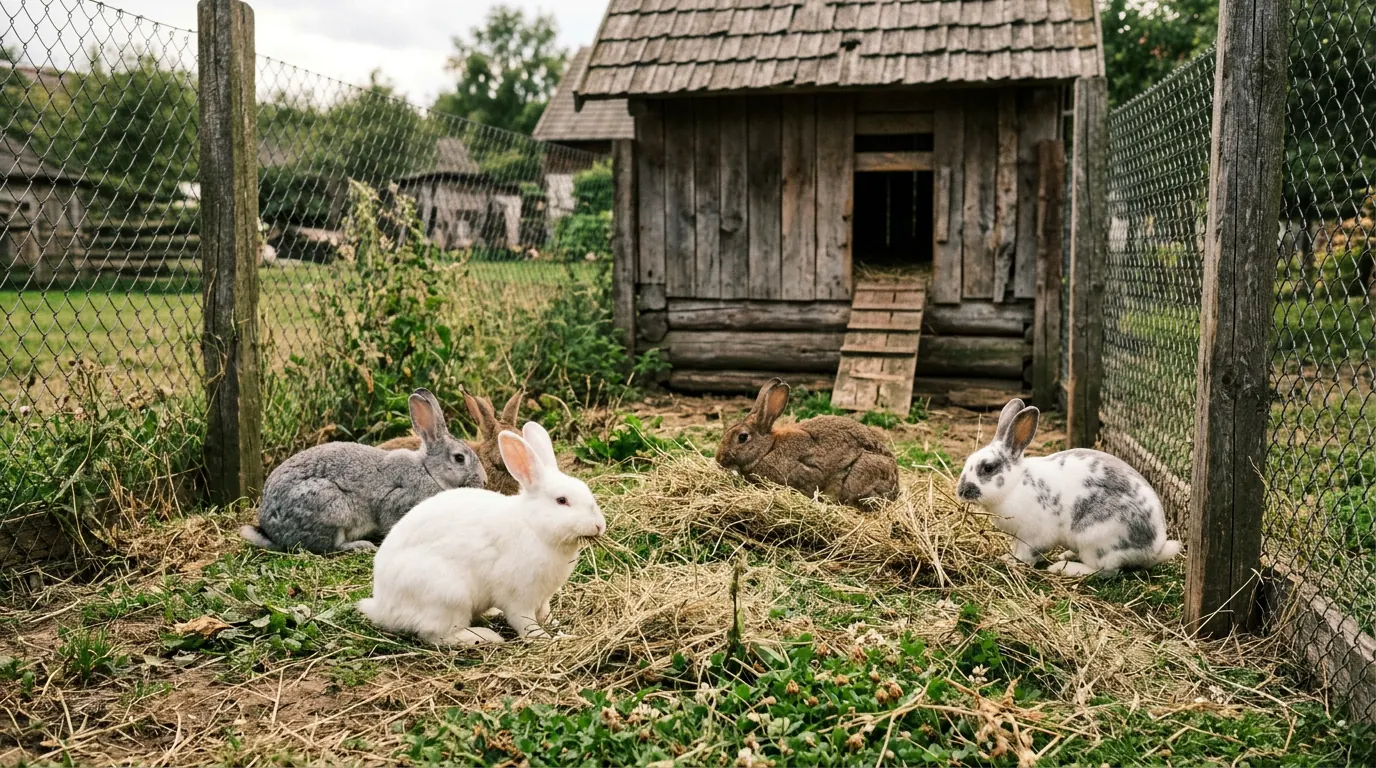
The angora is a long-haired breed kept mainly for its wool. Poland's Institute of Animal Science (Instytut Zootechniki PIB) divides rabbits into groups by use: meat, meat-and-fur, fur, wool, laboratory and fancy. The angora belongs to the wool group. By coat type it is a long-haired rabbit, together with the fox rabbit (królik lisi). What sets it apart from the meat breeds described in our guide to meat rabbit breeds is a long coat that needs attention every day.
Angora wool in world figures
The FAO report "The rabbit — husbandry, health and production" counts angora among five animal textile fibers of economic importance. Sheep wool is produced at more than 1.3 million tonnes a year (after thorough washing). The other four fibers, mohair, angora, cashmere and alpaca, come to 5,000–30,000 tonnes a year each. According to the FAO, these are fibers of special fineness, luster and softness, used for luxury goods. In textiles, the word "angora" on its own means rabbit wool.
Who this breed is for
People keep angoras for wool, for pleasure or for shows. There is no fast fattening and no simple carcass production here. If you are still planning a herd, start with the overview in our article on how to start keeping rabbits. Before you buy your first animals, work out how much time a day you have for coat care.
How to recognize an angora and its varieties
Appearance and coat
You recognize an angora by long, silky hair covering the whole body, often the ears and paws too. The hair is fine and soft, so it tangles and mats easily. The animal looks bigger than it really is. Under the coat there is a small or medium frame. When you pick young rabbits, judge not only hair length but also density and how well it combs out, because a dense, matting coat makes all later care harder.
Angora varieties
In breeding you will meet several angora varieties, among them English, French, German, satin and giant. They differ in coat structure, density and the amount of wool you can get. The French and German varieties are bred more for production than the English, which is ornamental. Before you buy, ask the breeder what purpose the line was selected for. For a full overview of breeds, see our list of rabbit breeds: meat, fur and giants.
Shearing and combing angora rabbits
Shearing or combing
You can harvest angora wool two ways: shear it with scissors or clippers, or comb out the ripe hairs. Shearing is simpler for a beginner; combing takes practice and a calm animal. Both methods have the same goal: take the wool off before it starts to mat. Before your first session, watch an experienced keeper, and shear your first animals under their eye. Hold the rabbit on a stable, non-slip table, because a frightened rabbit can hurt itself by struggling.
Timing
The interval between shearings depends on the variety, the line and how fast the hair grows. There is no single date that suits every herd. Go by coat length and whether the hair starts to tangle. Shearing too rarely gives mats that hurt the animal and lower the value of the wool, and shearing too often reduces yield. Record the dates and the amount of wool from each rabbit. After a few cycles you will see which animals give the best yield and can choose breeding stock from them.
Sorting and storing wool
Sort the harvested wool by length and cleanliness. Set aside long, clean hair separately from shorter, soiled hair. Throw away mats and bits of bedding. Store wool in a dry place, in breathable cloth bags, not sealed plastic ones, because damp quickly spoils it. If you sell the raw wool, agree beforehand with the buyer what they require for hair length and cleanliness.
Housing conditions for angora rabbits
Heat is the main risk
The EFSA AHAW Panel, in its opinion on rabbit health and welfare (EFSA Journal 2020;18(1):5944), lists angoras among the genetic factors that raise the risk of heat stress. Other risks it names are poor ventilation, no access to water and high stocking density. In practice, provide shade, airflow and constant access to fresh water. On hot days put a thermometer in the room and act before the animals start to breathe heavily. It is better to keep angoras in a cool, well-ventilated room than in an open yard.
Cage and bedding
Long hair picks up dirt, urine and droppings, so the cage must be dry and clean. The floor must not be slippery or too rough, because the coat catches on wires. Change the bedding often enough that it does not soak up urine. Wool soiled with droppings loses value, and the animal falls ill more easily. When choosing equipment, also check rabbit drinkers and feeders: pick ones that do not wet the coat around the mouth and neck.
Daily check
Look over every animal once a day. Check that the hair around the anus is not clumped, that the eyes and nose are dry and that the rabbit is eating normally. Comb out tangled clumps at once, before they turn into mats. An animal that has stopped eating or is not passing droppings needs a quick consultation with a vet. Any treatment and dose is always set by the vet, and after medicines you follow the withdrawal period they give.
What to feed an angora rabbit
Fiber and protein in the ration
The values given by W. Potępka in "Wiadomości Zootechniczne" (2011), citing Kostro and Gliński (2005) and Maertens (1992), apply to rabbits in general, not to angoras alone. According to them, young rabbits aged 3–6 weeks need feed with 15.5% crude fiber and 15.5–16.0% crude protein. Does rearing young need 11.5% crude fiber and 17.5–18% crude protein. Treat these figures as a starting point and ask an adviser whether your angora line needs adjustments. We cover feed and hay in more detail in our guide to feeding rabbits.
Hay and water
Hay should be in the cage all the time. It supplies fiber that keeps the gut working and keeps the animal busy. Replace it when it gets damp or dusty. Water must be fresh and always available, in winter too. EFSA lists lack of water among the risks linked to heat stress. Do not change feed overnight, because a sudden change harms digestion. Introduce a new ingredient gradually over several days.
Breeding, health and profitability
Choosing breeding stock
For breeding, pick healthy animals with a dense coat that is easy to care for and good wool yield in earlier cycles. We describe timing and pair age in our article on breeding rabbits, and kindling and rearing in the guide to kindling and raising young. Remember that EFSA lists poor nest quality among the heat risks, so prepare the nest carefully, with dry, warm lining.
Vaccination and rules
Angoras get the same infectious diseases as other rabbits. You will find vaccination timing in our article on rabbit vaccination, and the requirements for keepers in the overview of rabbit keeping regulations. Check the legal position in official sources, and report doubts to the county veterinary officer (powiatowy lekarz weterynarii).
Does an angora pay
Profitability depends on wool yield, the price from the buyer, feed costs and labor time. Wool prices change, so we give no amounts. Check them with buyers and in breeders' clubs. Work out the figures from your own records, following the scheme in our article on rabbit farming profitability. With angoras, the biggest cost is often the labor of daily coat care.
Frequently asked questions
What is an angora rabbit used for?add
It is kept mainly for wool, the long, soft hair called angora. According to the FAO, it is one of five animal textile fibers of economic importance. Some animals are also kept as pets or show rabbits.
How often should you shear an angora rabbit?add
There is no single interval for all lines. Shear or comb the animal when the hair is long but not yet matting. Agree the frequency with an experienced keeper of your variety and record the dates.
Do angora rabbits tolerate heat badly?add
Yes. The EFSA AHAW Panel lists angoras among the genetic factors that raise the risk of heat stress. Provide shade, ventilation and constant access to fresh water.
What do you feed an angora rabbit?add
Give constant access to hay, good-quality pelleted feed and fresh water. The feed should contain enough crude fiber. We cover details in our article on feeding rabbits.
Do angora rabbits need vaccinating?add
Yes, angoras are vaccinated like other rabbits, for example against RHD and myxomatosis. Agree the vaccination program with a vet.
Can you raise an angora rabbit for meat?add
You can use it for meat, but the breed is selected for wool, not growth rate. For carcass production, meat breeds are better, described in a separate guide.
Sources & resources
- linkFAO — The rabbit — husbandry, health and production (F. Lebas et al., FAO Animal Production and Health Series 21, revised ed.)
- linkIZ PIB — Wiadomości Zootechniczne — Little-known endangered rabbit breeds (D. Kowalska et al.), WZ XLV(2007)3:71–75
- linkIZ PIB — Wiadomości Zootechniczne — Problems and options in feeding rabbits on small farms (W. Potępka), WZ XLIX(2011)2:37–42
- linkEFSA AHAW Panel (copy in the CSIC repository) — Health and welfare of rabbits farmed in different production systems (EFSA Journal 18(1):5944)
Prepared by: DlaFerm Team based on data from the sources listed · Publisher: INSTA-TECH sp. z o.o.
Record treatment and withdrawal periods in one place
The Treatment and withdrawal module in DlaFerm lets you record treatments, medicines given and withdrawal dates in your farm records. Create a free farm account or get in touch, and we will show you how it works in practice.
Phone
+48 796 258 151