Mediterranean chicken breeds: castellana, penedesenca, empordanesa
The castellana negra comes from Castile. The penedesenca and empordanesa come from Catalonia. They are light, active hens with good laying, developed in a warm climate. We explain how they differ and what to change in your care if you keep them in Poland.
verifiedFrom the team that has organised work on poultry farms for years.
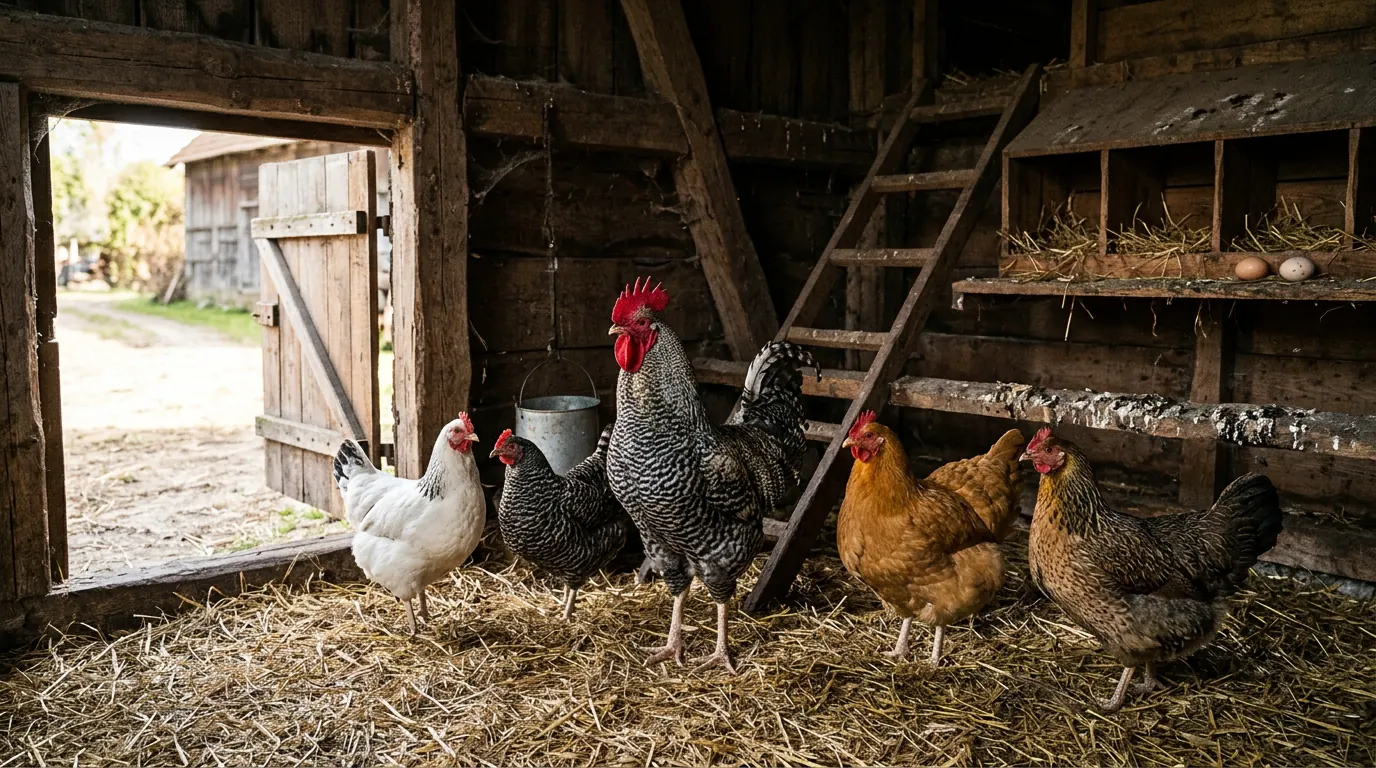
Mediterranean chicken breeds are light birds from the Iberian Peninsula, kept mainly for eggs. Among the most interesting are the castellana negra from Castile and the penedesenca and empordanesa from Catalonia. They have a slim build, large combs and a lively temperament. To compare them with other layers, see our overview of laying hen breeds.
Why they are worth knowing
Local breeds spent hundreds of years adapting to the region where they developed. That is why they do well on free range and find much of their own food. For a keeper, they offer a flock that stands out for its looks and its eggs. They are not breeds for intensive production, though. They suit backyard keeping, niche egg sales and preserving old lines.
What Mediterranean chickens have in common
Build and temperament
Hens of this type have a light frame, a high-carried tail and a large comb that helps them shed heat. White ear lobes are a common trait of breeds from the Mediterranean basin. The birds are flighty and fly readily, so the run fence must be higher than for heavy breeds. For contrast, we describe meat breeds in our overview of meat and dual-purpose breeds. Their calm, heavy type is the opposite of the Spanish hens.
Laying and broodiness
Light Mediterranean breeds are selected for eggs, not meat. They usually start laying early and rarely go broody, so for hatching you need an incubator or a broody hen of another breed. For a specific number of eggs per year, check the breed standard and the line description from the breeder you buy from. It depends on the line, the feeding and the lighting in the coop. For the basics of ration planning, read about feeding laying hens.
The castellana negra hen
Looks
The castellana negra has black plumage with a greenish sheen, a red single comb and white ear lobes. The contrast of black feathers and white by the ear is the easiest way to recognize the breed. The body is slim and upright, and the bird looks alert. The cock has an impressive but proportionate comb. When buying, check the breed standard, because show lines and working lines can differ a little.
Eggs and use
The castellana is regarded as a laying breed and lays eggs with a pale shell. If you want colored shells, this is not the breed. We cover hens that lay colored eggs in the article on green shell and dark shell hens. The castellana suits a small flock with access to a grassy run. Meat is of little importance, because the carcass is light.
The penedesenca hen
Where it comes from
The penedesenca comes from the Penedès region of Catalonia. Keepers value it above all for eggs with a very dark brown shell. The breed has several color varieties, and Catalan breeders' associations maintain its standard. It is rare, so chicks and hens with documented origin are found mainly with specialist breeders.
Why the penedesenca is prized
Dark eggs stand out from ordinary shop eggs and sell well on small local markets. Shell color depends on the line, the age of the hen and the season. In many hens it gets lighter over time. It does not change the nutritional value of the egg. Other breeds also lay colored eggs. They are described in the article on hens that lay green and blue eggs and in the overview of native Polish breeds, so you can compare your options.
The empordanesa hen
Origin and varieties
The empordanesa comes from the Empordà region in north-eastern Catalonia. It is another local breed with small numbers, kept by enthusiasts. It comes in several color varieties. Check the exact standard, including comb shape and egg shell color, in the breeders' association documents before you buy, because descriptions online are sometimes inconsistent.
A rare breed: what it means for the keeper
Small numbers mean a limited gene pool. Buy birds from several unrelated breeders and keep pedigree records so you do not mate siblings. There is no room for random crossing, because the line soon blurs. We discuss breeds with a similar status in the articles on British chicken breeds and German chicken breeds.
Can Mediterranean chickens survive a Polish winter?
Cold and combs
Large combs make these breeds sensitive to frost. Frostbitten combs and wattles are a real risk when temperatures drop sharply. Provide a dry coop without drafts, with deep litter, and constant access to water that does not freeze. Damp does more harm than cold alone, because it favors frostbite and eye disease. See conjunctivitis in hens. Treatment is always decided by a vet.
Run, parasites and molt
Flighty birds need a larger and higher fence than heavy breeds. In a dry coop and on a sandy dust bath it is easier to keep parasites low. We cover the use of diatomaceous earth for hens separately. These breeds molt in autumn. A drop in laying at that time is normal, and we describe causes and what to do in the article on feather loss in hens.
Who these breeds suit and how to buy them
Who they make sense for
Choose Mediterranean breeds when you want a small laying flock with character, not high bulk output. They work for direct egg sales and in a collection of heritage breeds. For comparison, if you keep birds for show, see the overview of ornamental chicken breeds. If production matters most, choose working lines, which we describe in separate guides.
How to buy and manage the flock
Buy from breeders who give the origin and a description of the line. Before buying, ask for information on vaccinations and the health of the flock. Keep new hens apart for the quarantine period a vet advises. From day one, record purchase dates, the number of layers and daily laying. Coop records help here, and you can compare the results of different breeds.
Frequently asked questions
What color eggs does a penedesenca lay?add
The penedesenca is prized for eggs with a very dark brown shell. How intense the color is depends on the line, the age of the hen and the season. Shell color does not change the nutritional value of the egg.
What color eggs does a castellana lay?add
The castellana negra lays eggs with a pale shell. It is kept mainly as a layer, not for egg color. Check the details of the standard with the breeders' association.
Are castellana and penedesenca chickens suited to cold winters?add
They can overwinter in Poland if they have a dry coop without drafts, deep litter and water that does not freeze. The biggest risk is frostbite on the large combs and wattles. Damp in the coop does more harm than cold alone.
Do these hens go broody?add
Mediterranean breeds rarely go broody. For hatching you usually need an incubator or a broody hen of another breed. Do not count on natural hatching under your own hen.
Where can I buy penedesenca, castellana and empordanesa chickens?add
These are rare breeds, so look for breeders in local breed associations, mainly in Spain. If you buy birds from outside Poland, ask a vet about the rules for moving poultry. You can check current rules on the website of the Chief Veterinary Inspectorate (Główny Inspektorat Weterynarii).
Is the empordanesa a good hen for a beginner?add
You can keep it, but the breed is rare and birds with reliable origin are hard to find. A beginner will find it easier to start with a breed available locally, then add local Spanish breeds once they have some experience.
Sources & resources
- linkNational Research Institute of Animal Production (Instytut Zootechniki PIB) — izoo.krakow.pl
- linkChief Veterinary Inspectorate (Główny Inspektorat Weterynarii) — gov.pl/web/wetgiw
- linkMinistry of Agriculture and Rural Development — gov.pl/web/rolnictwo
- linkEFSA — efsa.europa.eu
Prepared by: DlaFerm Team based on data from the sources listed · Publisher: INSTA-TECH sp. z o.o.
Keeping several breeds in one flock?
DlaFerm's <a href="/program-do-ewidencji-kurnika">coop records</a> let you log laying, purchases and events separately for each group of birds. Create a free farm account or get in touch.
Phone
+48 796 258 151