Dresdner chicken and German chicken breeds
The Dresdner (kura drezdeńska in Polish) is a light German breed developed around Dresden in the early 20th century. We describe its traits, compare it with other German breeds and show which flock each one suits.
verifiedFrom the team that has organised work on poultry farms for years.
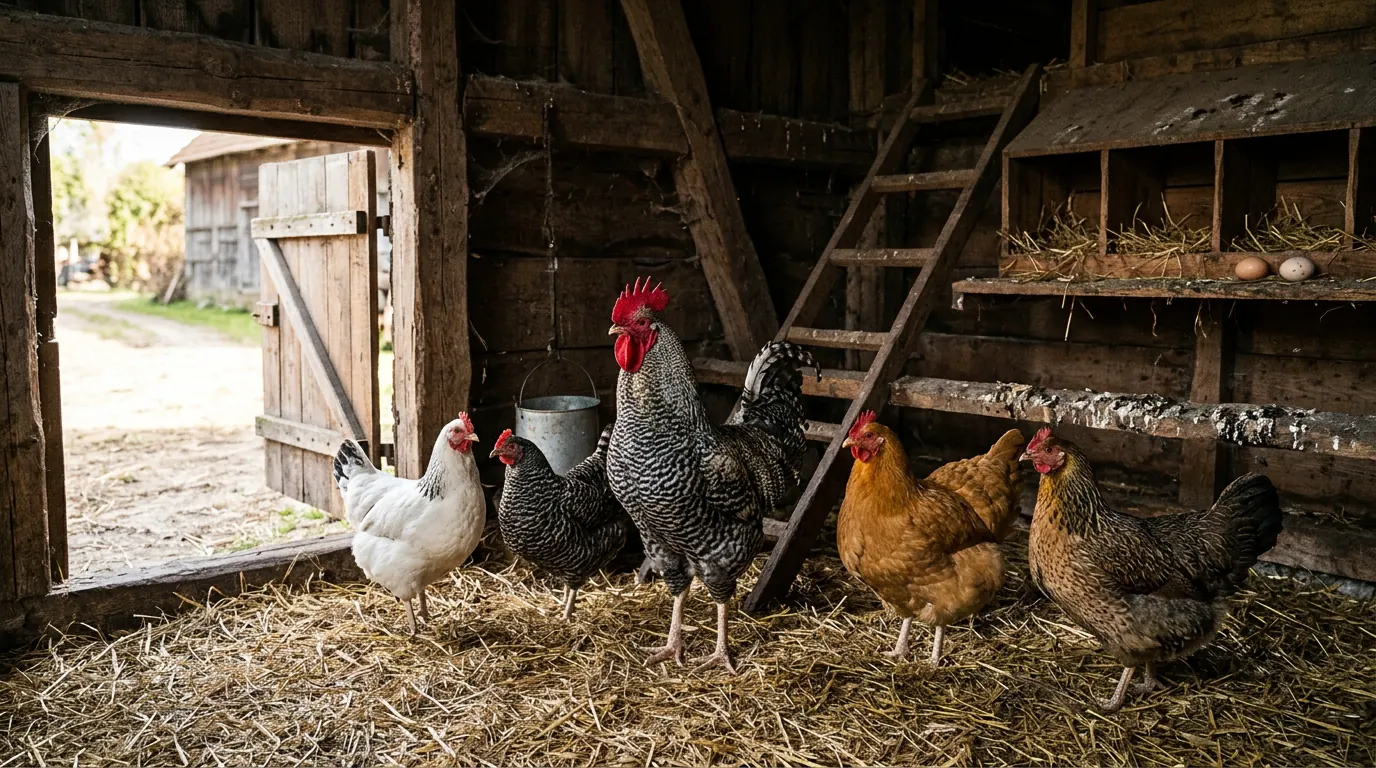
The Dresdner is a light German breed that appeared around Dresden in the early 20th century. In Poland it is rare and goes mainly to keepers of heritage breeds, not to commercial farms. For eggs on a large scale you would normally pick laying hen breeds. You keep a Dresdner for its looks, its calm temperament and its breed interest.
Why know German breeds
Germany has a rich tradition of chicken breeding. Many breeds were developed there in the 19th and 20th centuries as dual-purpose birds, giving eggs and meat on a small farm. Some of them reached Polish hobby breeders. You will meet them at shows, with heritage breeders and in classified ads. Below we describe how to judge a breed and give examples of the lines you meet most often.
The Dresdner chicken: origin and traits
Where the Dresdner comes from
The breed is named after Dresden in Saxony. Breeders developed it in the early 20th century as a light, active hen for small farms. In Germany the Dresdner is a recognized breed and also comes in a miniature bantam variety. For the exact standard, including plumage color and body weight, check the current breed standard from the national breeders' association or a show catalog, because standards are updated.
Temperament and behavior
Light breeds like the Dresdner are usually lively, alert and good at foraging on range. Such a bird copes better with free range than with a cramped house with no outdoor access. This cuts the need for extra feed in the season but raises the risk of a predator attack, so fence the run with wire netting and shut the coop at night. Light birds also fly over low fences more easily, so check the fence height.
Is the Dresdner a good laying hen?
Eggs and meat
The Dresdner is a light bird, so it cannot compete with meat breeds on weight or gain. If you want meat, see our overview of meat chicken breeds. Yearly egg numbers vary a lot with the line, the age of the hen, light and feed, and for rare breeds there is no reliable, consistent data. Ask the breeder for the results of their own flock and do not rely on general promises in ads.
Feeding a heritage-breed flock
Light hens need balanced feed, like any other. The base is a complete feed mix, with grain and greens from the range on top. We describe grain rations in our articles on grains for laying hens and on feeding laying hens. Too much corn fattens hens that sit around and lowers laying, and with light breeds it is easy to miss.
Other German chicken breeds
Bielefelder Kennhuhn
This is a large, heavy hen bred in Germany in the second half of the 20th century. It is valued as a dual-purpose breed, giving eggs and meat. A breeding trait is that you can tell the sex of chicks by feather color, which makes selection easier in a small flock. It is much heavier than the Dresdner, so it needs sturdier perches and more room in the coop. If you are interested in really big birds, see the largest chicken breeds.
Vorwerkhuhn and Lakenfelder
The Vorwerkhuhn is a breed from the early 20th century, with a golden body and a black neck and tail. The Lakenfelder has a white body and a black head, neck and tail, a clear pattern that is easy to recognize. Both are light, active birds for free range, with needs similar to the Dresdner. You will find exact standard descriptions with German and Polish breeders' associations.
Ornamental and native breeds
Many German breeds appear at shows as ornamental breeds. You can see an overview of such birds in our article on ornamental chicken breeds. If you prefer breeds from Poland, compare them with the description of Polish native chicken breeds, because they often have a similar use and are covered by genetic resource protection programs.
How to choose a breed for your own flock
Goal: eggs, meat or keeping the breed alive
Before you buy, answer three questions: why do you keep chickens, how much space do you have, and how will you heat the coop in winter. Light breeds like the Dresdner do well on range but give little meat. Heavy breeds need more feed and space. If shell color matters to you, compare options in our article on breeds that lay colored eggs.
Where to buy and what to check
Buy rare breeds from breeders who belong to associations and state the origin of their birds. Ask to see the state of the flock and its vaccinations, and keep new birds apart for a quarantine period agreed with a vet. Rules on protection against infectious diseases are published by the Chief Veterinary Inspectorate (Główny Inspektorat Weterynarii), and registration duties are explained by Poland's ARiMR (Agency for Restructuring and Modernisation of Agriculture) and the county veterinarian (powiatowy lekarz weterynarii). Check them before you buy, because they apply to small flocks too.
Health and welfare of light breeds
Parasites and molting
Birds on range pick up external parasites more often. In the coop and on the perches use prevention, for example diatomaceous earth for dust baths and for litter. Watch for molting in autumn. You will find its causes and what to do in our article on feather loss in chickens. Give molting hens peace and feed richer in protein.
Treatment and records
When a bird falls ill, the vet chooses the medicine and the dose, and you keep to the withdrawal period for eggs and meat. Note down every treatment: date, product, group of birds and withdrawal period. This data builds the history of your flock, and with several breeds at once you will quickly lose track without notes.
Frequently asked questions
What is a Dresdner chicken?add
It is a light German chicken breed developed around Dresden in the early 20th century. It is valued for being active and good at foraging on range. In Poland it counts as a rare breed.
Is the Dresdner a meat chicken?add
No, it is a light breed and gives little meat. For meat production, choose working breeds from our overview of meat breeds.
How many eggs does a Dresdner hen lay?add
Laying depends on the breeding line, age, lighting and feed, and there is no reliable, consistent data for a rare breed. Ask the breeder for the results of their flock and judge them after the first laying year.
What are the best-known German chicken breeds?add
Popular ones include the Bielefelder Kennhuhn, Vorwerkhuhn, Lakenfelder and Dresdner. They differ in body weight, plumage color and purpose.
Where can I buy a Dresdner chicken in Poland?add
Best from breeders who belong to pedigree poultry breeders' associations and state the origin of their birds. Keep new birds apart for a quarantine period agreed with a vet.
Do I have to register a small flock of chickens in Poland?add
Registration duties depend on the number and species of animals and on current rules. Check them with ARiMR and the county veterinarian before you buy birds.
Sources & resources
- linkInstytut Zootechniki PIB (National Research Institute of Animal Production) — izoo.krakow.pl
- linkGłówny Inspektorat Weterynarii (Chief Veterinary Inspectorate) — gov.pl/web/wetgiw
- linkARiMR — gov.pl/web/arimr
- linkMinistry of Agriculture and Rural Development — gov.pl/web/rolnictwo
Prepared by: DlaFerm Team based on data from the sources listed · Publisher: INSTA-TECH sp. z o.o.
Keep records for a coop with several breeds in one place
The <a href="/program-do-ewidencji-kurnika">Coop records</a> module in DlaFerm lets you log flock status, events and treatments separately for each group of birds. Create a free farm account or get in touch, and we will show you how it works.
Phone
+48 796 258 151