British chicken breeds: Derbyshire Redcap, Ixworth, Burford Brown
British chicken breeds are mostly old utility types from the Isles: hardy, good at foraging on free range, and kept for eggs or meat. We describe three of them, the Derbyshire Redcap, the Ixworth and the Burford Brown, and show what each one suits in a small flock.
verifiedFrom the team that has organised work on poultry farms for years.
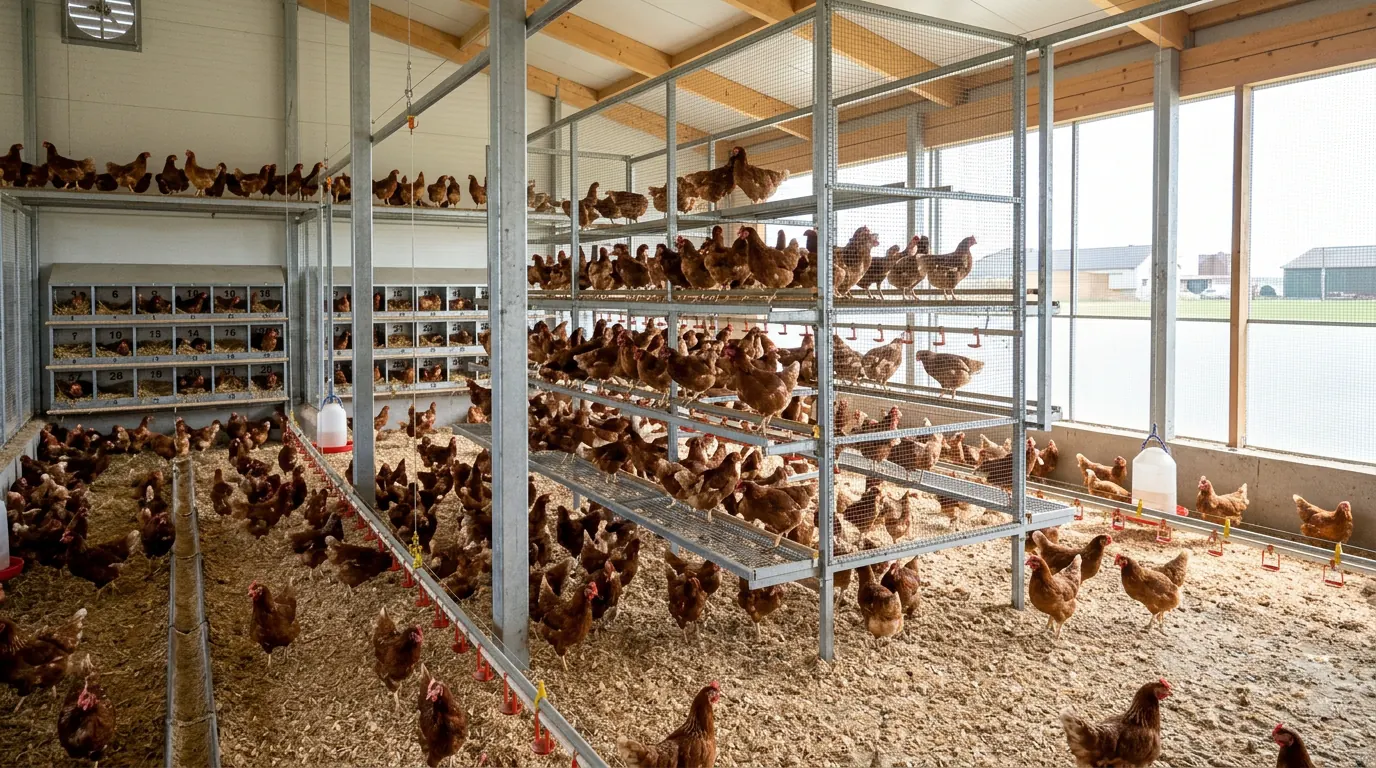
British chicken breeds were developed on farms where a bird had to give eggs and meat on simple feed and a lot of movement. For that reason most of them cope well with free-range keeping, and some do well in a cool, damp climate like Poland's. People usually choose them for small backyard flocks and farms that sell eggs directly, not for industrial production. Industrial production uses breeding lines, which we describe separately, for example Hisex Brown.
Three breeds, three uses
The Derbyshire Redcap is a light, very active laying hen with a large, wide rose comb. The Ixworth is a white hen with pale skin, developed as a dual-purpose bird with an emphasis on meat. The Burford Brown is known mainly for dark brown eggs and is treated as a utility type rather than a show breed. Check the breed standard and plumage color with the breeder or the breed club, because descriptions differ between lines.
Where they come from
The Derbyshire Redcap comes from the English county of Derbyshire and is one of the old farm breeds. The Ixworth was created in the 20th century in the county of Suffolk as a meat bird. The Burford Brown comes from Great Britain and was bred for large, dark eggs. Breed club literature gives exact dates and breeders' names, so we do not base any breeding conclusions on them.
Derbyshire Redcap: an active layer
Looks and build
The Redcap has a slim, upright body and a very large, wide rose comb, which gave the breed its name. The plumage is in shades of brown and black with fine speckling. The big comb is the pride of the breed, but check it in winter: in hard frost and a damp coop it can freeze. The coop should be dry and ventilated, with no drafts at perch height. To compare it with other egg breeds, see our overview of laying hen breeds.
Laying and temperament
The Redcap is described as a good layer of light-shelled eggs, but we give no figure for eggs per year, because it depends on the line, the age of the hen and the feed. The bird is active, flighty and likes to fly, so it needs a high fence or a covered run. It does not suit tight housing. For a calm flock around children, pick a gentler breed. For feeding, follow the standards for laying hens described in our article on feeding laying hens.
Ixworth: a white dual-purpose hen
Use
The Ixworth has white plumage, white skin and a pea comb, which freezes less than a rose comb or a large single comb. The carcass is broad with pale skin, which suits markets that value the look of the carcass. The hen lays light brown eggs. Growth is clearly slower than in broiler lines, so this kind of keeping pays off mainly with direct sales, not on an industrial scale. You can compare it with other types in our overview of meat chicken breeds.
Breed status
In Great Britain the Ixworth is counted among threatened breeds, so breeding birds usually come from a small number of breeders. Avoid mating closely related birds. When you buy, ask where the flock came from and keep records of the parents. Buying from two different breeders is good practice. In Poland old breeds are conserved by the Instytut Zootechniki PIB (National Research Institute of Animal Production), and we cover national breeds in our article on native Polish chicken breeds.
Burford Brown: dark eggs from the Isles
What the Burford Brown is
The Burford Brown is a British type of laying hen, linked above all with very dark, chocolate-brown eggs. Unlike the old show breeds, it does not always have one strictly defined standard, so looks and laying can differ between suppliers. When you buy, ask the breeder for a description of the line and photos of the parents. If you are interested in eggs of other shell colors, read our article on green shell and dark shell hens.
Eggs and shell color
Shell color depends on the breed, but also on the age of the hen and the time of year: at the end of a long laying period the shell can be paler. A strong color does not mean better nutritional value, it is only pigment. So when you sell eggs directly, describe color as a look, not as quality. If you want a basket of eggs in several colors, see also the breeds in our article on hens that lay green and blue eggs.
Which British breed to choose
For eggs, for meat, for a backyard flock
For eggs sold directly, the Burford Brown fits best, because dark eggs stand out in a basket, while the Redcap gives light eggs and a lot of activity. For meat and eggs at the same time, choose the Ixworth. Remember that all three breeds grow and lay more slowly than industrial lines, so the feed cost per kilogram of eggs or meat will be higher. We give no prices for chicks or eggs, because they differ by breeder and season. Check them in classified ads and with several breeders at once.
What to check when buying
Buy from breeders who state where their birds came from and let you see the flock. Look for clean nostrils and eyes, dry feathers around the vent and a sound gait. Keep all new birds apart before you add them to the flock, and watch them every day. If you notice red or swollen eyes, read about conjunctivitis in chickens. Treatment is always decided by a vet.
Housing and flock needs
Coop, range and feed
Utility breeds from the Isles tolerate cold well, but not damp and drafts. The coop needs dry litter, perches and nests in a quiet spot. The birds like to range, and on good grass they cover part of their needs themselves. Balance the ration as for laying hens and treat grain as a supplement. We describe grain proportions in our article on grain for laying hens.
Molt and parasites
In autumn hens lose feathers and stop laying for a while, which is natural. If feather loss is heavy or comes with itching, look up the causes in our article on feather loss in chickens. To limit external parasites in the coop, keepers use, among other things, diatomaceous earth. Settle biosecurity rules and flock registration with your county vet (powiatowy lekarz weterynarii) and on the websites of the Chief Veterinary Inspectorate (Główny Inspektorat Weterynarii) and ARiMR (Poland's Agency for Restructuring and Modernisation of Agriculture). Legal state as of 23.11.2026.
Frequently asked questions
Is the Burford Brown a separate breed?add
The Burford Brown is described as a British utility type known for dark eggs, not as a show breed with one strict standard. So the birds' traits can differ by breeder. When you buy, ask about the line and look at the parents.
What eggs does a Burford Brown lay?add
The Burford Brown is known for eggs with a dark brown, chocolate shell. The color can change with the hen's age and the time of year. A strong shell color does not change the egg's nutritional value.
Is a Derbyshire Redcap suitable for a small backyard?add
The Redcap is active and likes to fly, so in a small yard it needs a high fence or a covered run. In tight housing it quickly turns nervous. It does better on a larger range.
What is the Ixworth chicken used for?add
The Ixworth is a dual-purpose bird: it gives light brown eggs and a carcass with white skin. It grows more slowly than broiler lines, so it pays off with direct sales. The breed is rare, so check where your birds come from.
How much does a British breed chicken cost?add
The price depends on the breed, the bird's age, its origin and whether you buy a chick or a breeding hen. We give no amounts, because they differ between breeders and change during the year. Compare offers from several breeders.
Where can I check the rules for a small flock of chickens?add
Duties on flock registration and biosecurity are set by the county vet and ARiMR. Current legal acts are in the Internetowy System Aktów Prawnych (Poland's online legal database). Before you buy birds, ask about the requirements for your flock size.
Sources & resources
- linkInstytut Zootechniki PIB (National Research Institute of Animal Production) — izoo.krakow.pl
- linkChief Veterinary Inspectorate (Główny Inspektorat Weterynarii) — gov.pl/web/wetgiw
- linkARiMR — gov.pl/web/arimr
- linkInternetowy System Aktów Prawnych (online legal database) — isap.sejm.gov.pl
Prepared by: DlaFerm Team based on data from the sources listed · Publisher: INSTA-TECH sp. z o.o.
Keeping several breeds in one flock?
The <a href="/program-do-ewidencji-kurnika">coop records module</a> in DlaFerm lets you log bird groups, laying and flock events in one place. Create a free farm account or get in touch with us.
Phone
+48 796 258 151