Frizzle chickens: feathers that curl the wrong way
A frizzle chicken has feathers that curl up and outward instead of lying flat against the body. You will find this feather trait in several ornamental breeds. We explain where it comes from, how it is inherited and how to keep these birds in Poland's climate.
verifiedFrom the team that has organised work on poultry farms for years.
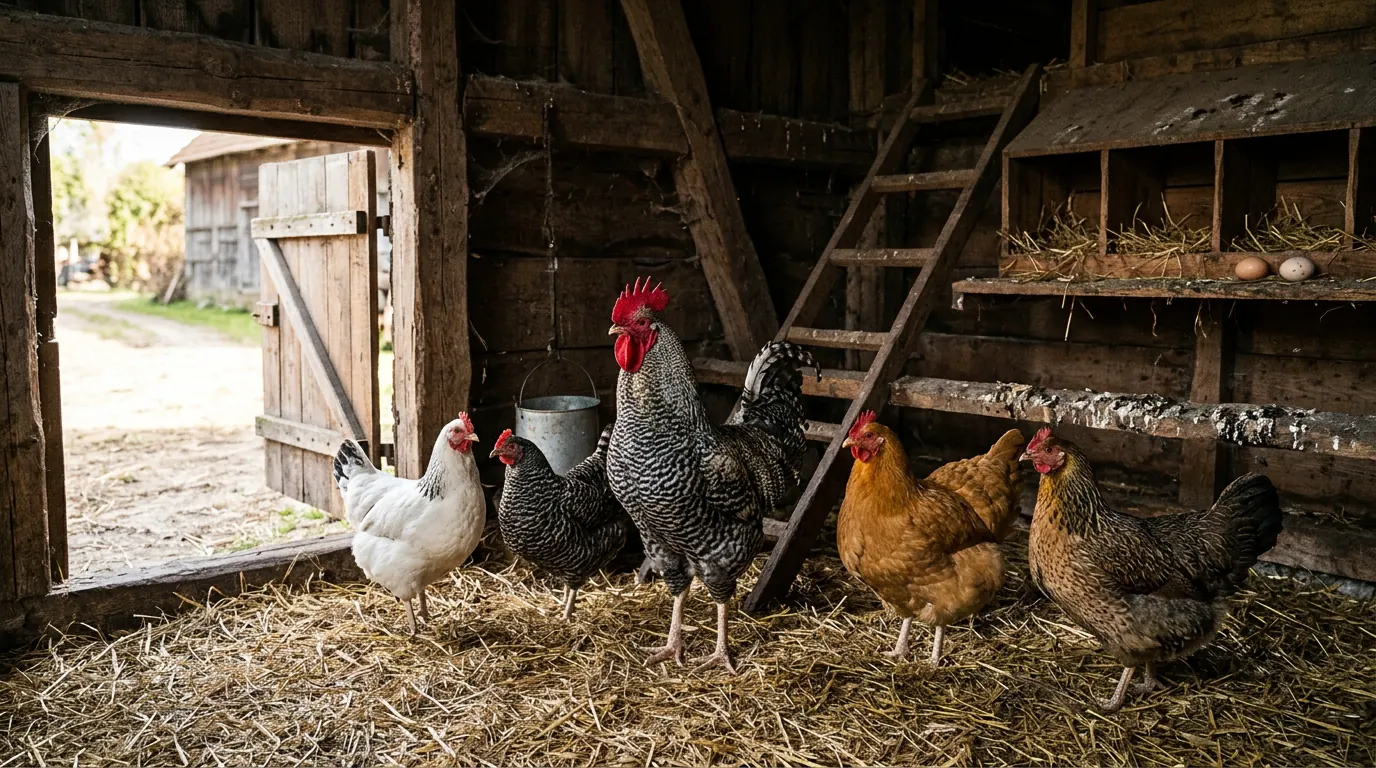
Frizzle chickens have feathers that curl forward and upward, so the bird looks badly groomed. Frizzle is not a separate breed by origin. It is a feather trait that breeders have fixed in several ornamental breeds, for example Pekin bantams and Cochins. In Poland you will mostly meet it in ornamental flocks and at shows. The other birds in our catalog, from popular ornamental breeds to miniature hens (liliputki), usually have smooth feathers that lie flat.
Where frizzled feathering comes from
The feather of a frizzle chicken has a changed structure, so it does not lie along the body but bends outward. A single gene with incomplete dominance controls the trait. This has practical effects for breeding, described below. The ancestor of all chickens is the wild red junglefowl (kur bankiwa), which has smooth, flat feathers. So frizzling appeared only in domesticated birds and people have kept it going.
How to recognize a frizzle chicken
Feathers curled outward
On a true frizzle, all feathers curl: on the back, wings, breast and neck. The feather tips point forward and up, and the bird looks fluffed up even when it is healthy and calm. Ruffled feathers after rain, molting or illness are not a breed trait. If a hen is ruffled and also listless, check the causes in our article on why a hen is listless, because it may be a sign of disease, not frizzling.
Breeds that carry the trait
Breeders have fixed frizzled feathering in several ornamental breeds, including Pekin bantams, Cochins, Polish chickens and other bantams. Breed standards list it as a feather variety next to color varieties. When you buy, check that the seller names the breed and the breeding line. As with Silkie chickens, which have fluffy, hair-like feathers, the look of the bird depends on the structure of the feather itself, so the description should be specific.
Inheriting the frizzle trait
A gene with incomplete dominance
A bird with one copy of the gene has frizzled feathers. A bird with no copy has smooth feathers. A bird with two copies, inherited from two frizzled parents, has feathers so brittle and twisted that they break and fall out. These birds are often called "frazzles". They are almost bare on the back and wings, lose heat quickly and need special care. In a breeding flock, pay attention to this when you choose pairs.
How to pair your birds
To avoid chicks with two copies of the gene, breeders pair a frizzled rooster with a smooth-feathered hen, or the other way round. From such a mating about half of the offspring have frizzled feathers and half have smooth ones. So do not promise buyers that all chicks will be frizzles. Write the mating plan in your flock records, ideally with the pair number and hatch date, for example in the coop records module.
Keeping frizzle chickens
Cold, rain and damp
Feathers that do not lie against the body insulate less and soak through more easily. That is why frizzle chickens cope badly with long rain, frost and drafts. Give them a dry, draft-free coop, a covered run and bedding that does not get damp quickly. On frosty days, limit the time they spend outside. After longer chilling, birds lose condition faster, and signs such as a blue comb call for a check of the cause.
Keeping them with other birds
Frizzle chickens are usually calm, but in a shared run with large, lively breeds they may lose out on feed and water. Provide extra feeders and drinkers, or keep them in a separate group. We describe the rules for mixing poultry species in our article on whether you can keep chickens, guinea fowl and quail together. The principle is similar: birds with different needs and temperaments are better kept apart.
Feather care
Frizzled feathers pick up dirt more easily, and external parasites can hide under them because checking the skin is harder. Part the feathers regularly and look at the skin around the vent, under the wings and on the back. If you suspect parasites, a vet will choose the product and give you the withdrawal period rules if the eggs or meat go to market.
Laying and purpose
The frizzle as a show bird
Frizzling is a trait of looks, not of productivity. Laying depends on the breed that carries the trait and on the breeding line, not on the curled feathers themselves. Most of these hens are kept for their looks, for shows and in hobby flocks. If you want eggs, read our articles on laying hens and laying hybrids. We explain when a young hen starts to lay in the text on when hens start laying eggs.
Where to buy and what to check
Buy frizzle chickens from ornamental bird breeders or breed clubs, not from random ads. Ask for information on the breed, the line and which birds are frizzled and which are smooth. Prices depend on breed, age, origin and bird quality, so agree them directly with the seller. For an overview of costly breeds, see the text on the most expensive ornamental chickens.
Frequently asked questions
What is a frizzle chicken?add
It is a chicken with frizzled feathers: the feathers curl up and outward instead of lying flat against the body. Frizzle is a feather trait found in several ornamental breeds, not one separate breed.
Do frizzle chickens lay eggs?add
Yes, they do, but laying depends on the breed and breeding line, not on the curled feathers. They are most often kept as ornamental and show birds, not for eggs.
How is the frizzle feather trait inherited?add
The trait shows incomplete dominance. A bird with one copy of the gene has frizzled feathers, and a bird with no copy has smooth ones. With two copies the feathers are brittle and break, so breeders pair a frizzled bird with a smooth one.
Are frizzle chickens sensitive to cold?add
Yes, curled feathers insulate less and soak through more easily. They need a dry, draft-free coop and a covered run, especially on rainy and frosty days.
Can a frizzle chicken live with other chickens?add
It can, if the rest of the flock is not too dominant. With large, active breeds, provide extra feeders and drinkers or keep the frizzles apart.
How do I know a chicken is a frizzle and not sick?add
Frizzling shows from a young age and affects all of the plumage, and the bird behaves normally. If ruffled feathers appear suddenly and come with listlessness, contact a vet.
Sources & resources
- linkNational Research Institute of Animal Production (Instytut Zootechniki PIB) — izoo.krakow.pl
- linkChief Veterinary Inspectorate (Główny Inspektorat Weterynarii) — gov.pl/web/wetgiw
- linkMinistry of Agriculture and Rural Development (Ministerstwo Rolnictwa i Rozwoju Wsi) — gov.pl/web/rolnictwo
Prepared by: DlaFerm Team based on data from the sources listed · Publisher: INSTA-TECH sp. z o.o.
Do you keep several breeds and lines in one flock?
In the DlaFerm coop records module you can store breed, line, hatch dates and breeding pairs in one place. Create a free farm account or get in touch with us.
Phone
+48 796 258 151