Do broilers lay eggs? Meat hens and egg laying
Yes, a broiler hen can lay eggs, but meat chickens never reach sexual maturity because they go to slaughter first. Eggs come only from hens in broiler breeder flocks, which run on a strict feeding and lighting program. We explain how these flocks differ from layers and why a broiler from a meat flock makes a poor egg hen.
verifiedFrom the team that has organised work on poultry farms for years.
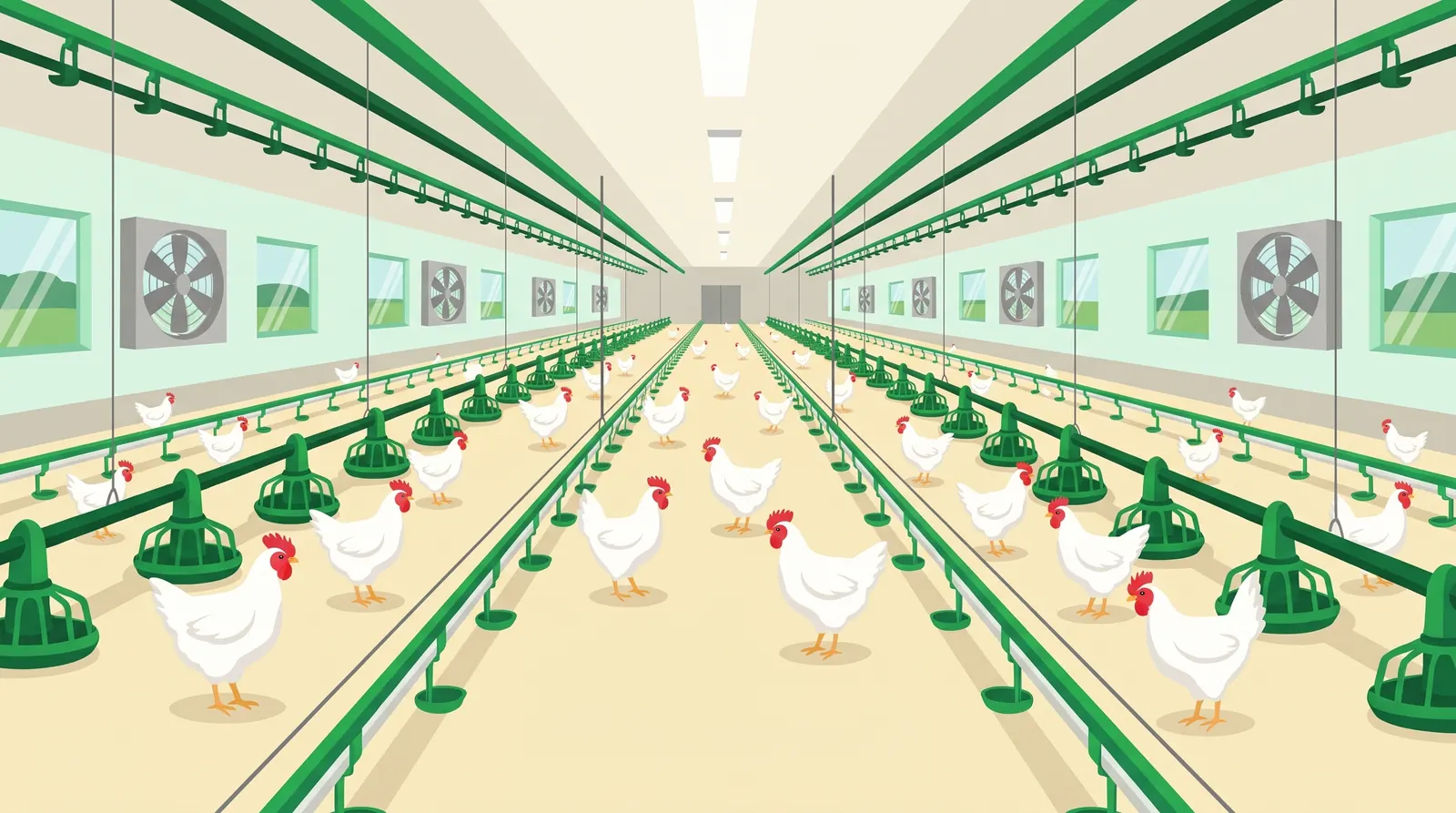
Do broilers lay eggs? Yes. A female broiler is an ordinary hen and can lay after she matures. On a working farm you almost never see it, because meat chickens leave the house long before the first egg. Eggs come from hens in broiler breeder flocks, where breeding birds produce hatching eggs for the next meat chicks.
Why people ask
Backyard keepers sometimes buy meat chickens and ask a few months later when they will start to lay. Others wonder whether broiler hens lay well enough to replace layers. The answer depends on the bird: a meat chicken from a fattening flock or a breeder hen. Below we separate the two cases and describe how egg production works in meat-type hens.
Broiler from a meat flock vs breeder hen
A meat chicken never reaches its first egg
A broiler is a bird from a meat line, bred for fast weight gain. A fattening flock goes to slaughter young, before the hens reach sexual maturity. That is why you will not see eggs in a broiler house. If you keep such a hen longer, she gets very heavy, and her legs and heart are overloaded by growth. For the types of poultry by purpose, see Poultry types by purpose: layer, meat, dual-purpose, ornamental.
Breeder hens lay hatching eggs
Hens in breeder flocks (broiler breeders) live longer, enter lay and produce the eggs that hatch into meat chicks. According to the Ross Parent Stock Management Handbook 2023, keeping such a flock splits into rearing and laying, with these stages: from 15 weeks to light stimulation, from stimulation to 5% production, from 5% production to peak, and from peak to depletion. This is professional production run by tables and regular measurements, not backyard keeping.
When broiler hens lay eggs
Age at first egg in meat hens
The exact age at first egg depends on the line, the hens' body weight and the lighting program, so check the breeder's handbook for your line. In breeder flocks, lay is started on purpose: according to the Ross handbook, from 15 weeks (105 days) the flock moves to the period before light stimulation. Only after light stimulation do the hens come into lay, and the peak comes after the flock reaches 5% daily production. For the general rules for laying hens, see When do hens start laying eggs: age at first egg and peak lay.
The role of light
The Ross handbook says that in controlled-environment housing, a constant short day length from day 10 of life solves many production problems: delayed maturity, hens that are too heavy, poor flock uniformity and high feed use. The lighting program should also make sure all birds respond to the longer day. In open houses, follow local rules and the line breeder's advice.
Why meat hens are kept on restricted feed
Body weight control instead of feeding ad libitum
A broiler tends to put on weight fast. A breeder hen fed without limits would be too heavy, lay fewer eggs and hatch worse. The Ross handbook stresses that females must keep gaining weight in early lay to reach the best production and hatchability. You set the feed amount after monitoring body weight, daily egg production and egg weight. When one of these drifts from target, the keeper changes the ration. For the nutrition needs of fattening broilers, see Broiler feeding.
How broiler feeding differs from layers
A layer from a laying line is light and has a high egg potential, so she eats what she needs to lay. A meat hen has the potential to grow muscle, and eggs are a side effect of the breeding program for her. To keep her laying, you must weigh birds and watch flock uniformity. For layer feeding rules, see Feeding laying hens.
Laying problems in meat hens
Abnormal eggs, prolapse, broodiness
According to the Ross handbook, you can limit the share of abnormal eggs and the risk of prolapse, broodiness and egg peritonitis with a proper lighting program and body weight control. All of these conditions lower welfare and output. If birds show symptoms, call a vet; the vet chooses the treatment and dose, and a withdrawal period applies after any medicine. You can keep treatment records in the Treatment and withdrawal period module.
Floor eggs and nests
In breeder flocks, eggs laid on the litter outside the nest are a topic of their own. The Ross handbook gives them a separate chapter, along with nest setup. Floor eggs are often dirty and hatch worse. Hens that eat eggs are a different problem; we cover the causes in Why hens eat eggs: causes and how to prevent it.
Is it worth keeping meat hens for eggs
Broiler as a layer: when it makes sense
A meat hen from a fattening flock is not suited to laying. She is heavy, and meat genetics drive her growth. She lays few eggs and is hard to keep in good condition without specialist feeding. We give no egg count, because it depends on line, age and housing; check it in the line breeder's handbook. If you want eggs for your own table, choose laying birds. For how to keep hens for eggs, see How to keep hens for eggs.
Which hens to choose instead of broilers
For laying, pick laying breeds and hybrids such as Rosa, Dominant or Italian hens (włoszki). If you want eggs in an unusual color, you will find breeds in Hens that lay green and blue eggs: breeds. Choose by coop requirements, run size and the number of eggs you expect, not by how heavy the hen is.
How to keep records for a meat flock
What to record in a fattening flock
In a fattening flock, what counts is stocking density, weight gain, feed and water use, mortality and the date of depopulation. In a broiler house, look after ventilation and housing requirements, described in Broiler house requirements and Poultry house ventilation. You can keep flock records in the digital flock card.
What to record in a breeder flock
A breeder flock adds measurements: daily egg production, egg weight, hen body weight and feed clean-up time. The Ross handbook says that monitoring body weight, daily egg production and daily egg weight is the basis for feed ration decisions. Record these data daily and compare them with the target table for your line.
Frequently asked questions
Do broilers lay eggs?add
Yes, a broiler hen can lay eggs. But meat chickens do not reach sexual maturity because they go to slaughter. Eggs come from hens in breeder flocks.
When do broiler hens start laying eggs?add
It depends on the line, body weight and lighting program. In breeder flocks, lay is triggered by light stimulation after rearing, and the peak comes after the flock reaches 5% daily production. Check the exact age in the line breeder's handbook.
Do broiler hens lay as well as layers?add
No. Meat hens have different genetics and need restricted feeding and body weight control. For eggs for your own use, choose laying breeds or hybrids.
Are broiler eggs safe to eat?add
Eggs from breeder hens are mainly used to hatch meat chicks. If you still want to eat them, remember the withdrawal period after any medicine given to the hens; your vet tells you how long it is.
Can a broiler hen go broody?add
Broodiness occurs in meat hens, but in breeder flocks it is seen as a problem that reduces laying. The Ross handbook recommends a lighting program and body weight control to limit it.
Is it worth keeping broilers past slaughter age?add
No. Birds from meat lines grow very fast and, kept longer, have leg and circulation problems. If you want hens for eggs, buy laying birds.
Sources & resources
- linkRoss Parent Stock Management Handbook 2023 (Interactive)
- linkInstitute of Animal Production, National Research Institute (Instytut Zootechniki PIB) — izoo.krakow.pl
- linkChief Veterinary Inspectorate (Główny Inspektorat Weterynarii) — gov.pl/web/wetgiw
Prepared by: DlaFerm Team based on data from the sources listed · Publisher: INSTA-TECH sp. z o.o.
Running a broiler flock? Record it in the DlaFerm digital flock card
The digital flock card keeps flock data in one place: stocking, weight gain, feed use, mortality and house records. Create a free farm account in DlaFerm or get in touch.
Phone
+48 796 258 151