Why hens eat eggs and how to stop it
Hens most often eat eggs when an egg is easy to reach or invites pecking, for example after the shell cracks. Diet can be the cause, but the coop fails just as often: bright nests, crowding or boredom. We show how to recognize each cause and what to change in practice.
verifiedFrom the team that has organised work on poultry farms for years.
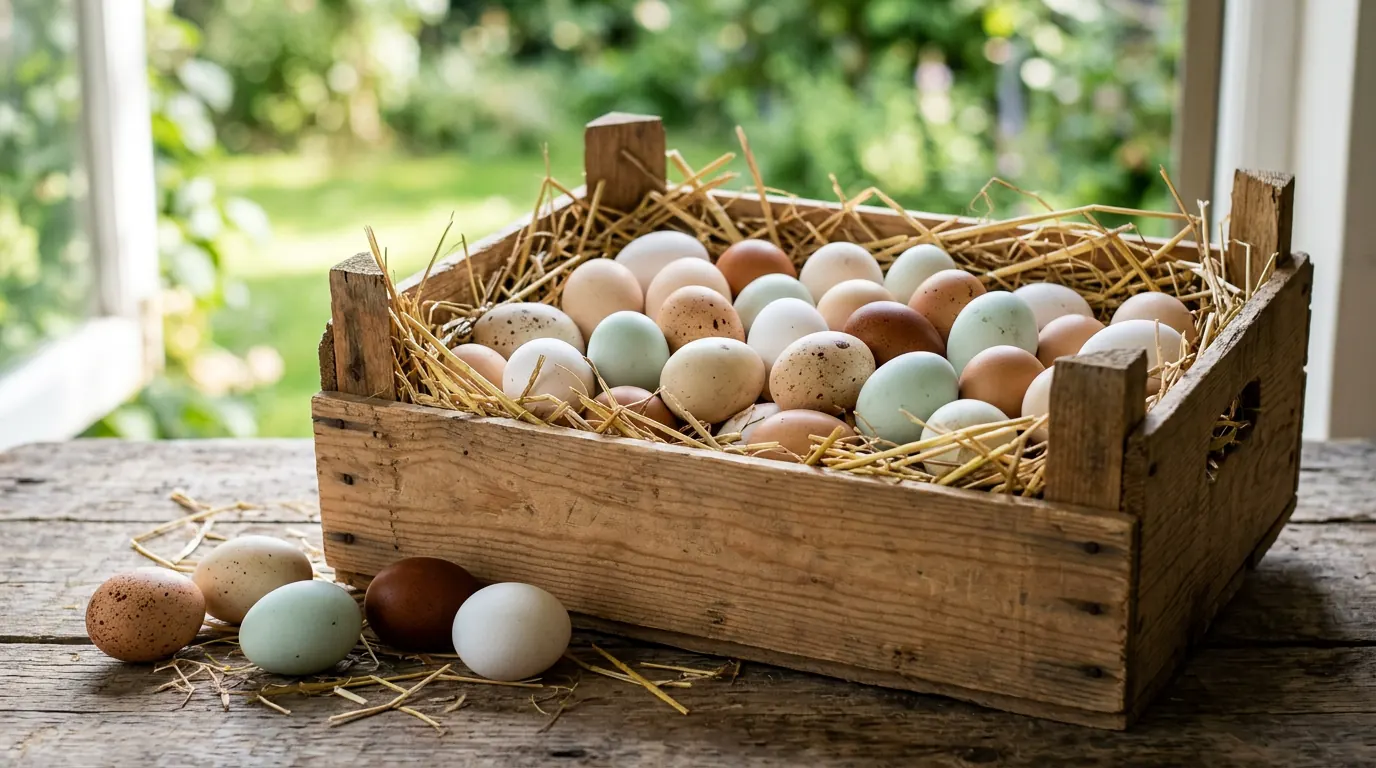
Hens eat eggs because an egg in the coop is easy food or something to peck. The most common causes are broken or cracked shells, a diet low in protein or calcium, bright and exposed nests, overcrowding and boredom. Before you change anything, check which of these apply to you. We cover the basics of keeping laying hens in How to keep hens for eggs.
Where the problem comes from
Egg pecking is a learned behavior. A hen that has broken an egg once and tasted the contents often returns to the habit. It spreads fast through the flock, because other birds copy their neighbors. So react to the first case you see instead of waiting for it to pass. The longer eggs stay within reach of beaks, the greater the risk that the habit sets in across the whole flock. Also note whether one hen or a larger group is involved, because that decides how far you need to act.
Broken eggs and the pecking habit
Cracked shells
Eggs with thin or cracked shells are the most common reason for egg eating. The hen pecks at the leak and learns that the contents are food. Cracks can come from too little calcium in the diet, but also from an egg dropping onto a hard floor or being crushed by other birds in the nest. Check the nests and inspect eggs for damage at every collection.
A habit that spreads in the flock
Hens learn from each other. One bird that starts pecking eggs can pass the habit on to others. Remove broken eggs immediately, before other birds see them, and catch the birds that clearly show the habit. Watching the flock lets you catch the start of the problem before it reaches everyone.
Diet and egg eating
Protein, calcium and trace minerals
A diet low in protein, calcium or some trace minerals can encourage egg eating, because the bird looks for what it lacks. Aviagen's parent stock materials stress that nutrient values must be adapted to local conditions, ingredient quality and feeding strategy, not copied unchanged. So discuss the feed composition with a nutrition adviser or the feed producer instead of adding random supplements.
Access to feed
If birds get little feed or it is shared unevenly, some hens look for extra food in the nests. Check that every bird can reach the feeder and drinker, and that feed does not run out before the next fill. Change the diet gradually and watch the flock for a few days.
Nests, light and stocking density
Bright and exposed nests
Nests under strong light encourage pecking, because eggs and birds are easy to see. Darken the nests so light falls mainly on the floor, not on the shells. Place them in a quiet spot with little traffic. We also cover nests and laying in Why hens stop laying eggs.
Crowding and boredom
Too many birds per square meter raises stress and competition for space, and bare, boring coops lead birds to peck at anything within reach. Provide litter for scratching, hanging objects to peck, and enough room on perches and in nests. Check the litter, because wet, compacted litter makes things worse.
When stress or disease is behind egg eating
Stress and predators
Noise, predators, sudden changes in the flock or heat can cause stress that shows in behavior. Secure the coop and run against pests, and in hot weather provide shade and ventilation. We write more about protecting the flock in Marten, fox, hawk: how to protect hens from predators, and about overheating in Heat stress in poultry.
Disease and your vet
A bird that eats eggs and also looks listless, loses appetite or has abnormal droppings may be sick. We describe such signs in Listless hen: causes. The vet chooses the medicine and dose after examining the flock, not the keeper on their own. If the problem continues after you improve conditions, report it to your vet.
A step-by-step plan for the coop
Collecting and removing eggs
Collect eggs several times a day, ideally at fixed times, so eggs do not sit long in the nests. Remove every broken egg at once and clean the nest before birds start pecking the leftovers. Record collections and losses, because after a few weeks you can see clearly whether the problem is growing or fading.
Watching the flock and logging events
Watch the flock daily, especially at egg collection and when you change feed. Note which nests are attacked most often and which birds behave oddly. Such a log makes talking to your vet easier and shows whether your changes work.
Frequently asked questions
Why do hens eat eggs?add
Most often it starts after an egg breaks and a bird notices the contents and begins to peck them. A diet low in protein or calcium, bright nests, crowding or boredom can also be the cause. Check several factors at once.
How do you stop hens eating eggs?add
In many cases you can, by removing broken eggs quickly, darkening the nests and improving conditions in the coop. A habit that has spread through the whole flock takes more time and consistency.
Does egg eating always mean a calcium deficiency?add
Not always. Low calcium can cause thin shells, which invite pecking, but coop conditions, stress and boredom can be the cause too. Check the feed composition with the producer or a nutrition adviser.
How can you tell if a hen is sick?add
Watch appetite, activity, feather condition and droppings. A listless bird, one with closed eyes or abnormal droppings needs a vet's advice. The vet diagnoses and treats, and chooses the medicine and dose.
How often should you collect eggs to reduce the problem?add
Ideally several times a day, at fixed times. The less time eggs spend in the nests, the smaller the chance that one breaks and pecking starts. Collecting also helps you spot damaged eggs quickly.
Can you prevent egg eating without extra cost?add
Yes. Some steps are just routine changes: collecting more often, darkening nests, removing broken eggs and providing litter for scratching. They mainly take time and consistency in running the flock.
Sources & resources
- linkRoss 308 Parent Stock Nutrition Specifications 2021
- linkRoss Parent Stock Management Handbook 2023 (Interactive)
- linkChief Veterinary Inspectorate (Główny Inspektorat Weterynarii): gov.pl/web/wetgiw
- linkNational Research Institute of Animal Production (Instytut Zootechniki PIB): izoo.krakow.pl
Prepared by: DlaFerm Team based on data from the sources listed · Publisher: INSTA-TECH sp. z o.o.
Do you keep a laying flock and want to track egg production?
The DlaFerm.pl <a href="/program-do-ewidencji-kurnika">coop records</a> module lets you log egg collections, losses and flock events in one place. Create a free farm account in DlaFerm.pl and see how it works in practice.
Phone
+48 796 258 151