Marten, fox, hawk: how to protect chickens from predators
Martens, foxes and hawks attack chickens in different ways, so protection differs too. A marten gets in through gaps in the coop, a fox works the run through weak fencing, and a hawk strikes from the air. First seal the coop and shut the birds in at night, then secure the run, and last cover the birds from above.
verifiedFrom the team that has organised work on poultry farms for years.
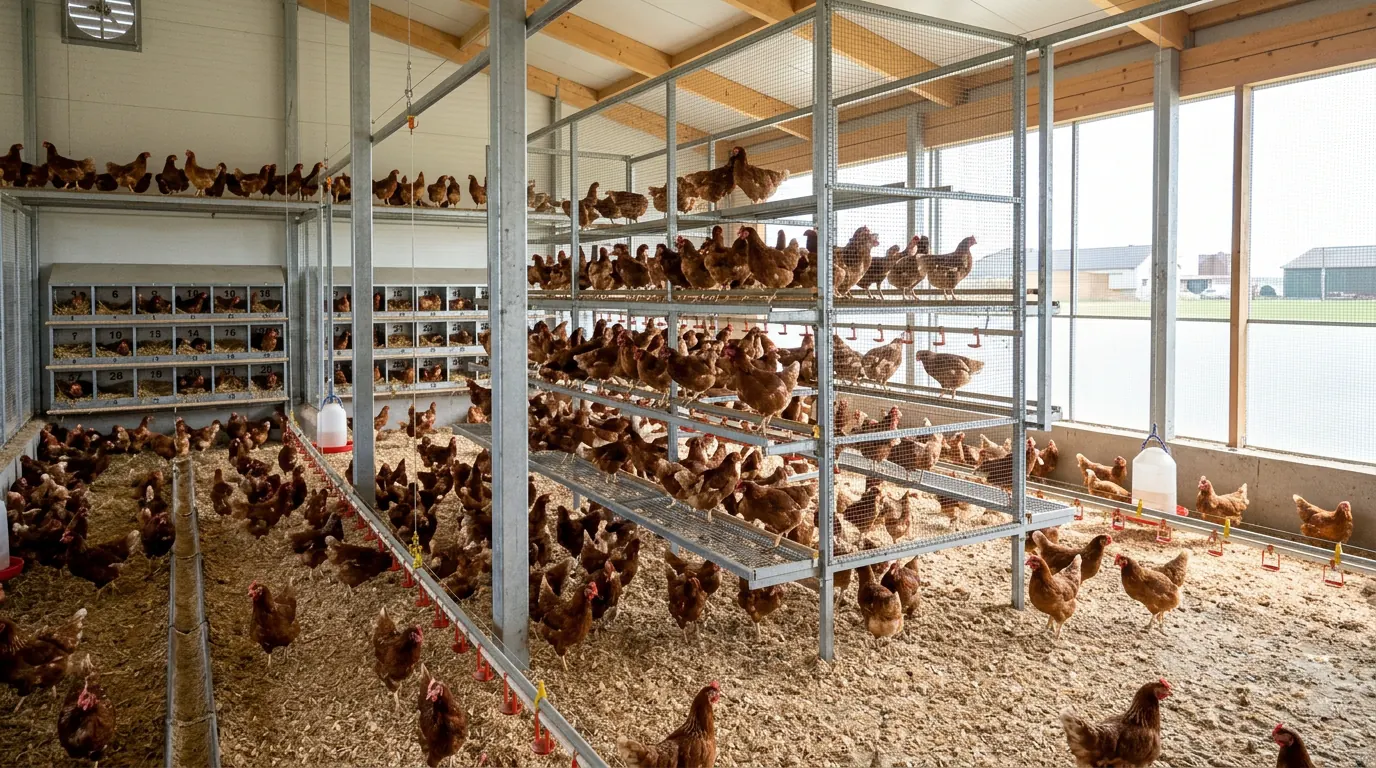
Marten, fox and hawk are the three predators that most often threaten chickens on a farm. A marten squeezes through small gaps in the coop and can kill many birds in one night, often without eating them. A fox hunts mainly at dusk and in the run, and a hawk attacks from the air, usually during the day. Each needs different measures, but the order is always the same: first a tight coop and nightly lockup, then run fencing, and last cover against birds of prey. Below we describe how each predator works and what really cuts losses.
Where to start
Before you bring in birds, check the coop for openings that are not obvious at first glance: gaps at floor level, doors that do not close tightly, and vents without mesh. We describe building and equipment rules in How to set up a chicken coop, and you will find the checklist before stocking in Preparing the coop before stocking. Good protection starts with an inspection, not with buying traps.
How martens kill chickens
What a marten attack looks like
A marten is agile and can squeeze through a very small opening. It attacks at night, when birds sleep on the perches. Instead of eating one victim, it often kills more, because it reacts to the movement and noise of the flock. In the morning keepers find injured or crushed birds by the perches, with bites to the neck and head. The marten is considered one of the most dangerous poultry predators on rural farms. If one is around, expect more losses until you close the entry point.
How to identify the culprit
Marten tracks are small, and the victims often lie side by side with bitten-through necks. A fox usually carries off the carcass, while a marten leaves victims in place and returns for more. If you find birds in the morning that were not eaten but have neck injuries, look for a hole in the wall or at floor level around the coop, especially where boards end and wire mesh begins. Check the whole perimeter, because a marten enters any gap it can widen.
Fox in the run and near the coop
When a fox hunts
A fox hunts mainly at dusk, in the morning and at night, but in rural areas it can also be active in daytime, especially when it has young to feed. It picks easy prey: unsupervised birds in the run, birds near a weak fence, or those that have wandered away from the yard. Birds vanishing without signs of a struggle can be its mark. After nightly lockup, check that the head count is right, and watch for birds that do not come back on time.
A fence a fox cannot beat
A fox does not only jump a fence. Digging under is a common problem, because mesh buried too shallow is easy to get around. The run fence should be tall, without big gaps, and firmly fixed to the posts. Good practice is mesh bent outward at the bottom, or weighted with stones. Before winter and after heavy rain, check for new gaps in the fence. See also Chicken fencing: run, height, fox protection.
Hawk over the run
Why birds are at risk from above
A hawk hunts from height and surprises a hen in open space. Young birds and those that stray from the flock are most at risk. Birds near shrubs or buildings have more cover than those in empty ground. The threat usually shows as a sudden alarm in the flock: hens run under cover and freeze. In the run it is worth having places where birds can hide quickly but that do not make it hard to check the flock.
Covering the run
The simplest solution is netting or a cover over part of the run, especially over the spot where birds spend the most time. The cover need not span the whole area, but it should give hens quick shelter. Remember that it does not protect against a marten or fox, so it works only together with the fence. Marks from birds of prey are sometimes mistaken for wounds from other hens, so after an injury, record the event and talk to a vet.
A tight coop and nightly lockup
Building tightness
Check the walls, floor, roof and the areas around doors. Look for gaps, knot holes, loose boards and leaks near ventilation. Cover vents with fine mesh that stops a predator but keeps air flowing. An earth floor needs special attention, because martens and foxes dig under walls. When repairing, do not leave gaps that look harmless but widen over time.
Nightly lockup
Shut hens in the coop before dusk and let them out only in the morning, when it is light. Secure doors and pop holes with a latch a predator cannot open with a paw. Always check that every bird has gone inside before you close up, because a hen left outside is an easy target. Automatic doors need regular checks and a manual backup lock. We describe coop routines in How to keep laying hens.
What to do after a predator attack
First steps
After an attack, secure the spot, move dead birds away from healthy ones and check whether the predator is still nearby. Separate injured birds and watch them for a few hours, and if in doubt, consult a vet. If unusual signs appear in the flock, such as sudden deaths with no visible cause, report it to the county veterinary officer (powiatowy lekarz weterynarii). Information on veterinary supervision is on the website of Poland's Chief Veterinary Inspectorate (Główny Inspektorat Weterynarii).
Recording losses and changes to protection
Write down every event: date, number of birds, place, description of tracks and what you changed in your protection. After a few weeks you will see a pattern, for example attacks always at the same opening. Such records help when talking to an adviser and in judging which measure works. In DlaFerm you keep these records in the coop records module, and you build a protection plan in the biosecurity plan generator.
Frequently asked questions
How do martens kill chickens?add
A marten enters the coop through gaps and kills birds on the perches, often biting through the neck. It usually does not eat all its victims on the spot, so many hens can die in one night. This most often happens when the building has gaps.
How can you tell a fox attack from a marten attack?add
A fox usually carries off carcasses, leaving feathers and signs of a struggle. A marten leaves victims in the coop, often several birds in one place. The direction of entry and tracks on the ground help identify the culprit, but if in doubt, ask an adviser.
Do foxes attack chickens in the daytime?add
A fox hunts mainly at dusk and at night, but can also be active by day, especially when feeding young. So unsupervised birds in the run are at risk in daylight too. Shutting hens in the coop before dusk reduces risk at both times.
Do hawks attack adult chickens?add
A hawk hunts birds in open space, including adult hens, though young birds and those straying from the flock are more at risk. A cover over part of the run and places where birds can hide quickly give protection. A fence alone does not stop an attack from above.
How do you protect a chicken run from foxes?add
The fence should be tall, without big gaps, with mesh protected against digging under, for example bent outward at the bottom. Check for gaps regularly after rain and after winter. The choice of materials depends on the terrain and on the predators' habits in your area.
Can you eat the meat of birds after a predator attack?add
Do not decide this yourself. Birds that are injured or died with no clear cause should be assessed by a vet, who decides what happens to them. Record the event and keep the documentation so you have a clear picture of the situation.
Sources & resources
- linkChief Veterinary Inspectorate (Główny Inspektorat Weterynarii) — gov.pl/web/wetgiw
- linkNational Research Institute of Animal Production (Instytut Zootechniki PIB) — izoo.krakow.pl
- linkMinistry of Agriculture and Rural Development — gov.pl/web/rolnictwo
- linkEFSA — efsa.europa.eu
Prepared by: DlaFerm Team based on data from the sources listed · Publisher: INSTA-TECH sp. z o.o.
Want to record coop losses and see what is happening in your flock?
The coop records module lets you log events, losses and changes to protection in one place. Create a free farm account or get in touch, and we will show you how it works in practice.
Phone
+48 796 258 151