Chicken Fencing: Run Height, Mesh and Fox Protection
Fencing around the run protects your flock from foxes, hawks and martens, but only if it is secured in the ground, tall enough and free of gaps. We explain how to plan the run fence step by step. We also give rules to follow during installation and daily checks.
verifiedFrom the team that has organised work on poultry farms for years.
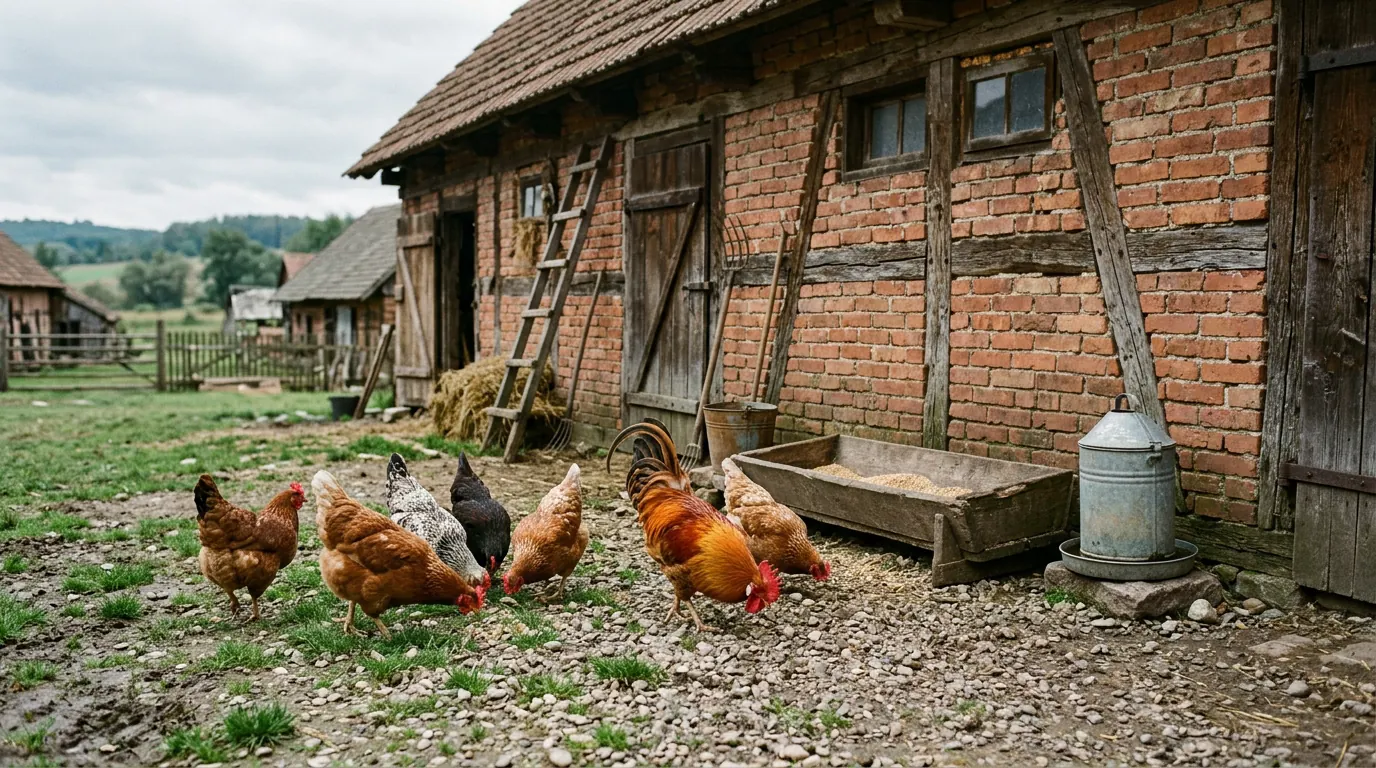
Fencing protects your flock from predators in the run and nearby. The most common threat is the fox, which digs under the fence or jumps low ones. Good fencing has three features: it is secured in the ground, it has the right height, and it is made of material that does not corrode after the first season. Choose the size of the run using the rules for a chicken run.
Why fencing, not just a barrier
A fence of boards or posts does not stop small predators that squeeze through gaps. Wire netting closes the space over its full height, and the mesh makes it hard for paws and snouts to get in. The second problem is birds from above. Hawks and crows attack from the air, so side fencing alone is not enough. You also need to think about cover over the run. When attacked, hens panic and pile into one corner. Crowding can cause injuries and suffocation, so the run should be sealed on all sides and the corners reinforced.
How to choose the fence height
Assess the site before you buy
Before you buy netting, walk the whole run and check where the ground is low, and where there are bushes or a woodpile a predator can jump from. These spots need a taller fence or extra protection. A fox prefers to jump where it has something to push off from. Remove anything near the fence that could give it a foothold.
Height that suits your birds
Laying hens can fly onto a low fence, especially when startled. So the fence should be tall enough that birds cannot fly out and a predator cannot jump in. Decide the exact height by watching your own farm and checking local requirements. Do not rely only on what your neighbors did, because their land may differ.
Cover from above
Fit netting or a light netting roof over the run. It protects against hawks and crows and also stops birds escaping. Remember that cover sags under the weight of snow and leaves. After every winter, check its tension and any spots that have dipped, because sagging netting can become a bridge for a predator.
Digging and corners: the weakest points
Stopping digging
The netting should reach down into the soil, or have a horizontal strip at the bottom laid on the ground and bent outward from the run. A fox that meets this obstacle digs at it and usually gives up. Cover the strip with stones or soil, because exposed netting can be pried up. Do this before you bring in the birds, not after the first attack.
Corners and gates
Corners and the area around the gate are the most common break-in points. Set the posts firmly and tension the netting so it does not stand away from the ground. The gate should close tightly and have a latch that you fasten every evening. Leave no gaps at the gate that an animal could fit through.
Tracks and checking the ground
After rain, look at the ground along the fence. Paw prints, scratched soil by the netting and feathers in the grass are signs that something tried to get in. Write down each such event in a log and fix the spot before the predator comes back. A quick response is usually enough, because a fox learns first at the easy points.
Mesh, material and installing the netting
Mesh size
The mesh must be small enough that a predator's paw and a small animal's snout cannot pass through, and birds cannot squeeze their heads through. Mesh that is too large gives only the appearance of protection. When buying, compare the dimensions in the manufacturer's specification, not how it looks. It is worth having the finest mesh near the ground, because that is where most attempts to get in happen.
Material and corrosion resistance
Netting exposed to rain, damp and manure corrodes quickly unless it has a protective coating. Choose galvanized or coated product made for outdoor use. Cheap material breaks at bends and on fixing wires, which creates gaps you cannot see from a distance.
Tension and fixing
Loose, hanging netting gives a fox a foothold and makes it easier to pry up. Tension it evenly and place fixings closer together at corners, gates and the bottom. After the first season, check the fixing points, because wind and animals can loosen them. After every strong storm, walk the whole fence and repair broken sections before you shut the birds in for the night.
Daily checks of the run
A routine before closing up
Before you shut the coop for the night, walk along the fence and check the gate. Count the birds in the coop and in the run, because a few missing may mean a predator has already got in. Look for feathers by the netting and for tracks. This daily check takes a few minutes and gives a quick warning of a problem.
Recording repairs and events
Write down every fence repair, every attack and every change to the fence, with the date. After a few months you can see which spots keep causing trouble and where to reinforce the fence. These records also help when you plan to replace the netting. For record keeping you can use the coop records module, which keeps all events in one place.
Link with the coop
The run and the coop form one whole. The pop hole for the birds should be covered with netting and closed at night, because a leaky entrance is how a fox most often reaches the flock. Construction details are in the article on coop requirements for laying hens.
Legal requirements and welfare in the run
Where to find current rules
You can find the rules on keeping poultry in Poland's ISAP (Internetowy System Aktów Prawnych, the online legal acts database). The legal state this text is based on is 22.11.2026. Farm requirements are checked by the Chief Veterinary Inspectorate (Główny Inspektorat Weterynarii) and the county inspectorates. Before building or rebuilding a run, call your vet or an adviser at the county agricultural advisory center, because local guidance can be more detailed than the general rules.
Welfare and the fence
The run should protect birds, but must not confine them in a cramped space. Plan the fence so birds have room to move, light and soil to scratch in. A cramped, shaded run encourages stress, feather pecking and scuffles. Welfare improves when the run is varied and the fence does not split it into pieces that are too small.
Frequently asked questions
What is the best chicken fencing against foxes?add
The best is netting with small mesh, protected against corrosion and fixed to stable posts. Securing the bottom is just as important, because a fox usually digs under the fence. Match the specification to your site and talk it over with your vet or an adviser.
Does a chicken run need a roof?add
Cover from above protects against hawks and crows, which attack from the air. Without it, side fencing does not protect the whole flock. Decide based on the threats in your area and on watching your birds.
How do I stop a fox digging under the fence?add
Lay a horizontal strip of netting on the ground at the bottom, bent outward from the run, or bury the netting in the soil. Cover the strip with stones or soil. Do this before you bring in the birds and check the spot after rain.
How often should I check the run fence?add
Before closing the coop for the night, check the gate and fence and count the birds. After every storm and strong wind, walk the whole fence. Write down each repair with the date so you can see repeating problems.
Does a fenced chicken run need a permit or notification?add
Requirements for keeping poultry come from the rules listed in ISAP, Poland's online legal acts database. It is worth checking the state as of 22.11.2026 before you build. If in doubt, contact your county vet or the veterinary inspectorate.
What should I do after a fox has attacked my flock?add
Secure the site of the attack, count the birds and check injured hens. Record the event in your coop records. Injured birds need a vet's assessment, and the vet chooses the treatment, which you then follow as advised.
What mesh size should I choose for chickens?add
The mesh should be small enough that a predator's paw and a bird's head cannot pass through. Use the finest mesh near the ground, where attempts to get in happen. Compare dimensions in the manufacturer's specification, not just how the roll looks.
Sources & resources
- linkChief Veterinary Inspectorate (Główny Inspektorat Weterynarii) — gov.pl/web/wetgiw
- linkInternetowy System Aktów Prawnych (online legal acts database) — isap.sejm.gov.pl
- linkNational Research Institute of Animal Production (Instytut Zootechniki PIB) — izoo.krakow.pl
- linkMinistry of Agriculture and Rural Development — gov.pl/web/rolnictwo
- linkEFSA — efsa.europa.eu
Prepared by: DlaFerm Team based on data from the sources listed · Publisher: INSTA-TECH sp. z o.o.
Do you run a chicken run and coop on the same farm?
The coop records module in DlaFerm.pl keeps fence repairs, events and bird counts in one place. Create a free farm account and see how it works in practice.
Phone
+48 796 258 151