East Indie duck (Emerald duck) — the small black ornamental duck
The East Indie duck, called kaczka smaragdowa (emerald duck) in Poland, is a small ornamental duck with black plumage and a metallic green sheen. We cover its looks, temperament, output and care needs.
verifiedFrom the team that has organised work on poultry farms for years.
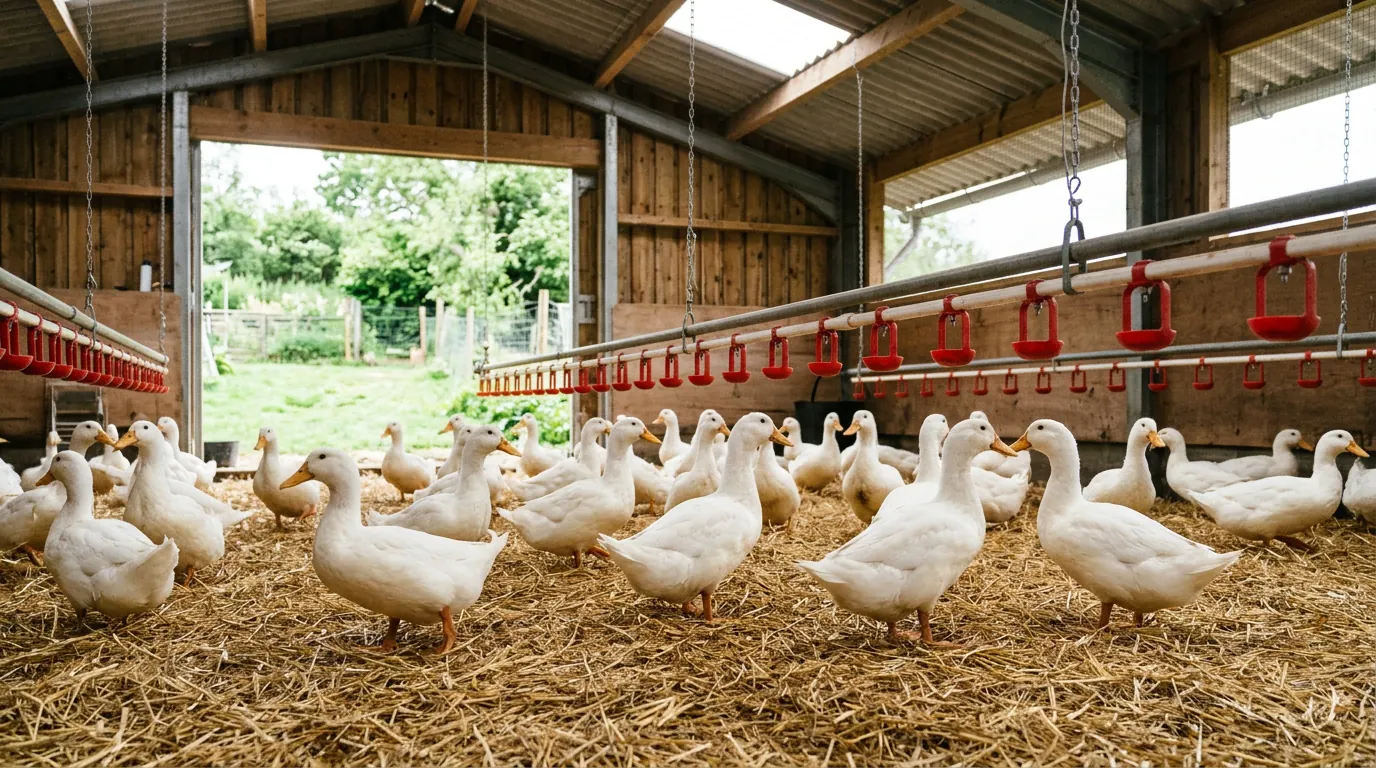
The East Indie duck is a small, fully black ornamental duck. In the light its feathers shine a deep green, which gave it the Polish name "smaragdowa" (emerald). Abroad the breed goes by "East Indie" or "Black East Indian". Despite the name it does not come from the East Indies, and breeders regard it as a breed developed in North America. You keep it mainly for looks, not for eggs or meat. We explain this split in our article on poultry production types.
Who this breed suits
The East Indie duck suits a keeper who wants calm, decorative birds on a pond or in a garden and does not expect production results. It is lighter than utility ducks, so it needs less space and less feed. If you like small breeds, compare it with call ducks and the Dworka duck. All three end up in flocks mainly as ornamental birds.
What an East Indie duck looks like
Plumage and color
The whole plumage is black, with no white markings. In good light the feathers on the back, neck and wings give a metallic green glint, like bottle glass or green opal. Bill, legs and eyes are dark. The green sheen is strongest in young, healthy birds kept in shade. Strong sun can fade it to a brownish tone over time, so a shaded corner of the run helps.
Build and size
This is a small duck with a compact build, lighter than a utility-type domestic duck. The body is short and rounded, the neck thin and the head small. Drakes and ducks look alike. The drake usually has a greener bill and a stronger sheen. For exact weights and standard details, check the breed standard of a Polish or foreign breeders' association, because details matter for show birds.
Temperament and usefulness
Disposition
Keepers describe East Indie ducks as cautious and rather shy. They are not as tame as some other ornamental breeds, so they need time if you feed them by hand every day. Their light build lets them escape in low flight, so it is worth securing the run with netting or clipping the flight feathers on one wing. Decide how to handle the wings together with a vet or an experienced keeper of this breed.
Eggs and meat
The breed was not created for production, and it lays the number of eggs typical for small ornamental ducks, far fewer than laying breeds. If you want eggs, look at the breeds in our article on laying ducks. The carcass is too small for profitable fattening. The small black feathers also spoil the look of the carcass after plucking. You buy this breed for the view on the pond and for show breeding.
How to keep East Indie ducks
Pen, water and bedding
Ducks need a dry night shelter with a thick layer of clean bedding, which you must change often because waterfowl wet it heavily. By day the duck should have water deep enough to dip its whole bill and eyes, for example a shallow pond or a trough. Clean water keeps the feathers in good condition. In winter, follow rules similar to those for other small water breeds, described in our article on keeping ducks in winter.
Feeding
Give adult ornamental ducks a complete feed for ducks or waterfowl, plus greens and access to water at every feeding. Ducks eat wet or soaked feed, and dry feed without water risks choking. Rations and composition for ducklings, young birds and birds in the breeding season depend on the feed producer. If you have doubts about feeding, ask a vet.
Keeping them with other poultry
A small, shy duck is easily dominated by larger birds. If you keep them with chickens, watch the competition for feed and water; you will find tips in the article on keeping chickens and ducks together. Strong roosters and big geese can injure a duck, and a shared drinker can make the coop damp.
Breeding and raising ducklings
Choosing breeding stock
For breeding, choose birds with uniformly black plumage, no white feathers on the chest or chin, and a dark bill and eyes. A white spot on ducklings or adults is a fault against the standard, and show breeders remove such birds from breeding. One drake is usually kept with several ducks. Check the exact ratio for this breed with a breeders' association or an experienced keeper, because it depends on conditions.
Hatching and ducklings
Ducks incubate their eggs themselves, but some keepers use an incubator or a broody hen. Ducklings are small and need warmth, dry bedding and feed for waterfowl chicks, and the water in the drinker must be shallow so they cannot drown. While raising them, keep simple records: hatch date, losses and feed use. A poultry house record program helps with this, even for a small ornamental flock.
Where to buy an East Indie duck and what to watch for
Where to get birds
It is best to buy from a breeder who belongs to an ornamental poultry association or club, who can show you the ducklings' parents and describe the line. Ducklings, young ducks and adult birds differ in price. Agree the amount directly with the breeder, because it depends on origin, age and whether the bird is suitable for shows. We collected general tips on buying waterfowl in our article on where to buy geese, ducks and guinea fowl.
Rules and flock health
Ornamental ducks count as poultry and fall under the same veterinary rules as other birds. In practice, the inspectorates expect you to register the flock and follow the guidance during avian influenza outbreaks, for example a ban on contact with wild birds. Check the current requirements for your county with the county veterinary inspectorate and on the website of the Chief Veterinary Inspectorate (Główny Inspektorat Weterynarii), as of 23.11.2026. Isolate new birds before adding them to the flock. A vet always chooses medicines and doses.
Frequently asked questions
What does an East Indie duck look like?add
It is a small duck with black plumage and a metallic green sheen. Bill, legs and eyes are dark, and the body is compact and rounded. Drakes usually have a greener bill.
Is the East Indie duck the same as the emerald duck?add
Yes. "East Indie" is the name used abroad, while "smaragdowa" (emerald) is the name Polish breeders use, referring to the green sheen of the feathers.
Do East Indie ducks lay a lot of eggs?add
No. This is an ornamental breed, and its laying is modest, typical for small ornamental ducks. If you want eggs, choose one of the laying breeds.
Is the East Indie duck good for meat?add
Fattening it for meat does not pay. The carcass is small, and the breed was developed as ornamental. For meat, use meat types and utility crosses.
Can East Indie ducks live with chickens?add
Not always. A small, shy duck easily loses out to larger birds for feed and space. Watch the flock, and separate the birds if you see competition or injuries. We wrote a separate article on keeping them together.
How much does an East Indie duck cost?add
The price depends on line, age and pedigree, and the breed is rare. Agree the exact amount with the breeder or an ornamental poultry club.
Sources & resources
- linkNational Research Institute of Animal Production (Instytut Zootechniki PIB) — izoo.krakow.pl
- linkChief Veterinary Inspectorate (Główny Inspektorat Weterynarii) — gov.pl/web/wetgiw
- linkMinistry of Agriculture and Rural Development — gov.pl/web/rolnictwo
Prepared by: DlaFerm Team based on data from the sources listed · Publisher: INSTA-TECH sp. z o.o.
Do you keep ornamental birds next to a production flock?
The poultry house records in DlaFerm let you log hatches, losses and feed use for each group of birds in one place. Create a free farm account or get in touch with us.
Phone
+48 796 258 151