Call ducks: the smallest ornamental ducks
Call ducks are the smallest of the popular ornamental duck breeds. They were developed in the Netherlands as decoy birds, and today we keep them mainly for their looks and character. We explain what sets them apart and what they need in your care.
verifiedFrom the team that has organised work on poultry farms for years.
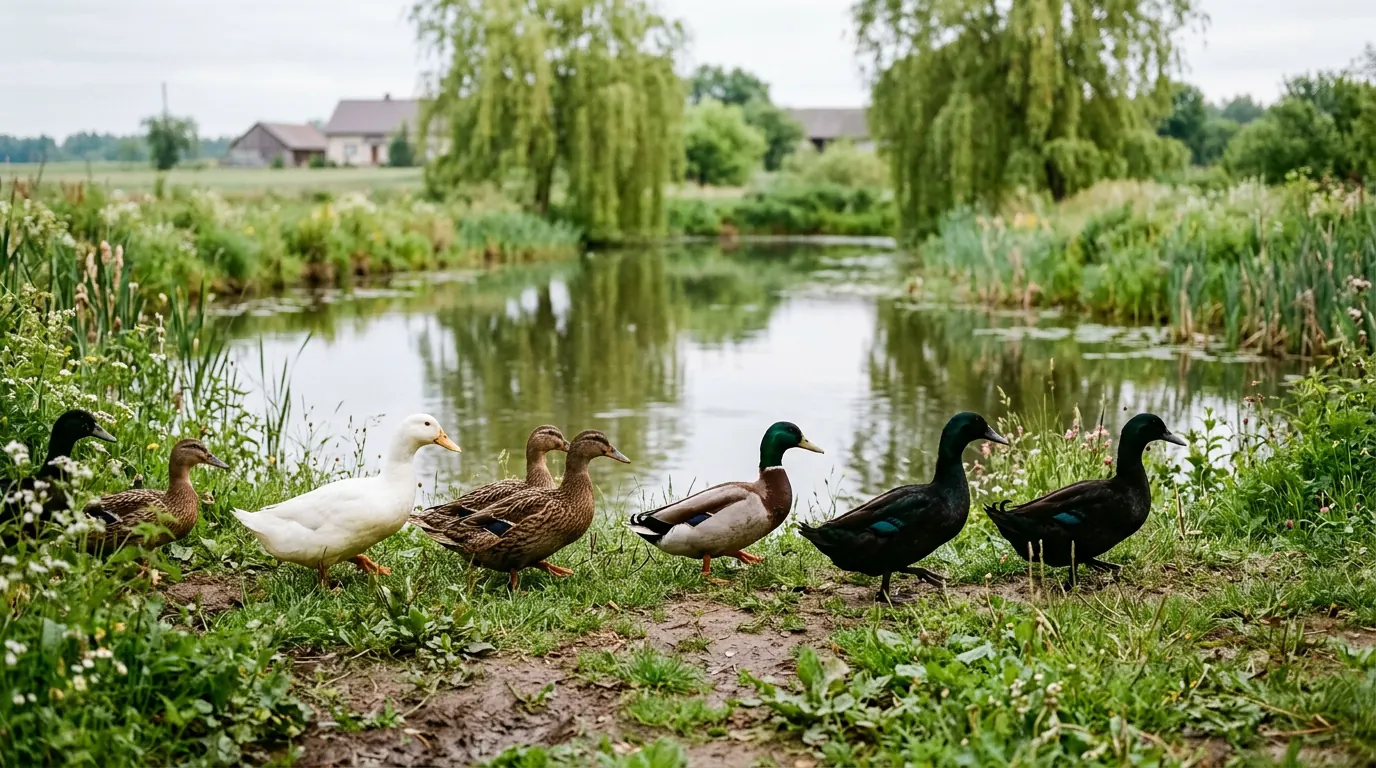
Call ducks are a small ornamental breed with an upright body and a fine build. They are clearly smaller than farm ducks and most ornamental breeds. We usually keep them as companion and show birds, not for meat or eggs. They mainly need a dry bed, access to water and close watching of their health.
Where the name comes from
The name "call" comes from calling. Dutch breeders selected small, light ducks with a loud voice, meant to lure wild ducks toward decoys on hunting grounds. Over time people began to breed them for looks and behavior. That is why call ducks are usually grouped with ornamental breeds, not farm breeds. Many ornamental poultry breeds took a similar path, as we describe in our overview of ornamental chicken breeds.
How to recognize a call duck
Shape and posture
A call duck has a short, compact neck and an upright posture. Its shape resembles a small bottle, which sets it apart from ducks with a horizontal body. The head is proportionally large and the bill is short and straight. When you assess a flock, compare the birds with the breed club standard, not with farm ducks, because the size differences are clear even in young birds.
Color varieties
The breed standard allows many plumage color varieties. The most common are white, black, wild-type birds colored like the mallard, and birds with striped and patched patterns. Color does not affect health or temperament, but it matters at shows. When you choose birds for a show, ask the breeder about the line's origin and the standard the birds were judged against.
Comparison with other ornamental ducks
Indian Runner ducks are slimmer and taller, and they stand upright like small penguins. The call duck is lower and rounder. If you are torn between the two breeds, compare them in person, ideally at a show. See our description of Indian Runner ducks if you are considering that breed as an alternative.
Voice and behavior of call ducks
Loud females, quieter males
Female call ducks give loud, carrying calls that sound like a classic quack, only stronger and repeated. Males make quieter, more muffled sounds. The difference is clear and lets you tell the sexes apart by voice alone. If you keep birds in a built-up area, remember that the females may be heard by your neighbors.
Sociable and active
Call ducks are flock birds. They cope badly with being alone, so we keep them at least in pairs or small groups. They are lively and curious about their surroundings. They respond well to fixed feeding times and routine, and sudden changes around them can stress them badly.
Housing conditions for call ducks
Shelter and bedding
Ducks get wetter than chickens, so the bedding must stay dry and be replaced when it gets damp. Wet feathers insulate the bird less well, and in cold weather the risk of disease rises. Protect the shelter from drafts and from drinkers freezing. When you choose bedding, avoid materials that soak up water and rot easily.
Access to water
Call ducks like to swim and clean their feathers in water. Swimming water does not have to be deep, but it must be safe and easy to empty. A pond that needs frequent water changes adds to your workload, so plan it from the start. Drinking water and bathing water are two separate matters. Never let droppings foul the drinking water.
Protection from predators
The small size of a call duck makes it easy prey for foxes, martens and rats. The run should have a sturdy fence buried or secured at the bottom, and the house must close at night. Check the protection regularly, especially after storms and in winter. Also record the number of birds at each closing, so you spot a missing bird quickly.
Feeding and prevention
Feeding
Call ducks need a complete poultry feed suited to their age and stage of development. Set the mix and the amount with the breeder or a nutrition adviser, because they depend on age, condition and season. Always provide clean water and access to grit, which helps digestion. Change feed gradually.
Biosecurity
Ornamental birds can pass diseases to a farm flock and the other way round, so keep them away from birds from other farms and from wild birds. Set the order of work, use separate footwear and disinfect equipment. You can prepare a ready plan in our biosecurity plan generator.
Treatment and withdrawal period
A vet decides every treatment and chooses the medicine and dose. Record each treatment, the date given and the withdrawal period. For birds whose eggs or meat may be sold, the withdrawal period decides when you may use them. Keep the records in the treatment and withdrawal module.
Reporting and record keeping
Flock records
Keep simple records: number of birds, sex, hatch or purchase date, origin and every movement. Such records help with shows, sales and inspections. You can keep them in the poultry house register, which lets you record groups of birds and events in one place.
Reporting duties
Duties to report a flock and its changes come from the law. Check the legal state as of 22.11.2026 directly in ISAP, Poland's online database of legal acts (Internetowy System Aktów Prawnych), and on the website of the Chief Veterinary Inspectorate (Główny Inspektorat Weterynarii). Before you buy or sell birds, ask your county veterinarian (powiatowy lekarz weterynarii) which reports apply in your situation.
Frequently asked questions
What are call ducks?add
The call duck is a small ornamental duck breed from the Netherlands. It was first bred as a decoy bird, and today we keep it for its looks, character and voice. It is clearly smaller than most farm ducks.
Are call ducks loud?add
Females are loud and their call carries far. Males make quieter sounds. If you keep birds near houses, take the females' voice into account when you plan the house and run.
Do call ducks need water to swim?add
They like to swim and clean their feathers, but the water does not have to be deep. It must be safe and easy to change. Keep drinking water separate from the bathing pond.
Can you keep call ducks with chickens?add
You can, if each species has access to feed, water and shelter. Ducks need more care with moisture than chickens, so the bedding must stay dry. Watch the birds' behavior during the first days after you join the groups.
How do you protect ducks from predators?add
The run fence should be sturdy and secured at the bottom. Close the house at night and check the protection regularly. Record the number of birds at each closing so you spot a missing bird quickly.
Who decides the treatment of ornamental ducks?add
A vet always decides the treatment and chooses the medicine and dose. The keeper should record each treatment and the withdrawal period before the birds or their products are sold.
Sources & resources
- linkChief Veterinary Inspectorate — gov.pl/web/wetgiw
- linkNational Research Institute of Animal Production — izoo.krakow.pl
- linkInternet System of Legal Acts — isap.sejm.gov.pl
- linkARiMR — gov.pl/web/arimr
Prepared by: DlaFerm Team based on data from the sources listed · Publisher: INSTA-TECH sp. z o.o.
Keeping ornamental ducks next to a farm flock?
DlaFerm.pl's farm management program and poultry house register let you keep different species and groups of birds in one place. Create a free farm account or get in touch, and we will show you how to set it up.
Phone
+48 796 258 151