Indian Runner Ducks in Winter: Housing and Frost Protection
In winter, Indian Runner ducks need above all a dry place to lie down and water that does not freeze. Most winter losses come from wet bedding and soaked feathers, not from frost itself. Here is what to prepare before winter and how to run the flock through it.
verifiedFrom the team that has organised work on poultry farms for years.
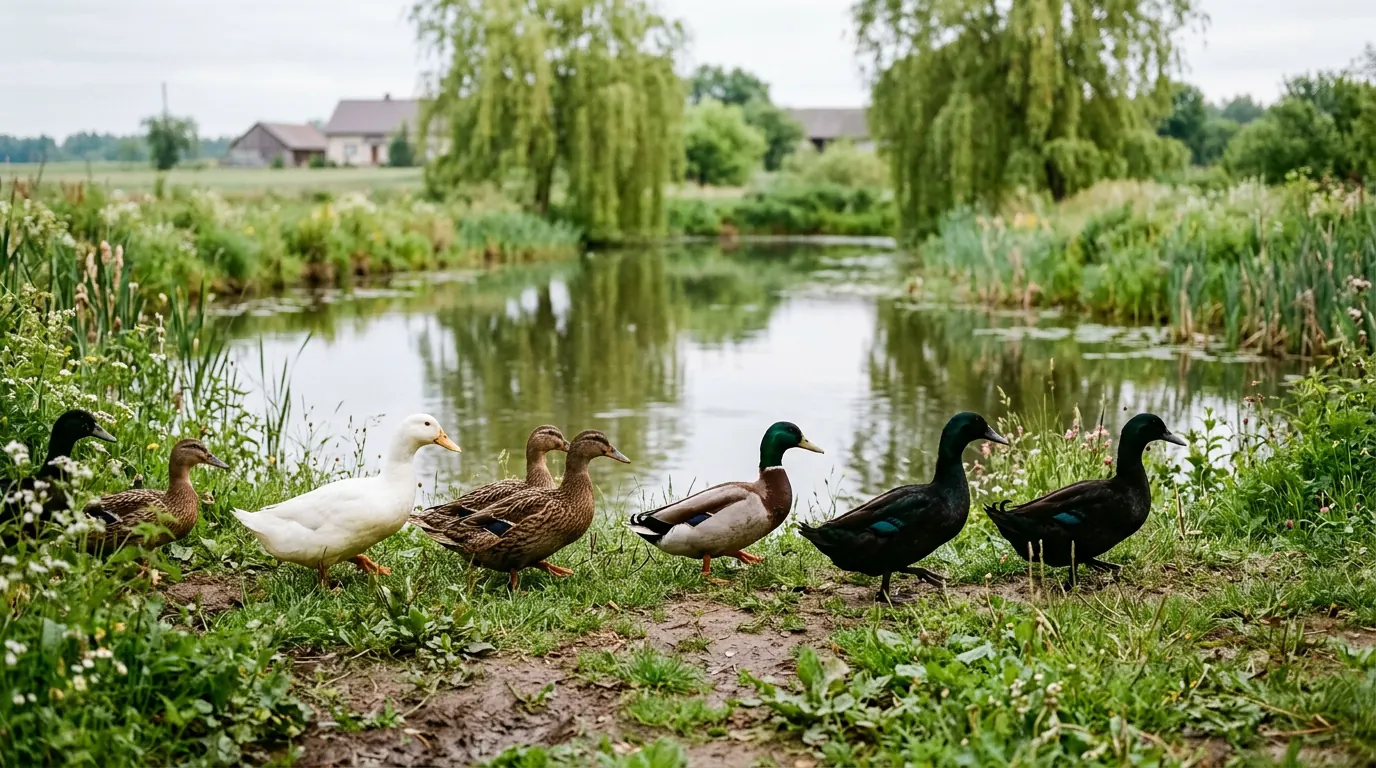
You keep Indian Runner ducks in winter much as you do in summer, with two differences: they need a dry place to lie down and constant access to liquid water. These birds tolerate cold well, but wet feathers lose their insulating power, and damp bedding quickly causes health problems. If you are still choosing birds, you will find a comparison of their traits in our guide to duck breeds.
What to do before winter arrives
Before the snow falls, check the house for a tight roof, doors and floor. Replace damp bedding and decide where the flock will sleep and how it will reach the run. Keep a stock of dry bedding for several weeks, because deliveries can be hard during thaws and frosts. Write the preparation down as a checklist and repeat it every year in the same order. We describe similar rules in the article on preparing the poultry house before stocking, since most points are the same for any poultry flock.
The house and a dry resting area
Dry bedding first
Bedding should be dry and clean, and the places where the flock gathers need changing more often. Remove wet patches around the drinkers at once, because in the cold they quickly freeze into a slippery, cold layer. Old, compacted bedding holds moisture, so add a fresh portion instead of waiting until the whole layer is soaked. Birds lying on a dry surface keep warm without extra effort and catch fewer chills.
Ventilation without drafts
Moisture from breath and droppings rises in the house, so it must be ventilated even in frost. Place vents above bird level so fresh air does not blow straight onto them. A building that is shut too tight gets damp and smells strongly of ammonia, which is a sign to improve ventilation. Check the house morning and evening: if condensation covers the walls, ventilation is not enough.
Water that does not freeze
Drinkers and where to put them
Runner ducks turn water into a dirty puddle within a short time, so the drinker should prevent spills and stand in a dry spot. A drinker that is too low, with water splashing onto the bedding, raises humidity in the house. Put it on a raised or sheltered platform, away from doors and drafts.
Frozen water
In frost, water in drinkers freezes within a few hours, so check it at least twice a day: morning and afternoon. Use heated drinkers or heated bases, following the manufacturer's instructions, and always check the equipment. Even a short lack of water quickly affects the flock's condition and behavior. If water has been frozen for longer, do not pour hot water into a warm drinker base without checking, because it can damage the equipment.
Feeding ducks in winter
More energy in the cold
In winter ducks use part of their feed to warm the body, so feed should match the age and condition of the flock. Change feed gradually, mixing old and new for several days so you do not upset digestion. We cover feed composition and amounts in the article on what to feed ducks, and your vet or a feeding adviser sets the amounts with you.
What to avoid
Do not give spoiled or moldy kitchen scraps, and keep bread to a minimum because it has little nutritional value. Frozen or damp feed loses quality and can spoil in the feeder, so store it in a dry, closed room. Check that the birds finish their feed; leftovers in the feeder are a signal to check the flock's health.
The run in winter: whether and how to let ducks out
Snow, ice and mud
Icy grass, slippery walkways and soggy ground raise the risk of leg injuries. Before letting the flock out, check the run and clear ice or deep snow from the path to the water. Provide a dry part of the run, for example a firm platform with bedding. The rules in our article on runs and fencing apply to ducks too, because the surface and fence height affect the safety of every species.
Fencing and predators
In winter nights are longer, and predators more often look for easy food near buildings. The fence must be tight at ground level, and the house closed at night. Tracks in the snow around the building are a good sign that you need to strengthen protection. We describe how to protect birds from martens and foxes in the article on predators.
Watching the flock and when to call the vet
Warning signs
Birds sitting fluffed up, moving away from the flock, with wet feathers or frostbitten bills and feet need attention. Also watch for apathy, reduced appetite and changes in droppings. At the first symptoms contact a vet, who will assess the flock and choose any treatment. The dose and choice of medicine belong solely to the vet, and the keeper is responsible for observing the withdrawal period.
Keeping records
Note the house temperature, the state of the water, bedding use and any treatment. This makes it easier to spot a recurring problem, such as damp in the same corner of the building. You can keep data on the flock, treatments and withdrawal periods in farm management software, and track treatment separately in the treatment and withdrawal module.
Frequently asked questions
Can Indian Runner ducks handle freezing weather?add
Ducks tolerate cold well if their feathers stay dry and they have a place to lie away from drafts. The problem is not frost itself but damp, wet bedding and a lack of liquid water. In hard frost, watch the flock more often and check that the birds are not huddling in one spot.
How do I keep water from freezing for ducks in winter?add
Use heated drinkers or heated bases and check the water at least twice a day. Place the drinker in a dry, sheltered spot so water does not spill onto the bedding. Always check that heating equipment works and follow the manufacturer's instructions.
Do I need to shut Indian Runner ducks in for winter?add
It depends on the weather, the state of the run and the birds' condition. With icy ground and heavy precipitation, it is better to limit time outside and provide a dry area in the enclosed part. At night the flock should always return to a closed house.
What should I feed ducks in winter?add
Feed should match the age and condition of the flock, and changes should be gradual. Avoid spoiled scraps and too much bread. Your vet or feeding adviser sets exact amounts, because they depend on breed, age and housing conditions.
What winter dangers do ducks face?add
The most common are wet bedding, freezing water, frostbitten bills and feet, a slippery run and more active predators. Regular flock checks help you spot these problems quickly. If you see worrying symptoms, contact a vet.
Should I keep flock records in winter?add
Yes, keep records all year, because the risk of disease and treatment rises in winter. Write down house conditions, water state, treatment and withdrawal periods. Such records help when talking to your vet and during inspections.
Sources & resources
- linkChief Veterinary Inspectorate (Główny Inspektorat Weterynarii) — gov.pl/web/wetgiw
- linkMinistry of Agriculture and Rural Development (Ministerstwo Rolnictwa i Rozwoju Wsi) — gov.pl/web/rolnictwo
- linkNational Research Institute of Animal Production (Instytut Zootechniki PIB) — izoo.krakow.pl
- linkInternet System of Legal Acts (Internetowy System Aktów Prawnych) — isap.sejm.gov.pl
Prepared by: DlaFerm Team based on data from the sources listed · Publisher: INSTA-TECH sp. z o.o.
Keeping a duck flock through the winter?
DlaFerm.pl poultry farm management software gathers data on your flock, treatments and withdrawal periods in one place. Create a free DlaFerm farm account and see how it works in practice.
Phone
+48 796 258 151