What to feed ducks: feed, water and what to avoid
Feed ducks a complete poultry feed that matches their age and what you keep them for. They also need plenty of clean water, so the drinker matters as much as the feeder. The most common mistakes are feeding bread, raw potatoes, and damp or spoiled feed.
verifiedFrom the team that has organised work on poultry farms for years.
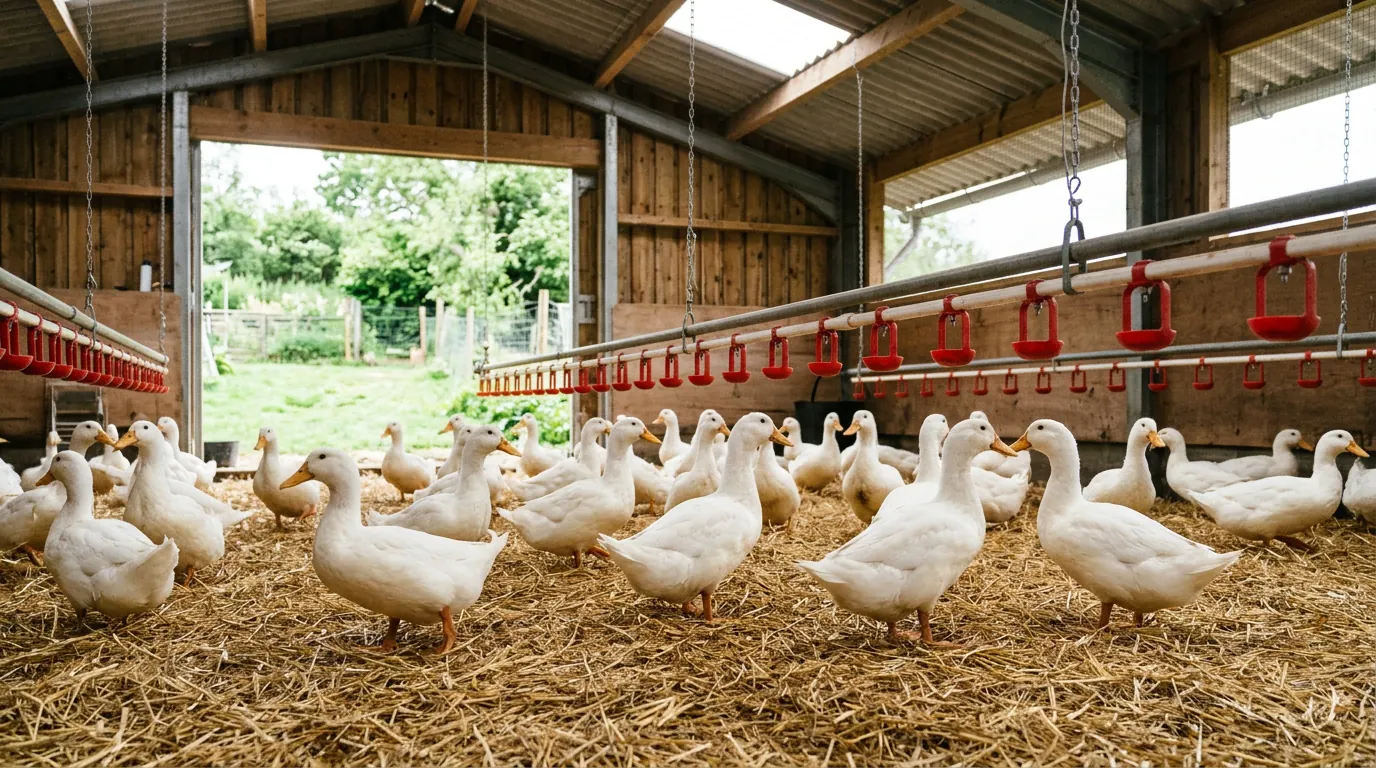
Feed ducks a complete pelleted or mash poultry feed, in the phase that matches their age. Ducklings need starter feed, young birds need grower feed, and breeding birds need adult feed. Greens can add to the diet but do not replace a complete feed. Above all, the feed must be fresh, dry and always available, and the water must be clean and in a drinker the birds can easily use. We describe feeding principles for the farm, not doses of products, because those are set by a vet or the feed producer.
Why water matters as much as feed
Ducks drink a lot, and many keepers notice that birds eat less when they cannot reach a larger container. The drinker should be deep enough for a duck to dip its bill and rinse its nostrils, which it does very often. Water gets dirty fast because ducks dabble in it and drop feed into it, so you change it more often than with chickens. A wet area around the drinker raises the risk of digestive disease and damp litter. When choosing a drinker, check that birds cannot tip it over and that it is easy to wash.
Duck feed: which types to choose
Starter and grower feed
In their first weeks, ducklings need a starter feed that is high in protein and easy to digest. Later they move to grower feed with somewhat less protein, which limits overly fast weight gain. Switch from one feed to the other gradually, mixing both for several days so you do not upset the gut. We cover detailed feeding norms in our article on feeding geese and ducks. Always check the label and ingredients, and if in doubt ask a vet or a nutrition adviser.
Feed for laying and breeding ducks
Laying birds need more calcium, because eggshell quality depends on it. Layer feed has a different composition from feed for growing birds, so do not switch to it without thinking it through. Breeding birds, especially drakes, have their own requirements and often get a feed with a different profile, so keep them separate if you can. Record which group gets which feed, because it makes later analysis of results and cost control easier.
Greens and extras
Ducks readily eat greens such as young grass or lettuce leaves, and they make a good addition to the diet. Treat them as a supplement, not the basis of feeding, because greens have less energy and protein than a complete feed. Introduce any feed additives, vitamins and products only after talking to a vet. Do not assume that something natural is safe for every age group. See also our guide to supplements for farm animals.
Drinkers for ducks: the rules
A drinker where the duck can dip its bill
A duck needs a container where it can dip its bill and rinse its nostrils. Nipple or cup drinkers, which suit chickens, often fail here because the bird only gets drops. We cover chicken drinkers in our article on the automatic drinker for chickens, but ducks have different needs. The base should be stable and the edges low, so birds can get in and out without risk of injury. Water must always be available, including in heat and in winter when it freezes. More on equipment is in drinkers and equipment for ducks.
Clean water and frequent changes
Dirty water quickly becomes a source of infection, so checking the drinker every day is the basic routine. Ducks drop feed, droppings and litter into the water, so empty the containers, scrub them and refill with fresh water. If you acidify the water, we describe it in our article on acidifying drinking water, but talk to a vet about any change to the water. A well-designed drinker area with drainage and a dry floor greatly reduces the problem.
What should not go in the duck feeder
Bread and baked goods
Bread is a popular extra, but it has very little nutritional value compared with a complete feed. Birds that fill up on bread eat less of the proper feed, which upsets the nutrient balance. Spoiled, moldy bread can cause digestive problems. If you want to give birds something extra, fresh greens or an additive recommended by a vet are better choices. Do not leave bread scraps in the drinker or on the litter, because they ferment quickly. The same logic applies to chickens, see what not to feed chickens.
Raw potatoes and spoiled scraps
Raw potatoes and their peelings contain substances harmful to poultry, so they should not go in the feeder. Cooked table scraps look harmless, but their content is unknown and they spoil easily. Spoiled food, moldy feed and scraps from an unknown source are also a biosecurity risk, because they can attract rodents and wild birds. Buy every feed you give from a trusted source and keep it in a clean, closed container.
Salt and salty foods
Too much salt is dangerous for poultry, and the salt content of kitchen and processed foods is usually high and unknown. Salted scraps, cold cuts, soured milk with salt or salty snacks are not suitable for ducks. Birds that eat salty food drink more water and may have problems with water balance. Salt should come only from a complete feed balanced by the producer, not from household additions.
Feeds meant for other species
Do not give poultry feeds meant for cattle or pigs, because they may contain ingredients that are not permitted or are harmful to birds. Check the ingredients of every bag, especially when buying from a neighbor or a random wholesaler. A feed without a clear composition and label is a risk not worth taking. For information on feed and animal health supervision, see the website of the Chief Veterinary Inspectorate (Główny Inspektorat Weterynarii). For pigs, see what pigs eat.
Storing feed and keeping track of stock
Dry, sealed and out of reach of rodents
Store feed in a dry, airy room, on a pallet or shelf, away from walls and leaks. Damp causes mold, and mold produces toxins that poison birds and are very hard to spot by eye. Open bags only as far as you need and close them after use. Rodents are a common source of feed contamination, so check and secure the store regularly. Use old feed that has been sitting for a long time before fresh feed.
Silo level and delivery dates
On a larger farm, feed arrives in big amounts and its level is hard to judge by eye. Record how much feed came in and how much left the store, so you know when to order the next delivery. Stock monitoring helps, and with several houses so does a feed level sensor in the silo, which we describe in our article on keeping feed stock under control. That way you avoid a situation where birds are left without feed over a weekend or in bad weather.
Feed additives, medicines and withdrawal periods
Medicines in feed or water
A vet chooses the medicine and the dose based on the diagnosis and the condition of the flock. Do not give medicines on your own initiative, even if you know a product from another flock, because the same medicine may be wrong for a different group of birds. Giving a medicine through water or feed needs careful mixing and a record of who got it and when. Write every treatment in the treatment log, because that makes it easier to track the withdrawal period. Keep your records in the treatment and withdrawal module, which helps you keep your records in order.
Withdrawal period before sale
The withdrawal period is the time after a medicine is used before a bird can go to slaughter or eggs can be sold. Its length depends on the product and is set by the vet and the product label, so do not quote figures from memory. The most common mistake is forgetting the withdrawal period after treating one house, then buying or selling birds from another place. Before you sell birds or eggs, check your records and make sure the period has passed. This check protects both you and the buyer.
Feeding in your duck flock plan
Feeding plan and records across the cycle
It helps to plan feeding for the whole cycle, from placing ducklings to sale. Record the type of feed, the date you change phase and any problems, such as weaker appetite or changes in droppings. These records let you compare results between cycles and spot feeding errors. With a larger flock, farm management software is useful, because all the data sits in one place. Remember that the plan must fit your own farm and your vet's advice, not be copied from someone else's notebook.
Housing and run requirements
Feed and water only work well in a suitable building. Feeders and drinkers should stand in a dry place, away from drafts and flooded litter, and birds should have access to a clean run. We describe the duck house in our article on duck house requirements. If you are planning to start from scratch, also read our guide to raising ducks for beginners.
Frequently asked questions
What should I feed ducklings in the first weeks?add
Feed ducklings a starter feed made for young poultry, available all the time. Greens can be an extra but do not replace a complete feed. Agree the exact feeding program with a vet or a nutrition adviser.
Can ducks live on grain alone?add
Grain alone is not a balanced diet, because it lacks many nutrients that growing and laying birds need. Complete feed is designed to cover those needs. Grain can be an ingredient of the feed, but not the only food.
Can ducks eat bread?add
Treat bread only as a rare, small extra, because it has little nutritional value and can upset the feed balance. Do not give it in large amounts, or moldy or soured. Fresh greens and complete feed are the best choice.
How important is the drinker for ducks?add
Very important, because ducks drink a lot and need water to rinse their nostrils. The container should be deep, stable and easy to clean. Change the water often, because it gets dirty fast.
Can I give a duck medicine in the water?add
The medicine and the way to give it are set by a vet who knows the diagnosis and the condition of the flock. Do not add products to the water without advice, because the dose and even mixing matter. Record every treatment and keep track of the withdrawal period.
What should I avoid most when feeding ducks?add
Avoid raw potatoes, spoiled scraps, salt and feeds meant for other species. Always check the ingredients and the expiry date of the feed. If in doubt, ask a vet before you give something new.
Sources & resources
- linkChief Veterinary Inspectorate (Główny Inspektorat Weterynarii) — gov.pl/web/wetgiw
- linkNational Research Institute of Animal Production (Instytut Zootechniki PIB) — izoo.krakow.pl
- linkMinistry of Agriculture and Rural Development (Ministerstwo Rolnictwa i Rozwoju Wsi) — gov.pl/web/rolnictwo
- linkInternet System of Legal Acts (Internetowy System Aktów Prawnych) — isap.sejm.gov.pl
Prepared by: DlaFerm Team based on data from the sources listed · Publisher: INSTA-TECH sp. z o.o.
Keeping a duck flock and want your feed records in one place?
The farm management software in DlaFerm.pl helps you keep your feeding plan, stock and treatment records in one place. Create a free farm account and see how it works in practice.
Phone
+48 796 258 151