What do pigs eat? What not to feed pigs
Pigs should get a complete feed matched to the finishing or rearing stage. Add extras and leftovers only when you know what is in them and what they do. In Poland, feeding kitchen waste is restricted by African swine fever (ASF) rules. We cover the basics, banned and risky feeds, and how to keep rations under control on the farm.
verifiedFrom the team that has organised work on poultry farms for years.
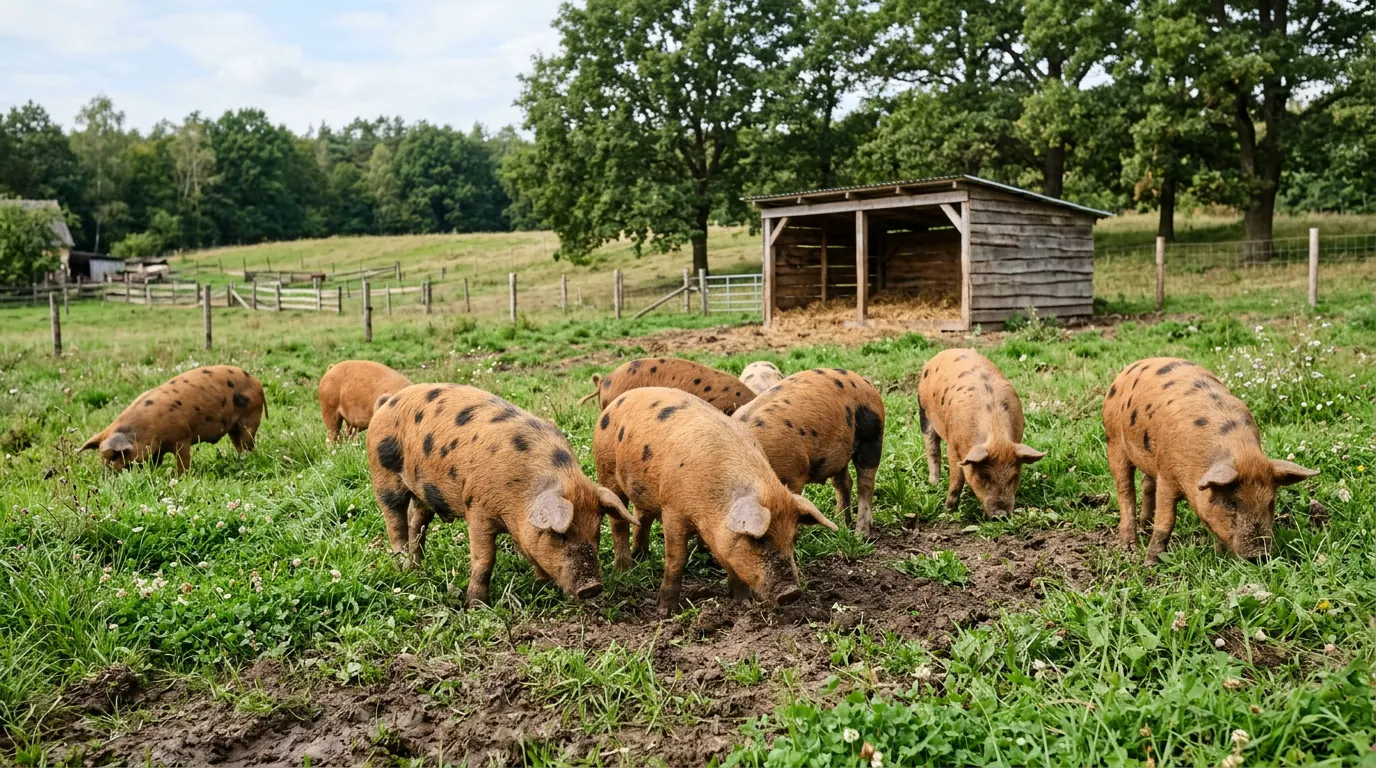
Pigs eat a lot, but not everything within reach is fit to feed. The base of the diet is a ready-made complete feed matched to the animal's age and weight. Add other ingredients only when you know their origin, composition and effect on herd health. The rule is simple: if you don't know what is in a feed, don't give it to pigs.
Why feeding control matters
According to KPODR Minikowo (a Polish agricultural advisory center), in a pen of 10 animals on bedding, pigs spend over 86% of the time sleeping and resting, and about 10% playing and rooting in the floor material. The more pigs at the feeder, the less time each one gets to eat and drink. Even good feed won't work if part of the herd lacks equal access to the feeder. Whenever you change feed, check that all animals eat evenly.
What pigs should eat
Complete feed
A complete feed contains protein, energy, vitamins and minerals in proportions set for the production stage. Matching the feed to age and weight matters more than the price per tonne. If you mix grain with additives yourself, have an adviser or a vet calculate the ingredients. Record which feed each pen gets and from what date, as this makes it easier to judge weight gain later.
Water always available
Pigs need constant access to clean, fresh water. Lack of water quickly cuts feed intake, and on hot days it cuts weight gain too. Check drinkers every day, because blocked or leaking ones often hide a problem. If gain drops after a feed change, work out your feed conversion in FCR and EPEF online before you change anything in the ration.
Change feed gradually
Switch to a new feed gradually, mixing old and new over several days. A sudden change in composition can cause diarrhea and loss of appetite. This also applies when you change supplier of the same feed. Note the date of the change and watch the animals at the feeder during the first days.
Banned or risky feeds and products
Kitchen and catering leftovers
Feeding pigs kitchen waste and catering leftovers is restricted by the rules on controlling African swine fever. The key acts are the Polish Ministry of Agriculture (MRiRW) regulation of 12.03.2026 (Dz.U. 2026 poz. 344, Poland's Journal of Laws) and Commission Implementing Regulation (EU) 2023/594. We describe the legal position as of 22.11.2026. Before you decide to feed any leftovers, ask your county veterinarian. You can set out your farm's biosecurity rules in the biosecurity plan generator.
Spoiled and moldy feed
Feed with visible mold, feed caked by moisture or feed that smells musty may contain mycotoxins, which weaken immunity and worsen results. Don't mix such feed with healthy feed, because the contamination spreads through the whole batch. Report the problem to your supplier and write down the batch number. Keep silos and tanks dry and check the feed regularly.
Raw potatoes and plants
Green plant parts, sprouts and green potato tubers contain substances toxic to animals, so don't give them to pigs. Raw legume seeds in large amounts are also risky and need heat treatment before use. If you suspect poisoning, contact a vet right away and don't wait for the animals to recover on their own.
What the organic system changes
Feed without chemicals and GMO
According to IZ PIB (the National Research Institute of Animal Production), in organic farming feed must be free of chemical feed additives and of genetically modified raw materials, for example imported soybean meal or Bt maize. Pigs must have constant access to a run or pasture. This model affects costs and requires exact records of where feed comes from. If you keep native breeds, plan the diet ahead, because their needs differ from those of fast-growing crossbreeds.
Native breeds and ration
Organic farms often keep slow-growing native Polish breeds such as puławska, złotnicka biała and złotnicka pstra. According to IZ PIB, nutritional needs are set as in conventional farming, but you must take the breed into account, because it affects growth rate and feed use. Set the ration with a nutrition adviser and check weight gain over the following weeks. You can keep your pig data in the app for pig farmers.
How to control feeding on the farm
Feed use records
Record how much feed you give each pen and when you refill the silo. This shows whether use matches the number of animals and their weight. A sudden rise in use with the same head count may mean wasted feed, and a drop signals an appetite problem. You can follow silo levels and use in the silo monitoring module.
Medicated feed
If the herd gets feed with a drug added, withdrawal period rules apply. The vet chooses the drug and dose and sets the timing and method of giving it. On the farm, record every treatment and the date the withdrawal period ends, so you don't send animals to slaughter too early. Keep these records in the treatment and withdrawal period module.
Feeding, welfare and disease
First days of finishing
According to KPODR Minikowo, the first day of finishing is a stress factor for pigs. Body weight affects sleeping and resting time, and heavier animals rest longer. In this period, don't change the feed, the group and the housing at the same time. Make sure every pig can reach the feeder, because smaller and weaker animals most often get pushed to the back.
When to call the vet
Call a vet when several animals stop eating at once, diarrhea appears, or animals lie away from the feeder. Don't give drugs on your own and don't add unknown supplements, because they can make the herd's condition worse. A quick diagnosis usually costs less than lost weight gain across a whole pen.
Frequently asked questions
Can you feed pigs table scraps?add
No. In Poland, feeding kitchen waste and catering leftovers is restricted by the rules on controlling African swine fever. The rules come from the MRiRW regulation of 12.03.2026 (Dz.U. 2026 poz. 344) and Implementing Regulation (EU) 2023/594. Ask a vet before you decide.
Can pigs eat raw potatoes?add
Raw potatoes in feed are not recommended, and green parts, sprouts and green tubers are toxic to animals. If you suspect poisoning, contact a vet right away. The vet or a nutrition adviser sets the dose and method of feeding.
Do you need organic feed to raise pigs for your own use?add
Not every farm has to farm organically. The rules on no chemical additives and no GMO raw materials apply to farms certified in the organic system. Whatever the system, feed should have a known composition and origin.
How fast should you change pig feed?add
Change feed gradually, mixing old and new over several days. A sudden change can cause diarrhea and loss of appetite. Watch the animals at the feeder and record the date of the change.
What should you do if pigs stop eating?add
Check the drinkers and the feed quality, then write down which pens are affected. If several animals stop eating at once, report it to a vet. Don't give drugs without the vet's advice.
Sources & resources
- linkKPODR Minikowo — Pig behavior and welfare (P. Dorszewski et al.)
- linkIZ PIB — Guide to organic pig farming (ed. E.R. Grela)
- linkMRiRW / Journal of Laws — MRiRW regulation of 12.03.2026 on measures to control African swine fever (Dz.U. 2026 poz. 344)
- linkEuropean Commission / EU Publications Office — Commission Implementing Regulation (EU) 2023/594 laying down special ASF control measures (original version, PL)
- linkChief Veterinary Inspectorate (Główny Inspektorat Weterynarii) — gov.pl/web/wetgiw
Prepared by: DlaFerm Team based on data from the sources listed · Publisher: INSTA-TECH sp. z o.o.
Do you raise finishing pigs and want feeding under control?
The DlaFerm app for pig farmers keeps your feeding records and performance figures in one place. Create a free farm account or get in touch, and we will show you how it works in practice.
Phone
+48 796 258 151