Duck waterer and equipment: house, water and run
A duck waterer must give clean water at all times. The house needs dry bedding and protection from predators. Ducks foul water faster than chickens, so you need to check the waterer more often. Below we describe what to plan before the flock arrives.
verifiedFrom the team that has organised work on poultry farms for years.
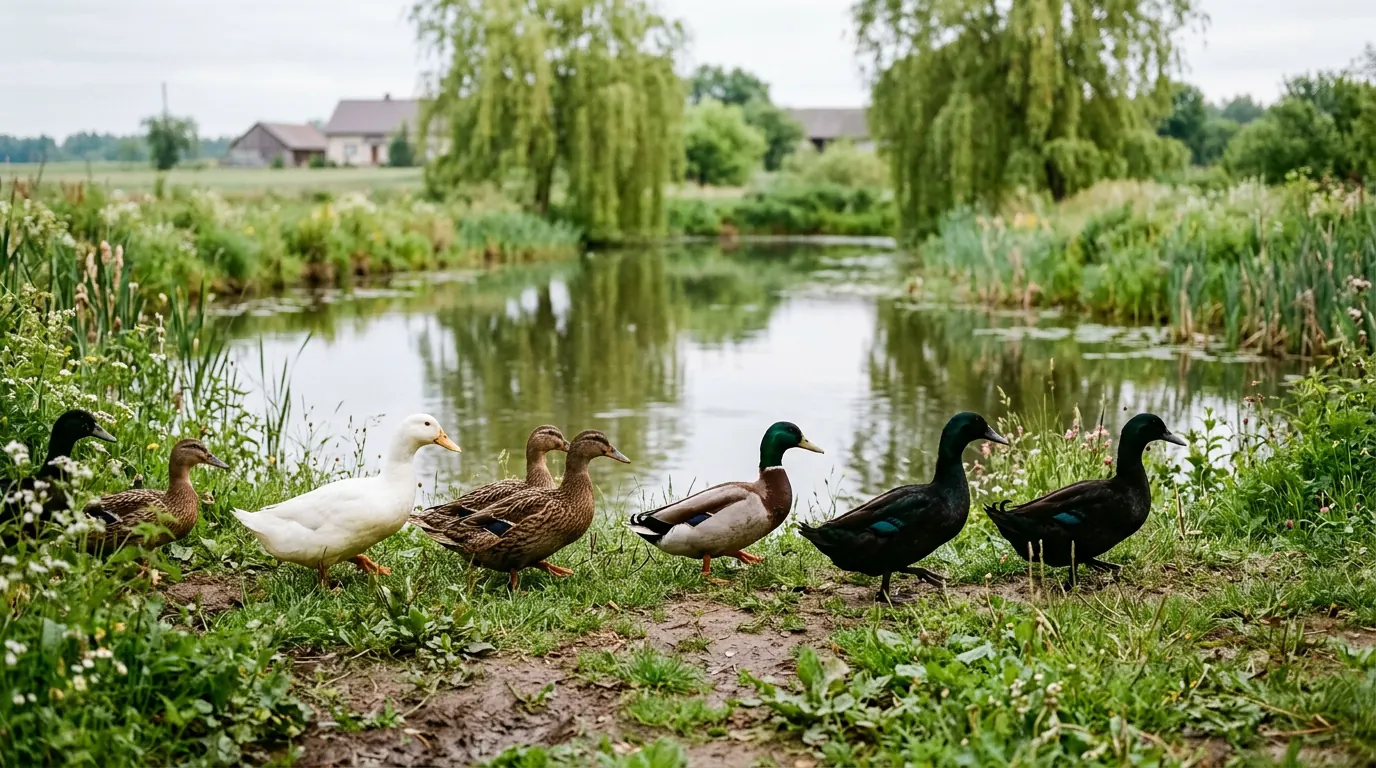
A duck waterer has two jobs: keep water available at all times and keep it reasonably clean. Ducks dip their bill and whole head into the water, so it gets dirty and spills quickly. The house protects the birds from predators, rain and cold, and the run gives them exercise and grass to eat. Plan all three together before the first birds arrive. We describe how to build the shelter in our article on the duck house, and from a beginner's side in duck keeping for beginners.
The minimum every pen needs
The minimum is a waterer with water, a house with dry bedding, and a run fenced against predators. A run with no water and no shade does not do its job, even if it is large. The number of birds per square meter depends on age, breed and house size, so check the building requirements for ducks. Geese need different proportions, so we cover them separately in the building requirements for geese.
Duck waterer requirements
Water always available
Ducks drink often and must never be cut off from water. On each round, check that the waterer is full and the water has not frozen. In winter, heat the waterer or change the water several times a day, depending on conditions. Check water quality separately. We describe ways to acidify drinking water in our article on acidifying drinking water.
Waterer depth and construction
A duck needs to dip its bill to drink properly and rinse its nostrils. Nipples and shallow drinkers that work well for chickens often fail here. Choose a bowl or trough where the water is deep enough but does not spill onto the bedding. The base should be stable, because ducks tip over a light waterer straight away.
Cleaning waterers
Dirty water and sediment on the bottom of the waterer encourage disease. Empty, scrub and refill the waterer with fresh water regularly, and more often on hot days. Write down every cleaning in the pen log so you do not rely on memory. With several flocks it is easier to keep records in software, for example in the house records module.
Duck house: dry bedding and ventilation
Dry bedding and moisture
Ducks soak the bedding near the waterer and at the entrance, so moisture in the house rises fast. Wet bedding raises ammonia levels and fouls feathers and feet. Replace bedding where water has spilled and add dry bedding where birds rest. Good ventilation without drafts helps keep the house dry without chilling the flock.
Entrance, exit and night
Ducks return to the house at dusk, so the door and entrance must be easy to use. Steep ramps and high thresholds make movement hard, especially for young birds. At night, close the house with a solid bolt and secure the door against being forced open. Cover ventilation openings with mesh so pests cannot get in.
Heating young birds
According to the Ross Broiler Management Handbook 2025, the need for heat under the brooder falls as body weight rises: at 44 g the temperature is 30 °C, and at 590 g it is 24 °C at the edge of the brooder ring. These figures are for broiler chickens, not ducks, so we do not apply them directly. The principle is the same, though: young birds need more warmth, and you can reduce it gradually as they grow. Agree a specific heating plan with your vet or adviser.
Duck run: fencing and protection
Fencing against the fox
The run fence must stop predators, not just mark a boundary. A fox can dig under a low fence, so bury the bottom edge of the mesh or bend it outward. We describe rules for poultry and protective netting in our article on chicken netting, and most of them carry over to a duck run.
Grass, shade and mud
Permanent mud near the waterer is a sign that water is being spilled in one place. Move the waterer and change feeding spots so the grass can recover. The run needs shade, because a flock can overheat quickly in hot weather. A run that has been eaten down to bare soil needs a rest or rotation.
Water use as a warning signal
Measuring water use
Recording daily water use lets you spot a change before visible symptoms appear. A sudden drop in drinking with the same amount of feed is worth reporting to your vet. We explain how to use a water meter and alarm thresholds in Water speaks first: water meter, flock norm and alarm.
Medicines given in water
Some medicines are given in drinking water, which requires an exact dose calculation based on water use. A vet always chooses the medicine and the dose. After treatment ends, a withdrawal period applies: the time before you may sell meat or eggs. Record the dates in the treatment and withdrawal module so you do not miss a date.
Frequently asked questions
What is the best waterer for ducks?add
The best waterer lets the duck dip its bill: a bowl or trough with a stable base. It must be easy to clean and shaped so water does not spill onto the bedding. Nipples and shallow chicken drinkers usually do not do the job.
Can ducks drink from a chicken waterer?add
Chicken waterers are often too shallow and narrow for a duck to drink naturally. Keepers usually choose larger bowls or troughs. When choosing, check that birds do not spill the water and that the waterer does not clog with sediment.
How often should I clean a duck waterer?add
Refill the waterer with fresh water every day and clean dirty or silted spots regularly. Clean more often on hot days and when it is very dirty. Write down every cleaning so you know it was done.
Do geese need the same waterer as ducks?add
Geese drink and graze differently from ducks, so their waterer must be solid and stable. Place it close to where they graze so birds do not have to look for water. We describe rules for geese in goose keeping for beginners.
What should I do if the duck house is wet?add
Find the source of moisture: a leaking waterer, a leaking roof or too little ventilation. Replace wet bedding and move the waterer away from the resting area. If the problem returns, discuss ventilation with an adviser or your vet.
Can I give medicine to ducks in water?add
Yes, some medicines are given in water, but only on your vet's advice. The vet sets the medicine, dose and duration, and you must calculate the amount of water the birds actually drink. After treatment, remember the withdrawal period before selling meat or eggs.
Sources & resources
- linkRoss Broiler Management Handbook 2025
- linkChief Veterinary Inspectorate (Główny Inspektorat Weterynarii): gov.pl/web/wetgiw
- linkNational Research Institute of Animal Production (Instytut Zootechniki PIB): izoo.krakow.pl
- linkInternet System of Legal Acts (Internetowy System Aktów Prawnych): isap.sejm.gov.pl
Prepared by: DlaFerm Team based on data from the sources listed · Publisher: INSTA-TECH sp. z o.o.
Do you keep a flock of ducks or geese?
The house records module helps you keep all your pen records in one place. Create a free farm account on DlaFerm.pl and start by entering your first house, or get in touch with us.
Phone
+48 796 258 151