Duck house: how to build one
A duck house is a closed building that shelters ducks from rain, wind and predators. A good one has a dry floor, ventilation without drafts, easy access to water and a door that shuts tight at night. Below we walk through the design decisions and the checks to make before you build.
verifiedFrom the team that has organised work on poultry farms for years.
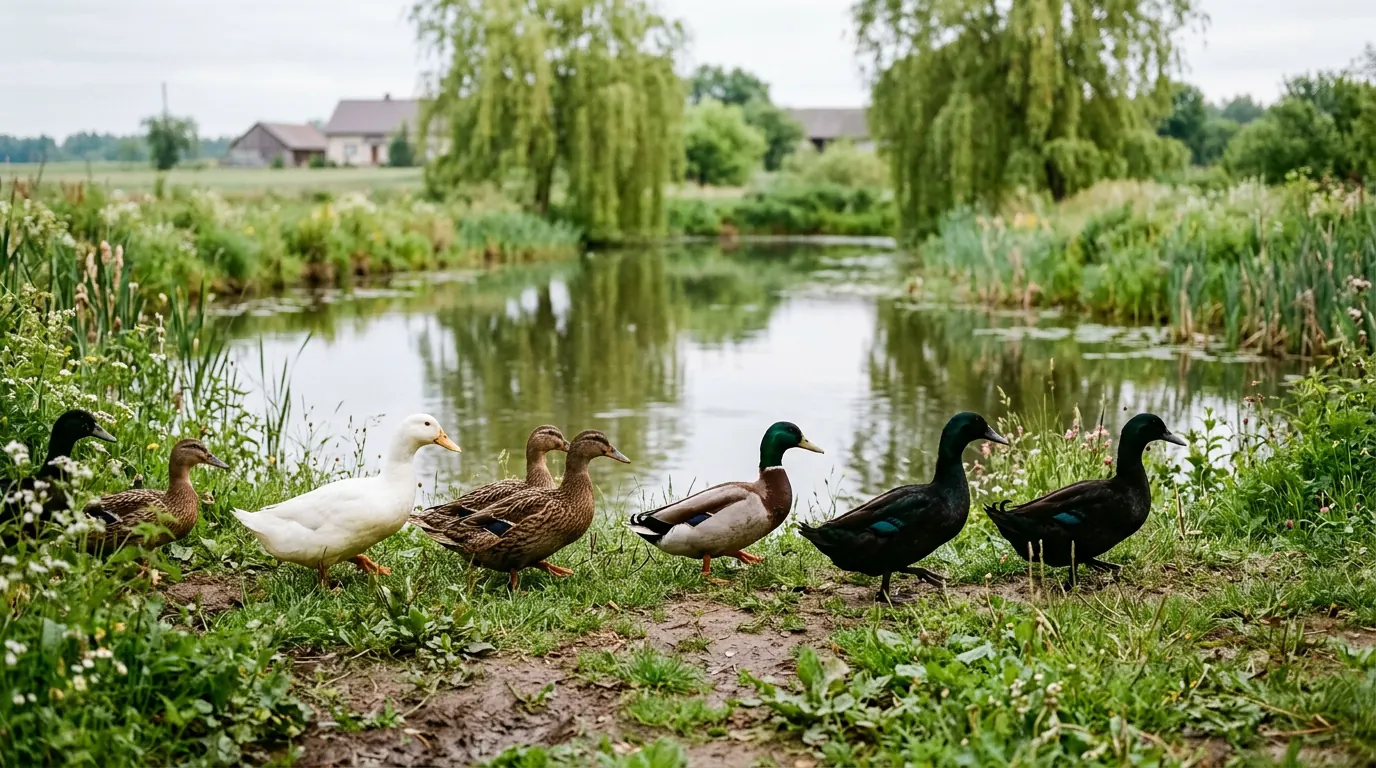
A duck house is a closed building or shelter where ducks sleep, get out of the weather and are shut in at night against predators. A well-designed one has a dry floor, enough space, ventilation without drafts and drinkers the birds can reach easily. Start the plan with the number of birds in one group, and only then choose materials and dimensions.
Where to start planning
Before you buy materials, count how many birds will live in one house and how old they are. Floor area, the number of doors and the drinker layout all depend on this. With larger flocks, split the building into several pens. It is then easier to separate groups and treat only part of the flock. If you are new to ducks, build a small house first and plan any extension after the first season. We describe the basics in duck house requirements, and you will find practical tips for starters in keeping ducks for beginners.
Floor area, height and doors
Floor area per bird
The area you need depends on the age of the ducks, the breed and whether the birds have permanent access to a run. We do not give a specific figure here, because it depends on the regulations and recommendations for the species. Check the current legal text in ISAP, Poland's online database of legal acts (legal state as of 22.11.2026), and agree the requirements with a vet who knows your county. When planning, measure net floor area, meaning without drinkers and feeders, and leave room for the birds to grow.
Height and doors
Ducks do not need a tall house like hens do, but a ceiling that is too low makes ventilation and cleaning harder. Put doors at floor level or add a gentle ramp, because ducks cope badly with steep steps. Doors and hatches should close tightly from the outside and open easily when you let the birds out to the run.
Layout inside
Put the feeder and drinkers on the opposite side from the bedding, so water does not soak the litter each time you fill them. Keep the water zone near the entrance, because that is where the birds gather. A grate or slatted mat at the drinker threshold keeps wet litter from spreading.
A dry floor above all
Floor material
The floor must be sealed, easy to wash and disinfect, and must not soften. Concrete with a slight slope toward a drain works well in permanent buildings. Wooden floors rot quickly in damp conditions, so they need ventilation underneath and frequent replacement of wet litter.
Litter
Litter absorbs water and droppings, so it must stay dry by the drinkers. Straw and sawdust are common, but replace wet spots right away instead of waiting for a full change. Wet, caked litter is the first sign that a drinker leaks or the birds splash water around. Take soiled litter away from the duck house and do not store it on the run, because there it puts germs back into circulation.
Fresh air without drafts
Ventilation
Moisture from the birds' breath and from water quickly turns a duck house into a place that favors respiratory disease. Place the inlets and outlets so air flows through the whole house but does not blow straight onto birds sleeping on the bedding. Put the inlet above bird level and the outlet high in a wall or the roof. We describe the rules for other buildings in duck house requirements.
Light and temperature
Natural daylight is enough during the day. In the evening the house should be dark so the birds settle to sleep. Cover windows with mesh against insects and wild birds. In winter, watch for freezing water and for how tight the building is, rather than heating, because ducks usually tolerate cold better than damp.
Drinkers and water quality
Water parameters according to Aviagen
Aviagen handbooks give water quality criteria for poultry. According to the Ross Broiler Management Handbook 2025, total dissolved solids (TDS) below 1 000 ppm is good, and 3 000–5 000 ppm is poor: droppings get wet, birds drink less, grow more slowly and die more often. A pH of 6.5–8.5 is recommended, below 6 causes performance problems and corrosion of the pipework, and above 8.6 is unsuitable. The Ross Parent Stock Management Handbook 2023 gives the same TDS and pH thresholds. The tables cover broilers and breeding flocks, so for ducks treat them as a starting point and agree the values with a vet.
Hardness and sulfates
According to the same handbooks, hard water above 100 ppm does not harm poultry, but it makes soaps, some disinfectants and medicines given in water work less well. Sulfates up to 200 ppm are fine, 200–250 ppm is the maximum desirable, and from 500 ppm upward they reduce copper absorption. If your well water exceeds these values, order a laboratory test before you install drinkers. We explain how to lower pH in our article on acidifying drinking water for poultry.
Predator protection and closing up
Shutting in at night
Ducks go into the house in the evening and come out in the morning, so closing the entrance after dusk protects them from foxes, martens and rats. Fit the bolt on the inside, or use an outside latch that cannot be opened through the mesh. Every evening, check that all birds are in and the entrance is closed.
Run fencing
Run mesh should reach the ground or be buried, because predators dig under fences. Fencing does not replace night-time closing. After every storm and strong wind, check the mesh, because that is where gaps appear most easily.
Biosecurity and duck house records
Hygiene plan
Empty and disinfect the duck house between groups of ducks. Before a new batch arrives, check the drinkers, mesh and floor, and only then bring in the birds. Keep the entrance zone apart from farm outbuildings and leave protective footwear by the door. You can build a ready plan for hygiene and zone entry in the biosecurity plan generator.
Records
Keep a record of when each group arrived, how many birds, what treatments were done and when medicine withdrawal periods end. Registration and notification duties come from the regulations, so check their current wording in ISAP and with your county veterinary officer (powiatowy lekarz weterynarii). Entries in the poultry house records replace a notebook and make it easier to review data during an inspection.
Frequently asked questions
How big should a duck house be?add
Size depends on the number and age of the birds, the breed and whether the ducks have access to a run. You will find the specific standard in the regulations available in ISAP, and you should agree the final requirements with a vet. When planning, count net floor area, without drinkers and feeders.
Do ducks need bathing water inside the duck house?add
Access to swimming water depends on the breed, the run and the housing system. Inside the house, bathing water quickly turns litter to mud, so it is better to put it outside, in a spot with drainage. Agree recommendations on this with a vet.
What should I build a duck house from?add
Floor and walls should be sealed, easy to wash and disinfect, and resistant to damp. Concrete works best for the floor. Wood is popular, but it needs good ventilation under the floor and frequent replacement of wet litter.
How do I check water quality for duck drinkers?add
Order a lab test of well or mains water before you install drinkers. Aviagen handbooks give thresholds for TDS, pH, hardness and sulfates for poultry, but for ducks, interpret the result with a vet. If pH is below 6 or above 8.6, change the source or treat the water.
Do I have to register a duck house with the authorities?add
Registration and notification duties depend on the regulations, and you can check their current wording in ISAP (legal state as of 22.11.2026). Your county veterinary officer will tell you most reliably, as they know the requirements in your county. Do not assume that skipping a notification does not matter until you have checked the rules.
How do I protect a duck house from foxes?add
Close the entrance every evening and check that all birds are inside. Bury the run mesh or bring it down to the ground, because foxes dig under fences. After a storm and strong wind, check the fence for gaps.
Sources & resources
- linkRoss Broiler Management Handbook 2025
- linkRoss Parent Stock Management Handbook 2023 (Interactive)
- linkChief Veterinary Inspectorate (Główny Inspektorat Weterynarii) — gov.pl/web/wetgiw
- linkNational Research Institute of Animal Production (Instytut Zootechniki PIB) — izoo.krakow.pl
- linkInternet System of Legal Acts (ISAP) — isap.sejm.gov.pl
Prepared by: DlaFerm Team based on data from the sources listed · Publisher: INSTA-TECH sp. z o.o.
Do you keep more than one group of ducks?
The <a href="/program-do-ewidencji-kurnika">poultry house records</a> module helps you log which group is in which house, when it arrived and how its documentation looks. Create a free farm account in DlaFerm.pl and see how it works on your own farm.
Phone
+48 796 258 151