Duck breeds: Pekin, Muscovy, Indian Runner, Old Polish
Pekin and Muscovy are meat ducks, the Indian Runner is an egg layer, and the Old Polish duck is a local breed kept for conservation. Each needs a different run, a different cost calculation and a different approach to breeding. Below we compare their traits and explain what they mean on your farm.
verifiedFrom the team that has organised work on poultry farms for years.
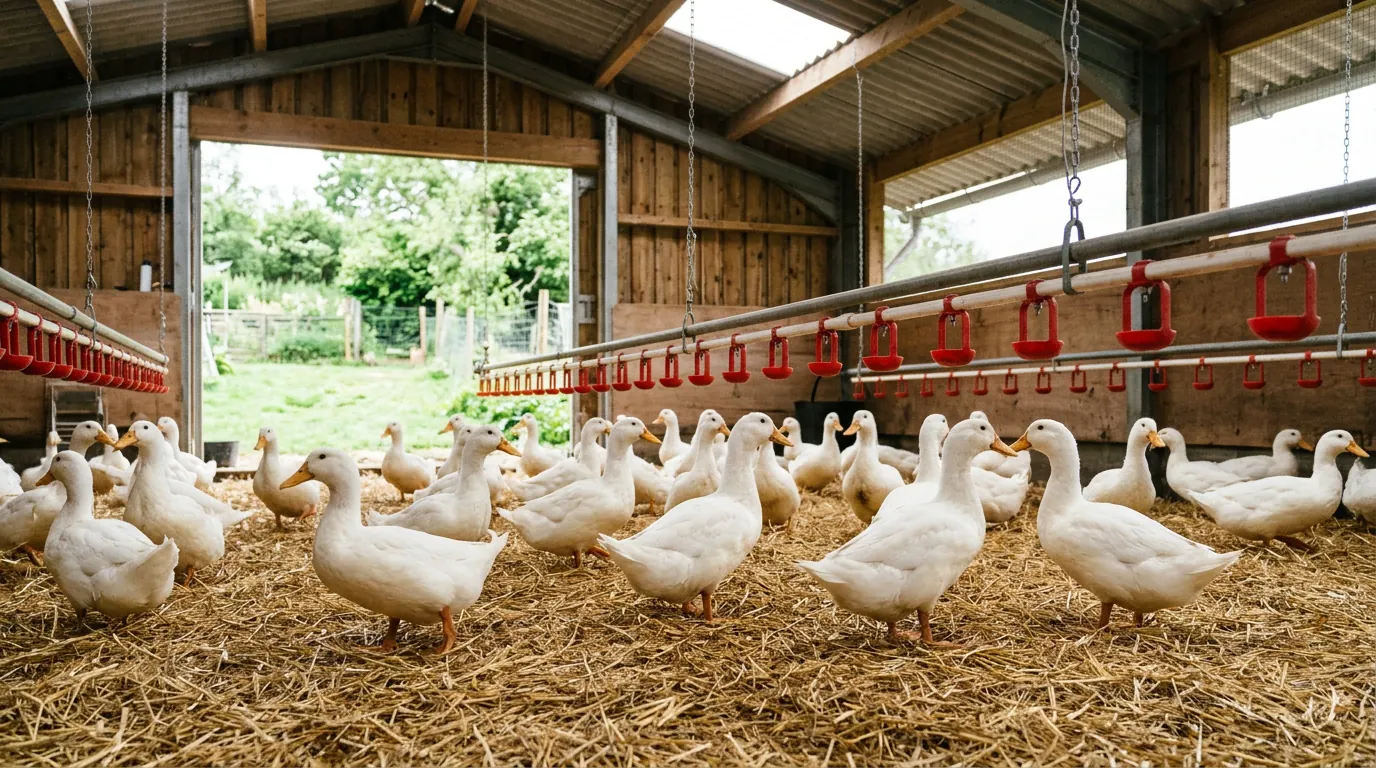
Four duck breeds are most common on Polish farms: the Pekin, the Muscovy, the Indian Runner (biegus indyjski) and the Old Polish duck (kaczka staropolska). Each has a different purpose. Pekin and Muscovy are meat breeds, the Indian Runner lays eggs, and the Old Polish duck is a local breed kept mainly to preserve the population. Before you buy ducklings, decide what the flock is for: meat, eggs or genetic conservation. That choice sets the breed, the size of the run and the profit calculation.
Duck breeds at a glance
Pekin: meat breed, white plumage, fast weight gain, needs dry litter and constant access to water. Muscovy: meat breed, red caruncles on the face, lean meat, drakes clearly larger than females. Indian Runner: egg breed, upright slim build, light and active. Old Polish duck: conservation breed, local type, varied coloring, small number of birds kept. Treat this as a starting point, not a finished decision. Growth rate and egg production depend on the genetic line and on housing, so ask your supplier for data from their own flock and check results on your own farm over several cycles.
Pekin: the most popular meat duck
Build and growth rate
The Pekin has a broad, compact body and white plumage, which gives clean, light carcasses after slaughter. It gains weight well, so it mostly goes to meat-oriented farms. Growth rate and slaughter yield depend on the breeding line, feeding and feed quality, so compare them with data from your specific supplier, not with general opinion. Pekins are usually kept on litter, because the birds spend a lot of time on the floor and around the drinkers. We cover production details in our guide to raising Pekin ducks.
Practical requirements
Pekins need no exotic conditions, but they drink a lot and foul their drinkers, so clean the drinkers more often than with chickens. Wet litter is the biggest problem: it promotes skin and joint disease and lowers carcass quality. Ducklings need warmth and a dry bed in the first weeks, and their feed should match their age. Agree feed type and amounts with a nutrition adviser or a vet. Building requirements are in a separate guide: housing requirements for ducks.
Muscovy duck: lean meat and a big difference between the sexes
Looks and sex
The Muscovy duck (Cairina moschata) clearly differs from the other breeds. It has red, bare caruncles on the face, and drakes are much larger than females. The weight gap between the sexes is big enough that sorting birds affects results at sale and slaughter. Muscovy meat is lean and darker than Pekin. Some buyers value it, but it needs a different market approach. Sexing at hatching is hard, so many farms buy ducklings and sort them later as they grow.
Hybrids and breeding
Crossing a Muscovy with domestic ducks gives hybrids called mulards, which are mostly sterile and unsuitable for further breeding. On a farm this means keeping flocks apart and marking birds clearly so breeding stock does not get mixed up. Muscovies lay seasonally, and their breeding can be less predictable than with domestic ducks, so fit your placement and hatching plan to that rhythm. Record the origin of birds whenever the flock changes, because without it you cannot judge results or avoid mistakes at sale.
Indian Runner: an egg-laying duck with an upright build
Laying and build
The Indian Runner has a long, upright body and moves in quick, small steps. It is light, so it suits meat production poorly, but it is an egg breed, which sets it apart from the Pekin and Muscovy. Laying results differ between lines, so do not treat general figures from the internet as certain. Track your own flock for several months and write the results in your records. You can read more about the breed and its uses here: Indian Runner ducks.
Run and fencing
Runners are active and agile, so the run fence must be higher and tighter than for heavy meat breeds. Their light build and high activity raise the risk of escape, so check the netting. Roof, litter and ventilation needs are similar to other ducks, but laying birds need a quiet place for their eggs, ideally a sheltered corner of the house. Collect eggs regularly so they do not spoil in the litter or tempt birds to peck.
Old Polish duck: a local breed
Origin and value
The Old Polish duck is a local breed, kept for many years on village farms without strict selection. Its coloring varies, and the birds are less uniform than industrial breeds. For a keeper it is a conservation breed, because it keeps traits developed in local conditions. For information on poultry genetic resource programs, check research bodies such as the Institute of Animal Science (Instytut Zootechniki PIB) rather than relying on casual opinions.
Records and registration
Keeping Old Polish ducks takes the same discipline as any other breed. You must register the birds in the system kept for poultry flocks and report changes as required. We explain poultry farm registration, including the IRZplus system (ARiMR's online animal register), in a separate guide: poultry farm registration (IRZplus). We describe it as the law stood on 22.11.2026, but rules change, so check the current source before you decide. With a small number of birds, a record entry is the basis, because it lets you trace the flock's origin in case of an inspection.
Duck diseases: what to check in every breed
Salmonella and worms
Salmonella and worm infections appear in duck flocks whatever the breed. Salmonella spreads through feed, water and litter, so monitoring and hygiene at entry points matter. Worms weaken birds and cut weight gain, and control rests on observation and tests ordered by a vet. We describe symptoms and what to do in separate guides: Salmonella in ducks and worms in ducks. A vet always chooses the medicine and the dose.
Withdrawal period and records
After any treatment a withdrawal period applies: the time when you may not sell meat or eggs. The medicine's manufacturer and your vet give its length, not a general table from the internet. So record every treatment at once: the product name, the date, the birds treated and the date the withdrawal period ends. In an inspection, treatment records show you followed the advice. We cover keeping these records in our module on treatment and drug withdrawal periods.
How to match the breed to your farm's goal
Do the math before you buy
Before you buy ducklings, work out three things: the cost of a duckling, the feed cost per unit of gain or per egg, and the selling price. Duck meat and egg prices change, so we do not base the calculation on fixed amounts, only on current quotes from your buyer. We explain how to calculate profitability in a separate guide: duck farming profitability. A meat breed needs a different run and building than an egg breed, so investment costs also count in the result.
Feeding and buying
Feed is the biggest cost, so match it to age and purpose. Research institutes prepare nutrition standards for geese and ducks, and you should check how to apply them with an adviser. When buying ducklings, ask about origin, data from the previous cycle and hatching conditions. A small flock is easy to manage by hand, while a larger one needs a system that joins records, feeding and production results.
Frequently asked questions
Which duck breed is best for meat?add
The Pekin is the most popular meat breed, with white plumage and good weight gain. The Muscovy is also a meat duck, but it gives lean meat and needs a different market approach. The final choice depends on the breeding line and your buyer.
Is a Muscovy a domestic duck?add
No, the Muscovy is a separate species (Cairina moschata). Its hybrids with domestic ducks are mostly sterile, so you need to keep flocks apart and mark the birds.
Which duck lays eggs well?add
The Indian Runner is an egg breed with a light, upright build. The exact number of eggs depends on the line and on housing, so check the results of your own flock.
How does the Old Polish duck differ from industrial breeds?add
The Old Polish duck is a local breed, usually kept for conservation. Its coloring and traits are less uniform than in industrial breeds, and its value lies in preserving the population.
How long is the withdrawal period after treating ducks?add
The length depends on the medicine, and the manufacturer and your vet give it. Do not rely on general tables; record the end date of the withdrawal period at every treatment.
Where can I check the current rules for poultry farms in Poland?add
Rules change, so check them in the Internet System of Legal Acts (ISAP) and on the pages of the Chief Veterinary Inspectorate (Główny Inspektorat Weterynarii). We describe them as the law stood on 22.11.2026.
Sources & resources
- linkChief Veterinary Inspectorate (Główny Inspektorat Weterynarii) — gov.pl/web/wetgiw
- linkInstitute of Animal Science (Instytut Zootechniki PIB) — izoo.krakow.pl
- linkInternet System of Legal Acts (Internetowy System Aktów Prawnych) — isap.sejm.gov.pl
Prepared by: DlaFerm Team based on data from the sources listed · Publisher: INSTA-TECH sp. z o.o.
Do you keep ducks alongside other poultry?
The DlaFerm.pl farm management program lets you keep records for flocks of different poultry species in one place. Create a free farm account and see how it works with your own data.
Phone
+48 796 258 151