What to Feed Ornamental Chickens
Feed ornamental chickens a complete feed that suits their age, and treat grain and supplements as extras. The most common mistake is the wrong amount, not the wrong recipe: ornamental breeds eat little, so they are easy to overfeed. We explain what the feed should contain, how to set the amount and what to watch for with supplements.
verifiedFrom the team that has organised work on poultry farms for years.
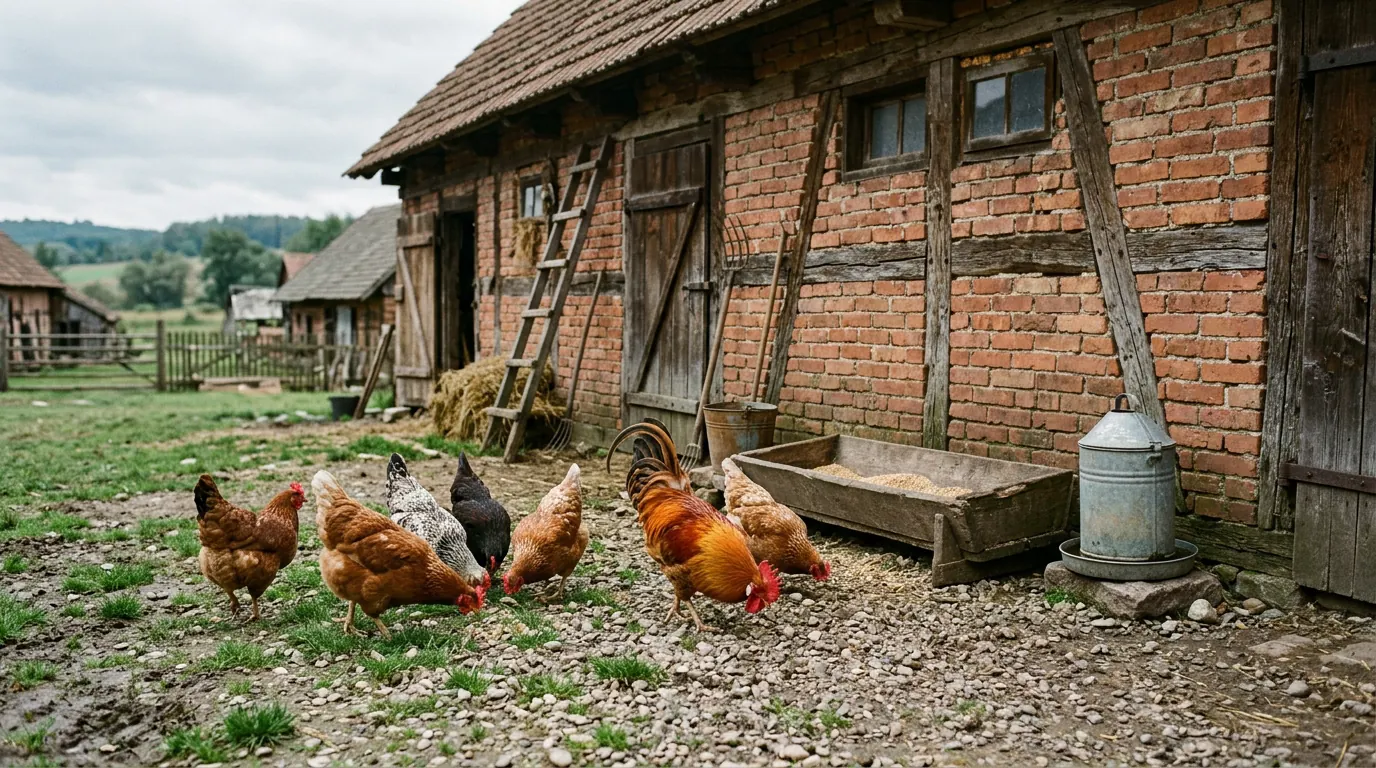
Feed ornamental chickens a complete chicken feed that matches the bird's age. Give grain, vegetables and supplements only as extras. There is no single required recipe just for ornamental breeds, because the difference is mainly in the amount. Ornamental breeds are small, so they need clearly less feed than production hens, and overfeeding is the most common mistake. Set the amount by the size of the breed and by what the birds actually eat. For details on production feeds, see our guide to chicken feed and the page on layer feed.
Why the amount matters more than the recipe
Nutrition handbooks for production breeds point out that what counts is not only the nutrient concentration in the feed, but also how much feed each bird eats per day. Ross, in its parent stock handbook (2023), says needs should be considered as daily intake, because feed intake changes, for example in high temperatures, when birds eat less. For an ornamental keeper the conclusion is simple: the same feed works differently in a bird that eats little and in a bird with unlimited access. These sources are written for large farms, so we carry over the principle, not the numbers.
What ornamental chicken feed should contain
Complete feed as the base
The base of the diet is a complete feed: a mix that covers the bird's needs for energy, protein, amino acids and minerals on its own. Check the label to see that the product is made for chickens and for which age stage. Ornamental chickens do not need broiler finisher feed, because they grow more slowly and use less energy. Layer feed has extra calcium, which laying hens need for shells, but too much does not suit birds that do not lay. Before you choose a product, ask the producer about its composition and the category of birds it is made for.
Grain and vegetables as extras
Grain is a treat and a reward, not a full diet. A hen fed mainly on grain gets too much energy and too little protein, calcium and vitamins, and she gets fat faster. Vegetables and green leaves can add variety, but give only what the birds eat in a short time so nothing is left lying in the run. Treat greens from the range as a seasonal extra. Give grain after the complete feed, not instead of it, and in small portions.
Protein and methionine
Sulfur amino acids matter for feather cover. Ross, in its broiler handbook (2025), lists incorrect methionine and cystine levels in the ration among the causes of poor feather cover and advises checking the recipe for this. In ornamental chickens, where plumage is a trait of the breed, this is a good reason not to cut corners on feed quality. Soybean meal is a common protein source in feeds, and it is worth knowing its share before you buy; see soybean meal for chickens. If feathers look worse despite good care, talk to a vet, who can judge whether the cause is feeding, parasites or disease.
Feed by age: chick, young hen, adult
Chicks
Chicks need a starter feed that is highly digestible and well balanced. The Ross broiler handbook (2022) advises feeding chicks a digestible, balanced starter diet and giving easy access to water and feed from day one. The same approach works for ornamental chicks: place feeders and drinkers so every chick can reach them without pushing. Small birds easily lose the fight for a spot at the feeder, so it pays to have more feeding points during rearing. More on equipment is in our guide to chicken feeders.
Young hens
When birds stop being chicks, change the feed as the producer recommends. Make the switch gradually, mixing old and new feed over several days so you do not upset the gut. Sudden changes are a common cause of reduced appetite. We do not give an exact switch point as a universal rule for ornamental breeds. Ask a vet or an experienced keeper of your breed.
Adult birds
Adult ornamental hens eat an adult-bird feed, and you keep grain and extras to a minimum. Roosters have different needs than hens, because they do not lay eggs. If you keep roosters and hens together, do not assume one ration suits everyone. Watch condition, weight and plumage. Keeping a record of observations and feeding changes is easier with a poultry house record system, which also shows your bird numbers.
How much feed to give and how to avoid overfeeding
Controlling the feed supply
Ross, in its parent stock handbook (2023), names control of feed supply as a major tool for managing a flock and stresses that you need to know the expected feed intake before you decide on nutrient density. For ornamental chickens this is simple. The feeder should always be accessible, but not overfilled. If feed sits for a long time, reduce the portion. If birds rush to the feeder and empty it at once, increase it. Write down how much you add and compare it week by week.
Heat and appetite
High temperature lowers feed intake, which Ross gives as a typical reason to treat rations flexibly. In summer, do not top up far ahead, because feed loses quality faster in heat. Serve the feed in the cooler part of the day and keep fresh water available all the time. In winter birds eat more to keep their body warm, so watch their weight through the whole season.
Feed wastage
Ross, in its broiler handbook (2025), lists feed wastage among the typical causes of poor feed conversion and advises checking the feed recipe and quality. In ornamental chickens, waste usually comes from how the feeder is set up. An open, shallow dish lets birds fling grain onto the litter. Choose a feeder with a guard, and at the drinker make sure water does not spill onto the feed, because the handbook names water spillage as a common cause of litter problems.
Feed quality, storage and medicines
Testing the composition
Ross, in its parent stock handbook (2023), advises sampling feed at farm level and running routine laboratory analysis to check that the expected nutrient content is actually reached. For a small flock a full analysis of every batch can be costly, but it is worth asking the producer for test results and choosing proven suppliers. Prices of feed and tests change, so check current rates directly with the seller or the laboratory.
Storage
Feed loses value with damp, heat and long storage. Keep bags in a dry, airy place, on a pallet, away from the wall, and use them in the order you received them. Close an open bag tightly so it does not take in moisture. Moldy feed is not fit to serve, even in a small amount. A clear change in smell or color is a signal not to take the risk.
Medicines and withdrawal periods
If birds are being treated, a separate feed or a pause in certain supplements is often required. Ross, in its broiler handbook (2022), describes so-called withdrawal feed, which is adjusted to local rules on withdrawal periods. A vet always chooses the medicine and the dose. Write down what you gave and when the withdrawal period ends, because it is hard to reconstruct later. A treatment and withdrawal record is made for this.
Calcium and vitamins: when to add them
Calcium and shells
Laying hens need calcium for eggshells. Layer feed usually has more of it, but ornamental hens lay few eggs, so their need is lower and extra calcium is not a good idea. Give shells and grit separately, in their own container, and watch how much the birds eat. More in the page on lime, shells and grit for chickens.
Vitamins
Give vitamins when there is a specific reason, for example after stress, in heat or when rearing chicks. Giving preparations all the time without need does not help the birds. A vet or the producer sets the dose and the length of use, not the label. Read our guide to vitamins for chickens before you start buying preparations.
Frequently asked questions
Can ornamental chickens eat layer feed?add
They can, but ornamental breeds usually need less than production hens. Layer feed has extra calcium, which birds that do not lay do not need. If a hen is not laying, an adult-bird feed is a better choice.
Can I feed ornamental chickens only grain?add
No. Grain has a lot of energy and little protein, calcium and vitamins, so birds soon lose their nutritional balance. Give grain as a reward, after the complete feed and in a small amount.
How much feed per day should an ornamental chicken get?add
We cannot give one amount, because it depends on breed, age, temperature and activity. Set the amount by observation: the feed left in the feeder, and the bird's condition and weight. If feed sits, reduce the portion.
What should I feed ornamental chicken chicks?add
Chicks need a starter feed that is highly digestible and well balanced, with easy access to water and feed from day one. Move to the next stages gradually, as the producer recommends.
Do ornamental chickens need vitamins and calcium?add
They need them in the amount a good feed already supplies. Give supplements when there is a specific reason, and let a vet or the producer set the dose. Lime makes sense mainly for birds that lay eggs.
What should I do if my ornamental chickens are losing feathers?add
The cause can be nutrition, parasites or health. Check the feed composition and quality, especially methionine and cystine content, and how the feeder is set up. If the problem continues, talk to a vet.
Sources & resources
- linkRoss Parent Stock Management Handbook 2023 (Interactive)
- linkRoss Broiler Management Handbook 2025
- linkRoss 308 / 308 FF Broiler Nutrition Specifications 2022
- linkChief Veterinary Inspectorate (Główny Inspektorat Weterynarii), gov.pl/web/wetgiw
Prepared by: DlaFerm Team based on data from the sources listed · Publisher: INSTA-TECH sp. z o.o.
Do you keep ornamental chickens alongside production birds?
The DlaFerm poultry house record module keeps your flocks and bird observations in one place. Create a free farm account in DlaFerm.pl and see how it works in practice.
Phone
+48 796 258 151