Rabbit diseases: symptoms, prevention and vaccination
The most dangerous rabbit diseases are myxomatosis and RHD (rabbit hemorrhagic disease). Vaccination protects against both, and your vet plans it. We describe the signs that mean you isolate an animal and the husbandry rules that cut down illness.
verifiedFrom the team that has organised work on poultry farms for years.
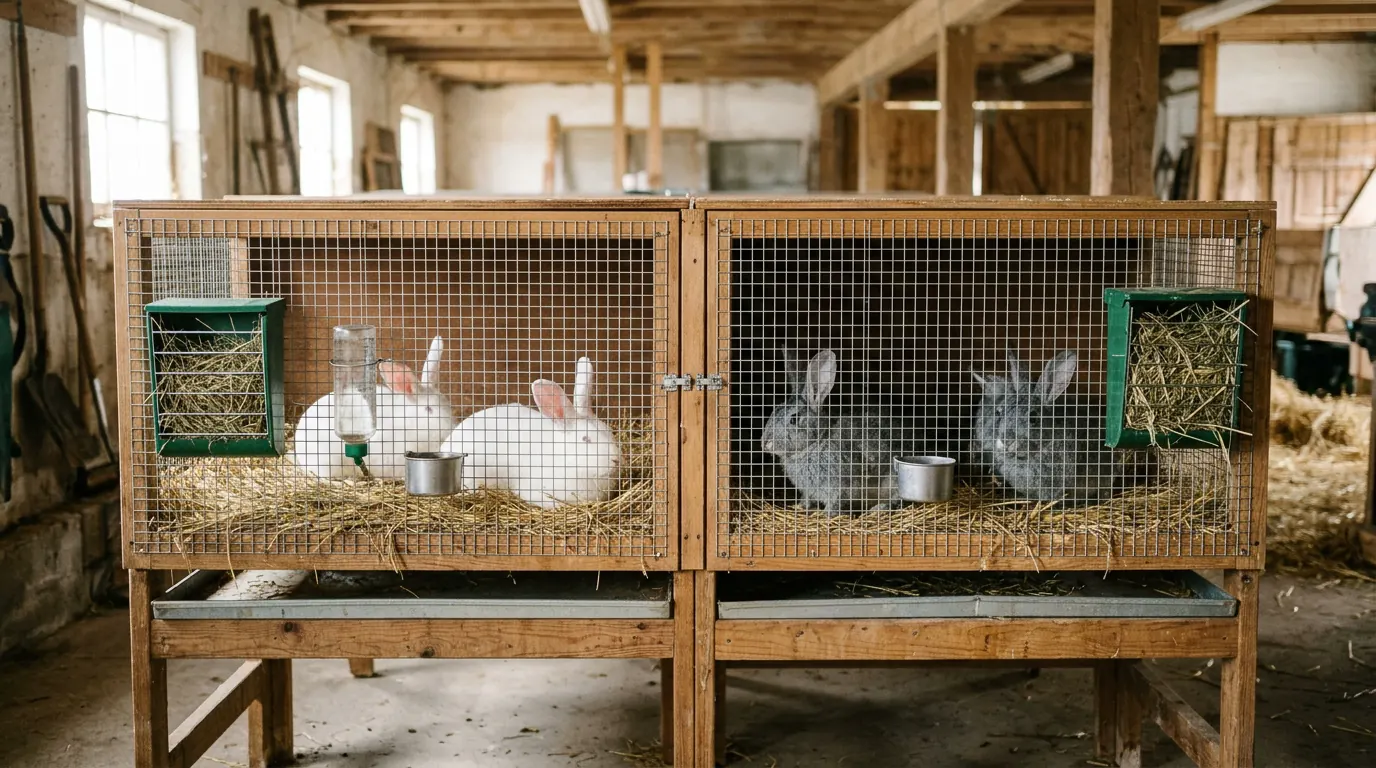
Myxomatosis and RHD (rabbit hemorrhagic disease) are among the most common and most dangerous rabbit diseases. Gacek, writing in Wiadomości Zootechniczne (2010), calls them the basic and most dangerous diseases of the species. Pasteurellosis with nasal discharge (snuffles) and coccidiosis also turn up in herds. Vaccination protects against RHD and myxomatosis; good housing protects against the rest.
Disease rarely comes from nowhere. The FAO manual "The rabbit" (Lebas et al.) states that disease is almost always the result of poor housing and environment, with a germ, virus or parasite acting on top of that. A source of infection in the herd does not by itself mean disease. So we start with the symptoms, then cover what you do on the farm to stop them appearing.
Sick rabbit: symptoms you can see at a glance
How to watch your animals
The IZ PIB (Poland's National Research Institute of Animal Production) guide for keepers stresses that a good keeper knows what to look for and how to react to worrying changes in health and behavior. Do a round every day, ideally at the same time, during feeding. A healthy rabbit rushes to the feed. An animal that sits apart, ignores the feed or turns away from the dish needs a look right away. Also check whether it passes droppings and whether they look normal.
Signs that mean you isolate the rabbit
Disease may show as: no appetite, lethargy, pus-like or watery discharge from the nose and eyes, sneezing, labored breathing, diarrhea, a bloated belly, swollen eyelids and ears, and lumps on the skin. Sudden, unexplained deaths in the herd call for an immediate response. Move sick animals to a separate cage, well away from the rest, and call a vet. Do not wait a few days for improvement, because disease in a herd usually spreads fast.
RHD, myxomatosis, pasteurellosis and coccidiosis
RHD and myxomatosis
These two viral diseases are named as the most dangerous. RHD often kills animals suddenly, while myxomatosis starts with swelling of the head and the genital area. Neither has a sensible treatment at herd level, so vaccination is what counts. Details are on our pages about RHD in rabbits and myxomatosis. Report suspected cases to your vet. For notification duties, check the rules on the website of the Chief Veterinary Inspectorate (Główny Inspektorat Weterynarii).
Pasteurellosis and snuffles
Pasteurellosis causes nasal discharge, sneezing, rattling breath and respiratory infections. Drafts, damp, overcrowded cages and temperature swings in the building make it more likely. Always isolate a rabbit with snuffles, because the disease passes easily to its neighbors. For diagnosis and prevention, see our article on pasteurellosis and snuffles in rabbits. Treatment, including the choice of drug and dose, is up to the vet.
Coccidiosis
This parasitic disease hits young rabbits hardest after weaning. It shows as diarrhea, no weight gain, emaciation and a dull coat. Parasites develop where it is dirty and damp, so clean cages, dry litter and clean water lower the risk. We cover it in more depth in the guide to coccidiosis in rabbits.
Rabbit vaccination
What the IZ PIB guide says
Gacek (WZ 2010) writes that vaccination and health monitoring by a vet are necessary, and every production farm should be under a vet's ongoing care. The vet draws up the program of vaccinations and other preventive measures. The same author gives an example: adult rabbits in the breeding herd are vaccinated once a year, ideally in early spring, against myxomatosis with Myxovac at a dose of 1 ml. Confirm the product and timing with your vet, because the range of vaccines changes.
Which vaccines the guide describes
The IZ PIB guide for keepers lists vaccines against RHD, vaccines against myxomatosis, and combined products that protect against both diseases at once. The vet decides the specific product, the age at first vaccination and the timing of boosters. We describe a calendar you can save and print in the article on rabbit vaccination. Write the date of each vaccination and the batch number in the herd records.
How to limit disease in the herd
Feeding and water
WODR Poznań (Poznań Agricultural Advisory Center) notes that proper feeding helps prevent many diseases and digestive disorders. According to this publication, the energy in feed for adult animals at sexual rest should not exceed 2400 kcal/kg of ration, and for pregnant and nursing does it is about 2600–2700 kcal/kg. Gacek points out that in a rabbit the gut contents move mechanically along with the feed eaten, so too much pelleted feed can speed up passage before the food is digested. We describe feeding rules in the article on feeding rabbits.
Conditions in the building
Rabbits handle drafts, damp and dirt badly. Keep cages dry, change litter, wash and disinfect dishes and drinkers, and always give fresh water. We cover equipment choice on the page about drinkers and feeders for rabbits. The IZ PIB guide also reminds you that conditions differ for pregnant does, young animals and animals at sexual rest, so adjust them to the physiological state of each group.
Biosecurity
Never bring animals into the herd without quarantine. Keep new animals apart and watch them before they join the rest. Limit visitors, change footwear before you enter the building, and do not borrow cages or equipment from other keepers without washing and disinfecting them. You can prepare a plan of such rules in the DlaFerm biosecurity plan generator.
Treatment and withdrawal periods: what you need to know
Don't pick drugs yourself
The IZ PIB guide notes that many keepers use medicines and supplements based on their own trials and experience. With antibiotics this is risky: the wrong product or dose will not cure the disease and can make things worse in the herd. Give an antibiotic only as your vet instructs. We do not give doses, because they depend on the product, the animal's weight and the diagnosis.
Withdrawal periods and records
Every drug has a withdrawal period: the time after treatment ends during which the animal must not go to slaughter. You will find it on the leaflet or in the vet's instructions. Record the start and end dates of treatment, the product name and the number of animals. That way you will not sell carcasses before the withdrawal period is over. We cover slaughter and sale rules in the article on rabbit meat, and formal requirements on the page about rabbit farming regulations.
Frequently asked questions
What are the most dangerous rabbit diseases?add
According to IZ PIB, they are myxomatosis and RHD. Vaccination protects against both. Pasteurellosis with snuffles and coccidiosis are also common problems.
How do you tell if a rabbit is sick?add
Look for no appetite, lethargy, discharge from the nose and eyes, sneezing, diarrhea and swelling of the head. Separate that rabbit from the rest and contact a vet.
How often should you vaccinate rabbits?add
IZ PIB says adult animals in the breeding herd are vaccinated once a year, ideally in early spring, against myxomatosis with Myxovac at a dose of 1 ml. Your vet sets the program for your farm.
Can you treat a sick rabbit yourself?add
No. The vet chooses the drug and dose after diagnosing the disease. After treatment, you keep to the withdrawal period before the animal goes to slaughter.
Why do rabbits get sick?add
The FAO manual states that disease is usually the result of poor housing and environment, with a germ, virus or parasite added on top. That is why cleanliness, dry litter, good feed and quarantine for new animals matter.
Does feeding affect rabbit health?add
Yes. WODR Poznań writes that well-chosen feed helps prevent many diseases and digestive disorders. The ration depends on the physiological state of the animals.
Sources & resources
- linkIZ PIB — Rabbit meat production technology under raised animal welfare standards. Guide for keepers and members of rabbit meat producer cooperatives (ed. Z. Kryński)
- linkIZ PIB — Wiadomości Zootechniczne — Rabbit meat production (L.A. Gacek), WZ XLVIII(2010)2–3:34–40
- linkFAO — The rabbit — husbandry, health and production (F. Lebas et al., FAO Animal Production and Health Series 21, revised ed.)
- linkWODR Poznań — Rabbit keeping: basic rules and housing conditions
- linkChief Veterinary Inspectorate (Główny Inspektorat Weterynarii) — gov.pl/web/wetgiw
Prepared by: DlaFerm Team based on data from the sources listed · Publisher: INSTA-TECH sp. z o.o.
Record treatment and track withdrawal periods in DlaFerm
The <a href="/ewidencja-leczenia-i-karencja-lekow">treatment and withdrawal module</a> lets you record the product, dates and withdrawal period, and the <a href="/generator-planu-bioasekuracji">biosecurity plan generator</a> helps you set entry rules for your farm. Create a free farm account or get in touch, and we will show you how it works in practice.
Phone
+48 796 258 151