Coccidiosis in rabbits: symptoms, treatment, prevention
Coccidiosis is a parasitic disease of the gut and liver. It hits young rabbits hardest after weaning. We describe the symptoms, how treatment works under a vet's control, and the steps that cut the risk in your herd.
verifiedFrom the team that has organised work on poultry farms for years.
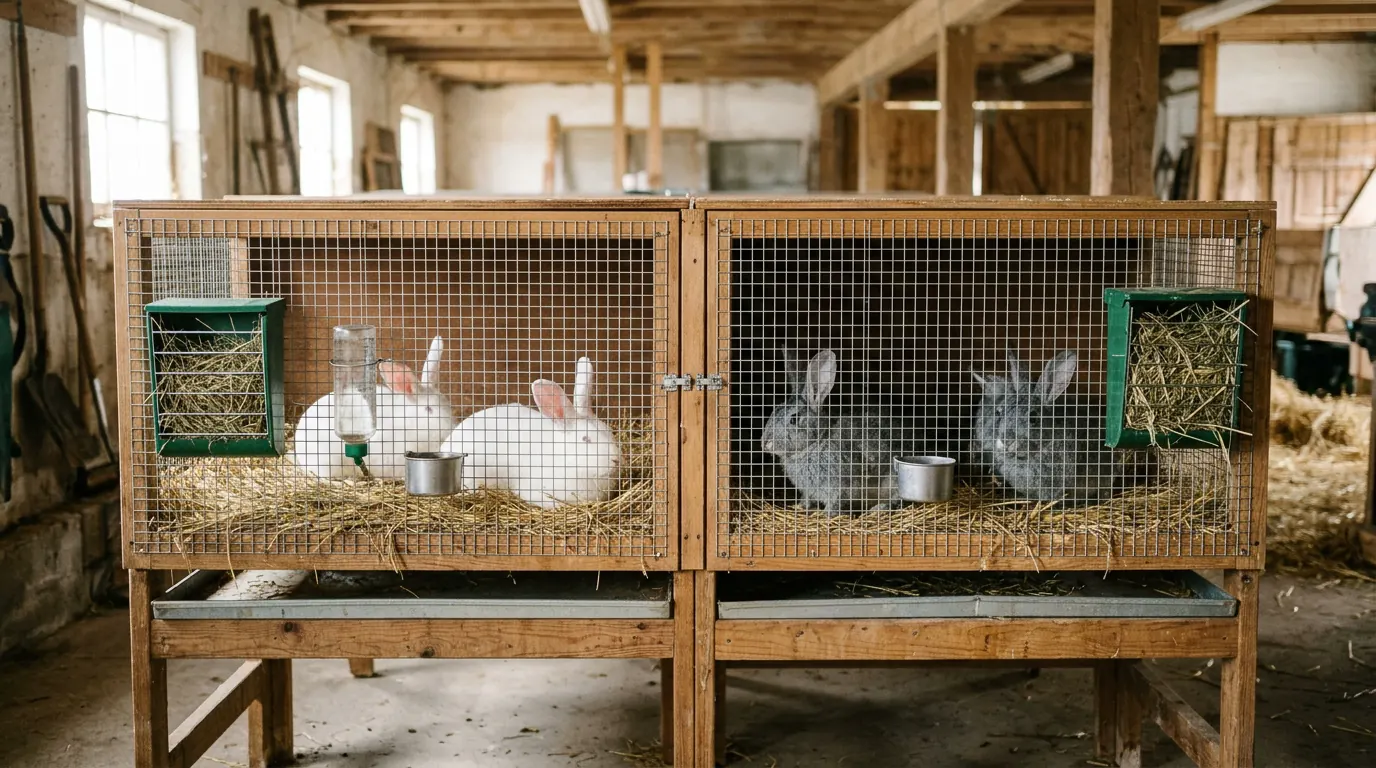
Coccidiosis in rabbits is caused by single-celled parasites of the genus Eimeria. Some species attack the gut, another damages the liver. Mainly young animals get infected, and according to the IZ PIB monograph (Poland's National Research Institute of Animal Production), most losses on farms come right after weaning from the doe. The disease develops in dirty, damp cages where rabbits come into contact with their own droppings.
The parasites multiply in the cells of the gut or liver and pass oocysts, a hardy resting form, out in the droppings. Other rabbits swallow them with feed, water or bedding. Adult animals often carry the infection with no clear signs and become a source of oocysts for the young. So watching the sick animals is not enough. You need to look after the whole herd and the conditions in the cages, as we describe in our section on rabbit diseases.
Why coccidiosis hurts profitability
The disease rarely kills a whole herd at once. More often it lowers weight gain, lengthens fattening and opens the way for other gut infections. According to FAO, diarrhea with no clear cause often clears up once the coccidiosis itself is treated properly, and French authors stress its role as a factor in gut inflammation. For you this means one thing: with any diarrhea in young rabbits, first check for coccidia, and plan treatment with a vet.
Symptoms of coccidiosis in rabbits
Gut form
With gut coccidiosis, young rabbits have diarrhea, sometimes with mucus. The belly may be bloated, the animal sits with its fur ruffled, eats poorly and loses weight. Weight gain drops clearly compared with healthy littermates. Some rabbits are only listless and soiled around the anus, so the signs are easy to miss on a quick round. Look at the cage floor and at the fur under the tail. In a severe case the animal dries out and weakens within a few days. Young rabbits after weaning are most at risk because their immunity is still developing.
Liver form
Liver coccidiosis is less dramatic. The rabbit gets thin, is apathetic, eats poorly and has a rounded, sometimes enlarged belly. There may be no diarrhea at all. Diagnosis is often confirmed only at post-mortem: the liver is enlarged, with pale nodules. For any death with no clear cause, send the body for examination. It is the surest way to tell coccidiosis from other conditions, such as those in our guide to pasteurellosis and snuffles or in the material on RHD.
When to call a vet
Call a vet when diarrhea affects several rabbits in a litter or when the young stop gaining weight. Do not wait for the first animal to die. The vet will order a fecal test for oocysts and choose treatment to fit the state of your herd. Have the details ready: the age of the rabbits, how long the signs have lasted, what feed you give and whether you recently changed it or the animal's place in the cage.
Where coccidiosis in a herd comes from
A rabbit gets infected by swallowing oocysts from droppings. Oocysts mature in the surroundings and become infective, especially when it is warm and damp. The risk grows when droppings build up in the cage, bedding is wet, and drinkers and feeders are placed so that droppings foul them. Stress after weaning is another big factor: a change of feed, new cage mates and a move to another cage. Well-designed rabbit cages with a slatted or wire floor that lets droppings fall through limit contact with the feces.
The role of adult animals
A doe with a hidden infection sheds oocysts and meets the young in the nest. So hygiene of the nest box and floor at kindling matters from day one. We describe the rules in the article on kindling and raising young rabbits. Bring new animals into the herd only after quarantine, because they may carry other strains of the parasite.
Treating coccidiosis in rabbits
What the sources say
The FAO handbook describes treating coccidiosis with sulfonamide drugs and their combinations with other substances. It notes that sulfonamides should always be avoided in pregnant does because they harm the fetuses. The authors also warn that many antibiotics are dangerous for rabbits and can cause digestive upsets. So never give a drug by guesswork or on advice from a forum. The dose, length of treatment and route (in water or feed) are set by a vet after diagnosis.
Withdrawal period and records
Every drug given to rabbits meant for slaughter has a withdrawal period, the time after which you may slaughter the animal for meat. You will find it on the leaflet and on the vet's prescription. Do not sell or slaughter rabbits before it ends. Write down the date of treatment, the drug name, the number of animals and the last day of the withdrawal period. The treatment and withdrawal records in DlaFerm help with this.
Treating the whole group
For coccidiosis you usually treat the whole group of rabbits in the room, not only the visibly sick ones, because those without signs are infected too. At the same time clean the cages, change the bedding and check the drinkers. Without this the animals will reinfect themselves from their own surroundings, and the treatment will be wasted money.
Coccidiostats for rabbits and other ways to prevent coccidiosis
Coccidiostats in feed
Coccidiostats are substances that slow the growth of coccidia. They are added to rabbit feed mixes. They are used as prevention in young rabbits, especially after weaning. Check on the feed label whether the additive is declared and which age group it is meant for. Note the withdrawal period before slaughter. If you mix feed yourself, discuss the recipe with a vet or adviser, because a dosing mistake with the additive can harm the animals. You will find more on building the ration in our guide to feeding rabbits.
Herbal mixes
The IZ PIB monograph describes research on herbal extracts as a possible substitute for feed coccidiostats. Extracts of garlic, oregano, ginseng and mustard eased the course of coccidiosis and improved production results in infected rabbits. Given regularly, they kept oocyst counts at a low, non-invasive level, and young rabbits coped better with the hard period after weaning. The authors tested specific products from one company. Treat herbal additives as support, not as a replacement for treatment when the disease strikes.
Hygiene and conditions
The cheapest prevention is cleanliness. Clean cages regularly, remove droppings from under the floor, keep bedding dry and disinfect cages once they are empty. Place drinkers and feeders so that droppings cannot foul them. We describe how to choose equipment in the article on drinkers and feeders. Do not overcrowd cages, keep the building dry and airy, and change the water every day. You can draw up a hygiene plan for your herd in the biosecurity plan generator.
How to run your herd so coccidiosis does not come back
Wean the young on schedule and do not change feed, cage and group all at once. Stress weakens immunity, and coccidia use every gap. After each batch, empty the room, clean it and leave it for a few days to dry before you bring in a new group. Keep records: the number of deaths in a litter, signs, treatment and fecal test result. After two or three cycles you will see in which period and which cage the disease shows up most often. You will find general rules for running a herd on the page about rabbit farming.
Frequently asked questions
How do you recognize coccidiosis in a rabbit?add
Most often you see diarrhea, a bloated belly, no appetite and lower weight gain in young rabbits. The liver form can occur without diarrhea. A fecal test for oocysts or a post-mortem gives a sure diagnosis.
Can coccidiosis in rabbits be cured?add
Yes, it can be treated, but the vet chooses the drug and the dose. You treat the whole group of animals and clean the cages at the same time, otherwise the rabbits will get infected again.
Which coccidiostats should you give rabbits?add
Coccidiostats are used in feed mixes for young rabbits. Agree the product and how long to give it with a vet. Always check on the feed label which age group the additive is meant for and what the withdrawal period is.
Which rabbits get coccidiosis most often?add
Young animals are most at risk, especially after weaning from the doe. The IZ PIB monograph names this time as the period of highest losses on farms.
Can herbs replace coccidiostats?add
Research described by IZ PIB shows that extracts of garlic, oregano, ginseng and mustard eased the course of coccidiosis. It covered specific products. When the disease strikes, a vet sets the treatment.
Can you slaughter a rabbit during treatment?add
No, only after the withdrawal period given for the drug used has passed. Write down the date of the last dose and the last day of the withdrawal period so you do not mix up groups.
Sources & resources
- linkIZ PIB — Rabbit meat production technology under raised animal welfare standards. Guide for breeders and members of rabbit meat producer cooperatives (ed. Z. Kryński)
- linkIZ PIB — Farming and breeding of livestock over 70 years — Poultry Breeding Department, Small Livestock Breeding Department (ed. D. Kowalska, K. Połtowicz)
- linkFAO — The rabbit — husbandry, health and production (F. Lebas et al., FAO Animal Production and Health Series 21, revised edition)
- linkWODR Poznań — Rabbit farming — basic rules and housing conditions
Prepared by: DlaFerm Team based on data from the sources listed · Publisher: INSTA-TECH sp. z o.o.
Keep treatment and withdrawal records in one place
The "Treatment and withdrawal" module in DlaFerm helps you track drug dates and the end of the withdrawal period before slaughter. Create a free farm account or get in touch, and we will show you how it works in practice.
Phone
+48 796 258 151