Feed mixer wagon: self-propelled or trailed, and how to choose for your barn
A feed mixer wagon mixes forage and concentrate into one ration and delivers it, which is the TMR (total mixed ration) system. A self-propelled wagon suits a large barn with frequent feeding. A trailed wagon suits a farm that already has a tractor and a smaller herd. Here is how to compare the two and what to check in your barn before you buy.
verifiedFrom the team that has organised work on poultry farms for years.
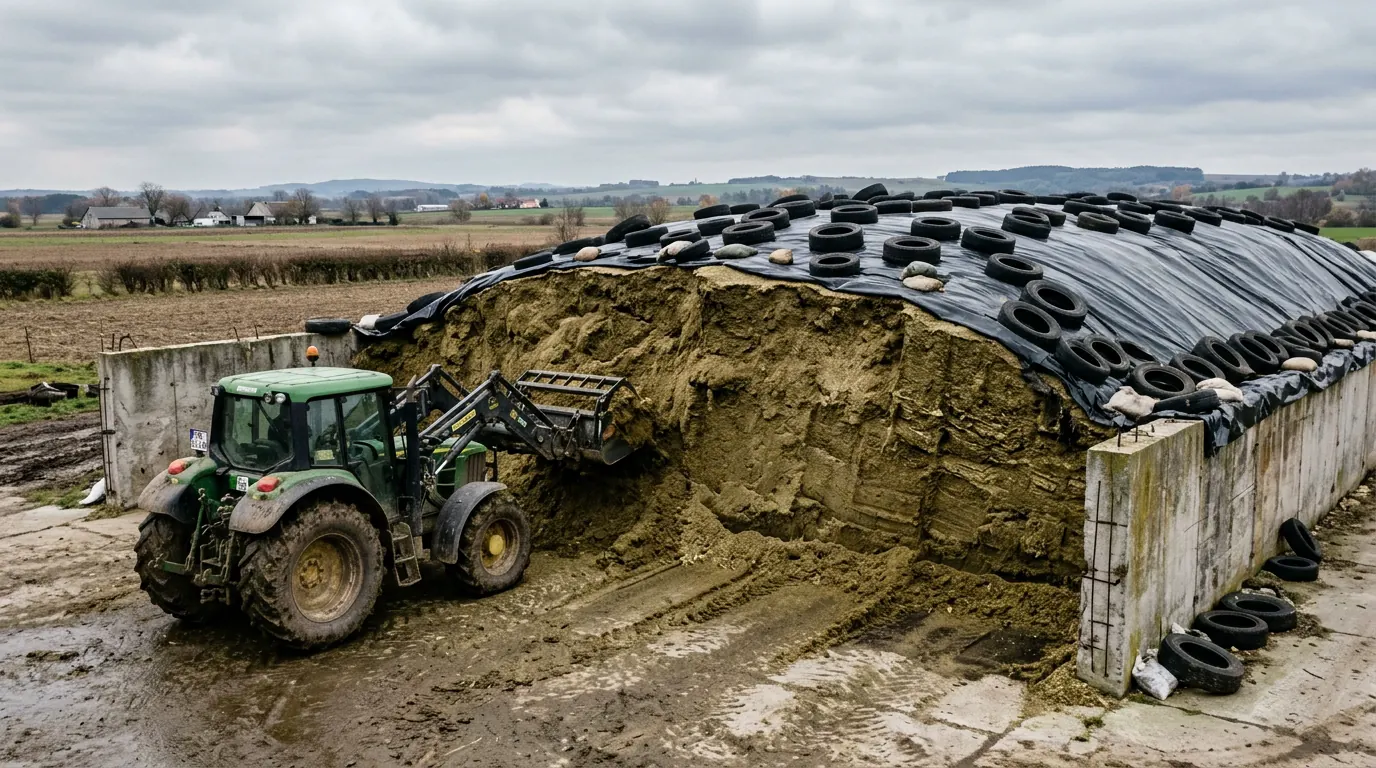
A feed mixer wagon picks up silage, hay, straw and additives, mixes them and delivers them onto the feed table. A self-propelled wagon has its own drive and usually loads itself from the clamp. You pull a trailed wagon with a tractor, so you need a working tractor and an operator. The right choice depends on herd size, how often you feed, the barn layout and who will run the machine.
Why mix the ration
The Teagasc beef manual (Teagasc is Ireland's agriculture and food development authority) advises that when feeding exceeds 14 kg (finishing cattle), you feed twice a day or use a TMR mix. The same manual says animals perform equally well when silage and concentrate are fed as a total mixed ration or separately. So mixing is not a must, but it keeps the ration consistent and shortens feeding time.
Self-propelled wagons: what farmers ask
Most often you ask whether a self-propelled wagon pays off, what capacity to choose and whether it will fit in the barn. You will find the answers below, with a list of questions for the dealer and a look at how the feed table layout affects your choice.
Self-propelled and trailed wagons: how they differ
Self-propelled wagon
A self-propelled feed wagon has its own engine, a cab and usually its own system for picking feed from the clamp. One operator drives from the silage clamp to the barn and feeds without hitching or unhitching anything. This shortens the gaps between feedings, so feeding several times a day is easier. But it is one more vehicle to service, fuel and inspect. It usually pays off better with a larger herd, where the machine works every day for long hours.
Trailed wagon
A trailed wagon works with the tractor you already have on the farm. Before you buy, check the manufacturer's manual for the recommended tractor power and the PTO (power take-off) shaft the mixer needs. A tractor busy feeding cannot do other jobs at the same time, so plan your working hours across the whole farm. In smaller barns a trailed wagon is often the cheaper option, because you do not run a second machine with its own engine.
Mixing wagon or delivery-only wagon
Some wagons only deliver feed from the trailer to the table. Others mix it in a tank with augers or paddles. For a TMR ration you need mixing. If you feed silage separately from concentrate, a delivery wagon or a simpler solution is enough. Ask the dealer how the machine handles long straw, because straw can wrap around the mixer and lengthen the time needed to prepare the ration.
How to match the wagon to your barn layout
Feed table and feed alley
In loose-housing barns, feed goes onto the feed table from the feeding-and-manure alley. The Institute of Animal Production (IZ PIB, Poland's National Research Institute of Animal Production) describes conversions of tied barns where a feed table and a feeding-and-manure alley were added, among others at its experimental stations in Odrzechowa and Kołbacz. In one of them the feeding zone was placed in a semi-open shelter with a one-sided feed table. Before you choose a machine, measure the passage width, the entrance height and the turning radius along the whole route.
Tied barns and narrow passages
In old tied barns with feed alleys along the walls, a self-propelled wagon may not fit through the passages. A smaller trailed wagon or a rail-mounted feeder is sometimes the better answer. Another route is a conversion to a cubicle system with a new feed table, as at the IZ PIB experimental stations. Before you decide, check that the weight and width of the machine suit your floor and doors.
Ventilation and a clean feed table
The wagon leaves fresh, moist feed on the table, and the animals eat it over several hours. In a damp, poorly ventilated barn, feed loses quality faster. We describe air inlet and outlet layout in Fans and barn ventilation: how to choose. After each feeding, clear leftovers from the manger so they do not sit there and spoil the next ration.
What the feed mixer wagon has to mix
Forage and concentrate
The Teagasc manual says finishing animals should get at least 10% of intake as forage. It lists grass silage, hay, straw, maize silage and whole-crop cereal silage. Silage quality affects how much concentrate you need. Well-preserved silage with a DMD (dry matter digestibility) of 72 or higher needs less concentrate than silage with lower digestibility. Teagasc also gives a minimum energy density for the concentrate: 0.92 UFV/kg fresh.
Weighing and accuracy
Wagon scales let you dose each ingredient to the recipe. Without scales, the ration depends on the operator's eye and changes from day to day. If you change the ration often, for example for groups of different ages, recipe memory in the controller helps. Check how easily you can set several rations and how the wagon shows the mix after loading ends. Set the recipe itself with a nutrition adviser or an agricultural advisory center.
Acidosis and ration structure
Feed that is chopped too fine, with too little fiber, raises the risk of rumen acidosis. A wagon that grinds silage into mush damages the structure of the ration. Set the mixing time as the manual says and watch whether animals pick out only the fine particles. We describe the signs and what to do in Acidosis in cattle: signs, causes, dose. Treatment is always decided by a vet.
How many times a day to feed
Feeding TMR several times a day
An IZ PIB monograph notes that automated systems for preparing and delivering TMR have made it possible to feed cows more often during the day, which matters for welfare. The authors say that with repeated TMR delivery, animals at the bottom of the herd hierarchy get easier access to the manger than with one or two feedings. For you this means: the more often the wagon can go out, the fewer animals wait for their portion.
What this means when you choose a machine
When you feed several times a day, the time of one cycle counts: loading, mixing, delivering and returning. A self-propelled wagon shortens that time because you do not hitch a tractor. In a small barn where one or two feedings are enough, a trailed wagon with a tractor does the job without trouble. Work out how many times a day you really want to feed, and only then compare machines.
Checklist before you buy
Capacity, operation and service
Choose tank capacity for the largest ration you will prepare in one go and for the number of groups in the barn. Check exact values with the manufacturer, because they differ between models. Ask about parts availability, how long the service technician takes to reach you and what it costs to replace knives and augers. Ask for a demo on your own feed: straw, silage and haylage mix differently than in the brochures.
Total cost
Add fuel, service, replacement of wearing parts, insurance and operator time to the price of the machine. A self-propelled wagon often needs a bigger investment, but it saves time and a second tractor. A trailed wagon is cheaper to buy, but it ties up a tractor. Check actual prices in dealer offers and at farm shows, because they change from season to season. Think about manure equipment too, which covers the other half of the working day. You will find an overview in Forks, spreaders and bedding machines: barn equipment, and we cover choosing a spreader in a separate guide.
Feed for calves
A feed wagon for adult cattle does not replace feeding young animals. Calves get milk or milk replacer, and separately solid feed in amounts set for their age. In winter, keep calves warm, as we describe in Calf jackets: when to use them and how to choose. If calves have scours, pay attention to the hygiene of feeding equipment and use the guide Scours in calves: causes, treatment, withdrawal period.
Frequently asked questions
What is the difference between a self-propelled and a trailed feed mixer wagon?add
A self-propelled wagon has its own engine and one person runs it, with no extra tractor. You pull a trailed wagon with a tractor, so that vehicle is busy during feeding. A self-propelled wagon usually costs more to buy and run.
What is TMR?add
TMR is a total mixed ration, in which forage and concentrate are mixed together. According to Teagasc, when feeding more than 14 kg to finishing cattle, you should feed twice a day or use TMR. The same manual says silage and concentrate fed separately give similar results.
Do I need a feed mixer wagon in a small barn?add
No. In a small herd you can feed by hand or with simpler equipment. A wagon starts to pay off when feeding time and uneven rations begin to get in the way of your work. Count the hours you work each day before you decide.
How do I check that a feed wagon will fit in my barn?add
Measure the width and height of passages, the turning radius and the access to the feed table. Ask the dealer for a test run in your barn. In tied barns with narrow alleys, a smaller wagon or a rebuild of the feeding zone is sometimes the only way.
How much forage should the ration contain?add
Teagasc says finishing animals should take at least 10% of dry matter as forage. Set the exact ration with a nutrition adviser, because it depends on breed, age and silage quality.
How much does a feed mixer wagon cost?add
The price depends on type, capacity, equipment and age of the machine. We give no amounts because they change from season to season. Collect offers from several dealers and compare the total cost, including fuel, service and working time.
Sources & resources
- linkTeagasc — Teagasc Beef Manual — Section 6: Nutrition
- linkIZ PIB — Livestock farming and breeding over 70 years. Cattle Breeding Department, Sheep and Goat Breeding Department
- linkOODR Łosiów (gov.pl) — Beef cattle feeding (leaflet)
Prepared by: DlaFerm Team based on data from the sources listed · Publisher: INSTA-TECH sp. z o.o.
Feeding is teamwork: assign it in the DlaFerm staff app
The <a href="/aplikacja-dla-pracownikow">staff app</a> lets you assign tasks on the farm and collect records of finished work in one place. Create a free farm account in DlaFerm or get in touch.
Phone
+48 796 258 151