Calf scours: causes, treatment and withdrawal periods
Calf diarrhea (scours) is a big problem in beef herds, especially where calves live in dirty housing. We explain the causes, isolation and buying rules, and how to record treatment and withdrawal periods. The vet always chooses the drug and the dose.
verifiedFrom the team that has organised work on poultry farms for years.
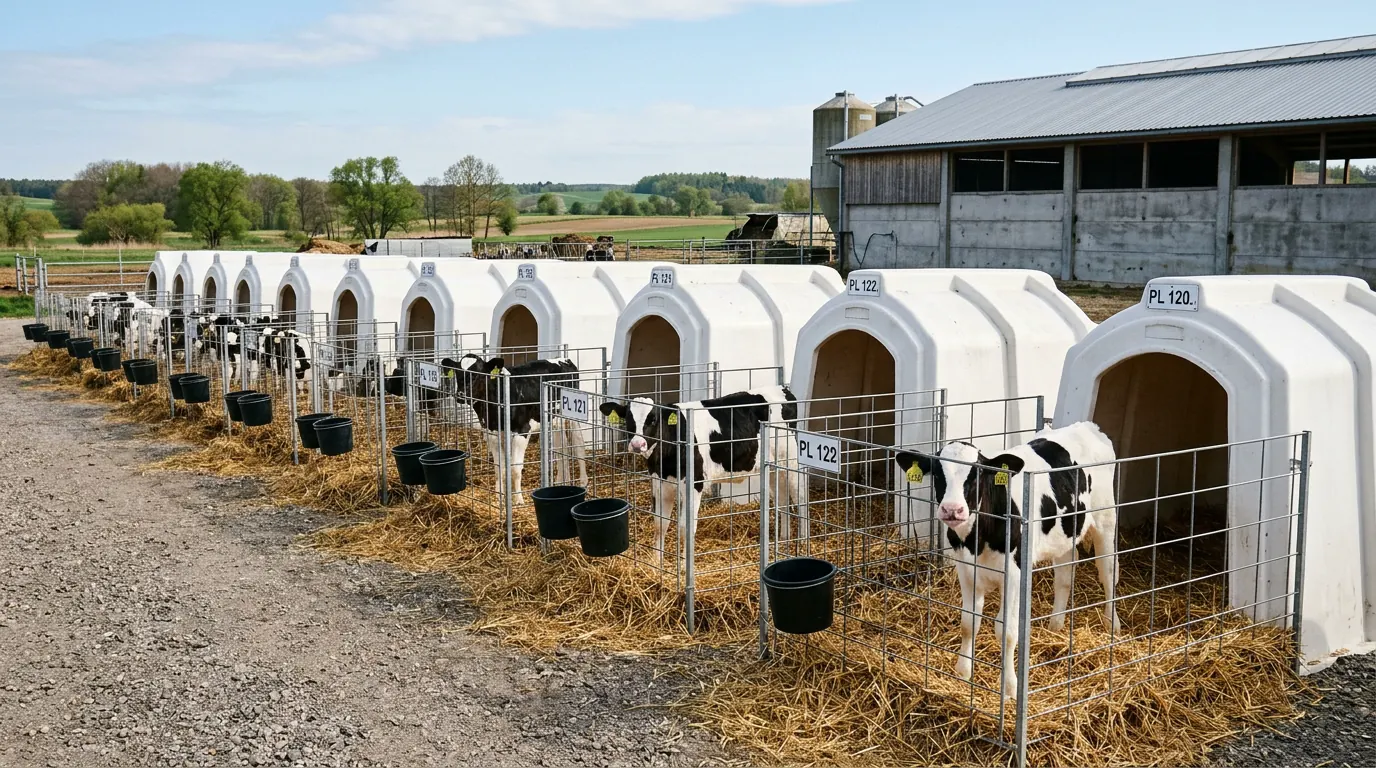
Calf scours means loose, often watery dung and a weak young animal. Viruses, bacteria or parasites usually cause it, and it develops faster when a calf has low immunity and lives in a dirty pen. The vet chooses the treatment. You are responsible for isolating the sick calf quickly and for writing down every drug dose in your treatment and withdrawal records, because the withdrawal date depends on it. Below we cover causes, isolation, buying calves and documenting treatment.
When to call the vet
If the diarrhea continues, the calf is dull, will not suck, or more animals start to fall ill, do not wait for it to clear up on its own. Infection can spread quickly through a group, and a young calf can dehydrate fast. The vet will assess hydration, decide on treatment and say whether a dung sample is needed. Until the vet arrives, isolate the sick calf and note the time the signs appeared.
Where calf scours comes from
Viruses, bacteria and parasites
Three groups of agents usually cause scours: viruses, bacteria and parasites. According to the Teagasc manual, all of them are shed in the dung of cows and calves, and young animals pick them up from their surroundings. That is why the disease rarely hits just one calf, and others from the same place start to fall ill. You cannot reliably tell from the dung which agent is at work in your herd. Laboratory testing and choice of treatment belong to the vet.
Colostrum and immunity
A calf is born with limited immunity and gets its first antibodies from colostrum. According to IZ PIB (Poland's Institute of Animal Production) data, beef cow colostrum contains much more immunoglobulins than colostrum from dairy breeds. Even so, acute scours remain a big problem, especially in herds where cows calve in poorly kept housing. Good colostrum is a condition of protection, but it does not replace a clean bed. Check that every calf sucks colostrum after birth.
Wet bedding and dirt
A damp, soiled bed helps germs and parasites multiply. With every batch of calves, check that the bedding is dry and dung does not build up in the corners of the pen. We explain where moisture comes from and how to limit it in our guide wet bedding: causes and effects. A clean building reduces the number of agents passing between calves.
Isolating the sick calf and keeping pens clean
The first step
According to Teagasc, remove a sick calf from the group straight away, together with its dam, and put it in a pen used only for sick animals. It returns to the group only after it recovers. Clean and disinfect the sick pen after each use. Do not use it as an isolation pen for animals you have bought or that return from shows, because infection then spreads easily. Record in your notes the date the calf entered the isolation pen.
Do not mix age groups
Older calves, which have met more disease agents, can pass disease to younger ones. Teagasc advises avoiding needless mixing of calves from different age groups, especially when something is going on in the herd. If calves must move to another group, do it with the health of the youngest in mind. You can prepare a plan for such steps in the biosecurity plan generator.
Cleaning between batches
Teagasc stresses that regular cleaning and disinfection of every place where calves stay, for example calving pens and calf pens, is a must. Without it, disease agents from dung build up in the calves' environment and infection returns with every new batch. Remove used bedding and let surfaces dry before the next calves go in.
The risk of bringing disease in from outside
Why buying is a risk
According to the KPODR Minikowo manual (a regional agricultural advisory center in Poland), buying calves always carries a risk of bringing in infectious agents. The worst case is an infection the farm has never had. One example is Mycoplasma bovis, common in bought-in calves, which can cause severe pneumonia that is hard to treat. A new calf in an unfamiliar herd is one more source of agents the herd has not met before.
Market or farm
According to the same source, calves bought directly from dairy farms have fewer health problems than those from markets. They are less exposed to pathogens, have not mixed with animals from other farms and go straight to their final place. When you buy, ask about the health history of the farm of origin and whether there has been scours in the herd recently. Record every batch with the date of arrival and origin, so that if disease appears you know where the infection came from.
Treating calves and recording withdrawal periods
Who chooses the drug and dose
Treating scours starts with assessing the calf: hydration, dullness and general condition. The vet chooses the drug, dose and route, not the leaflet or a neighbor's experience. The vet may recommend a dung test to match treatment to the specific agent. Give drugs only as advised and do not stop a course without talking to the vet.
Withdrawal means time off the market
The withdrawal period is the time from the last dose of a drug until the animal's product, for example meat, may be sold. Its length depends on the drug and is given in the manufacturer's documents and by the vet. So record every dose: date, drug name, the calf's ID number and the date the withdrawal ends. The treatment and withdrawal module in DlaFerm lets you record each dose and watch withdrawal dates in one place.
Documents at an inspection
In an inspection, the treatment record is the first document inspectors ask for. You can find the rules on identifying and documenting cattle in ISAP, Poland's online database of legal acts, and animal health notices are published by the Chief Veterinary Inspectorate (Główny Inspektorat Weterynarii). We assess the rules as of the legal state on 22.11.2026. Check the current version before you decide, because the rules change.
Frequently asked questions
How do you recognize scours in a calf?add
Mostly by loose, often watery dung and a weak animal. The calf may eat less, stand apart from the group and look dehydrated. Report every such case to the vet rather than assuming it will pass by itself.
Is calf diarrhea contagious?add
Yes. The agents that cause it are shed in dung and pass to other animals through the environment. Isolate the sick calf quickly and clean and disinfect the pen thoroughly. The risk rises when calves of different ages share the same space.
Can I give a calf with scours a drug myself?add
The vet chooses the drug and dose, so do not pick a product from a leaflet used on another farm. Treating without advice can delay proper help and make the withdrawal period hard to set. Record every dose, even when you follow the vet's advice.
How long is the withdrawal period after treating calves?add
It depends on the specific drug and is given in the manufacturer's documents. The vet who runs the treatment also sets it. Write down the date of the last dose and the end date of the withdrawal so you do not sell the animal too early.
Can you avoid disease when buying calves?add
There is no guarantee, but the risk falls when calves come directly from farms rather than markets. Ask about the health history of the farm of origin. Watch new animals and record where they came from.
Sources & resources
- linkTeagasc — Teagasc Beef Manual — Section 7: Animal Health
- linkKPODR Minikowo — Rearing beef calves (manual, SGGW authors)
- linkIZ PIB — WZ — Feeding beef cattle in organic farming (K. Bilik et al.)
- linkInternetowy System Aktów Prawnych (Poland's online legal acts database) — isap.sejm.gov.pl
- linkGłówny Inspektorat Weterynarii (Chief Veterinary Inspectorate) — gov.pl/web/wetgiw
Prepared by: DlaFerm Team based on data from the sources listed · Publisher: INSTA-TECH sp. z o.o.
Do you run a beef herd and want to keep track of withdrawal periods?
The treatment and withdrawal module in DlaFerm lets you record every drug dose and keep each calf's treatment history in one place. Create a free farm account and see how it works in practice.
Phone
+48 796 258 151