Barn Ventilation and Fans: How to Choose
You choose barn fans to fit the building, the number of animals and the way air moves where the animals lie. A strong catalog model does not fix the problem if there is no air inlet or the inlets are blocked. We show how to assess your current ventilation, pick equipment and link it to sensors.
verifiedFrom the team that has organised work on poultry farms for years.
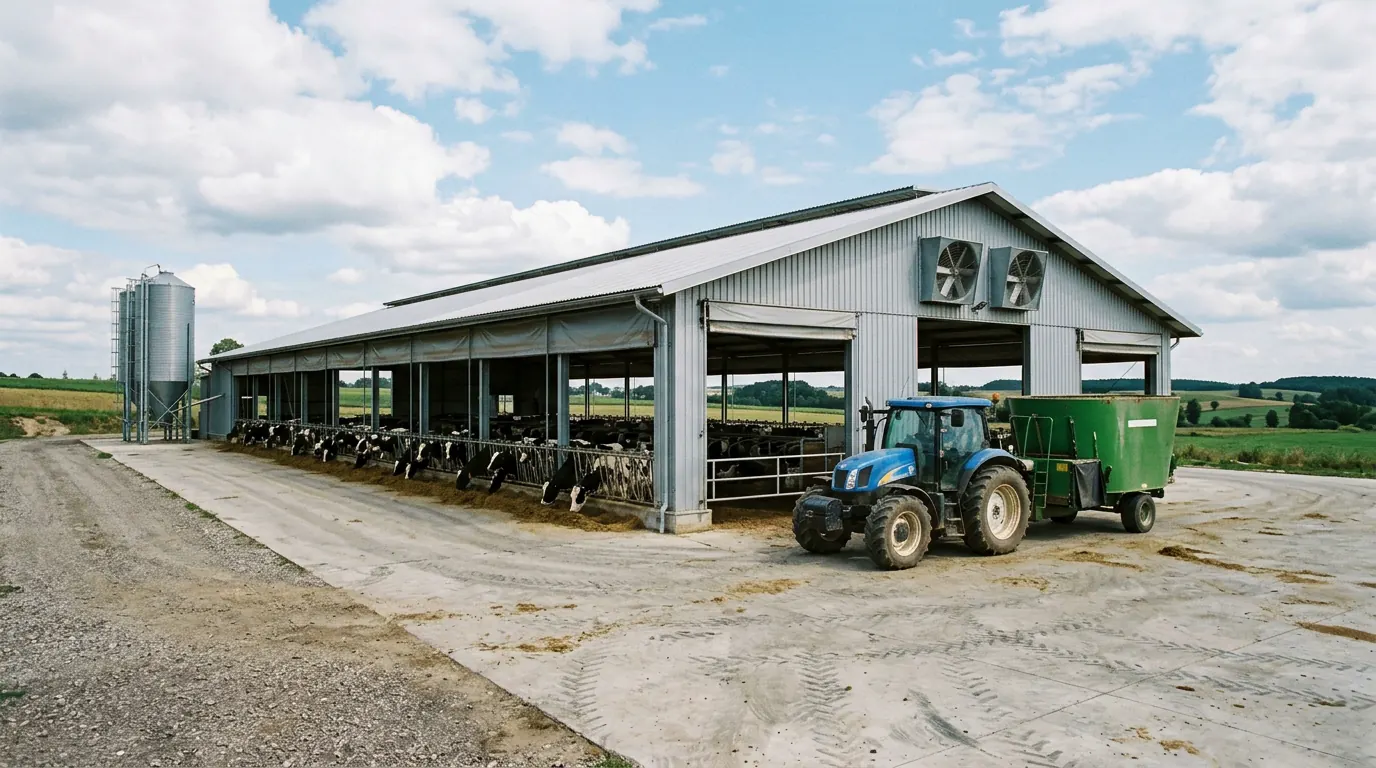
You choose barn fans to fit the size of the building, the number of cattle, the type of ventilation (natural or mechanical) and the way air moves through the lying area. First find out how ventilation works today: where fresh air comes in, where it leaves and where moisture collects. Only then choose the capacity and number of fans. We describe tunnel and cross ventilation in Ventilation: tunnel vs cross.
Why ventilation affects cattle health
Damp air that is poorly exchanged favors respiratory and parasitic diseases. The Teagasc manual for cattle farmers lists wet and dirty bedding, overcrowding and poorly ventilated sheds among the risk factors for coccidiosis. For pneumonia in calves, the same manual advises asking whether ventilation in the building is poor, and looking for the cause in the building, not only in vaccination. Coughing, fast breathing or poorer weight gain in a group are a signal to check the air. A vet makes the diagnosis and decides on treatment.
What to check in the barn before buying fans
Airflow where the animals are
Check airflow where the animals lie, not only near the chimney. A simple test with a light ribbon or smoke shows whether air moves over the lying areas or bypasses them. Check the corners of the building, the passages between sections and the spots behind partitions. Record the results for each section separately. If air stands still in one corner, a fan elsewhere will not fix it. Repeat the check in two conditions, on a cool day and on a warm one, because gravity ventilation works differently at different temperature gaps.
Inlets, outlets and openings
A study by IZ PIB (Poland's National Research Institute of Animal Production) on converting a tie-stall barn into a free-stall cubicle barn describes a layout worth checking in your own building: supply air through a duct with a baffle under the eaves, windows or clear plastic curtains as inlets, and a ventilation chimney as the outlet. Compare your building with this layout. A missing baffle, blocked ducts or closed curtains mean air enters through random gaps. Sort out inlets and outlets first, then add fans.
When a barn needs fans
Gravity ventilation
Natural ventilation works through temperature difference and wind. Warm air rises in the chimney and fresh air enters through the inlets. It works well when chimneys are clear and inlets do not freeze or get overgrown. Its weak point is windless, warm days, when the air barely moves. Then humidity and the level of gases from the bedding rise in the barn. If a measurement in the lying area shows stagnant air on warm days, gravity ventilation alone may not be enough.
Supporting fans
You add mechanical fans where natural flow is not enough. Most often they are fitted as an outlet in the wall or on the ridge, or as an inlet fan that helps air flow through a duct. An exhaust fan without an inlet pulls air through gaps and can create drafts over the animals, so always plan it together with the inlets. Variable-speed fans let you match output to the weather and the age of the group, instead of running at full speed all the time.
How to choose barn fans
Capacity and number of animals
Manufacturers give fan capacity in m³/h, but at a set static pressure, which in a barn differs from the lab. So do not compare catalogs directly. Work out the volume of the building and the airflow needed for the number of animals, then choose fans so they are spread evenly and leave no dead zones. When choosing, ask an ODR adviser (a farm advisory center in Poland) or the manufacturer's representative to run the calculation for your building. Also plan a reserve in case one unit fails.
Controls and operating modes
Fan control decides animal comfort all year. In winter, cut airflow to the minimum that keeps the air changing without chilling the lying areas. In summer, raise airflow in the warmest hours. The minimum mode should run all the time, because without constant air exchange moisture and gases from the bedding build up faster than you notice by smell. Set switch-on thresholds by temperature and humidity, not just by the time of day.
Temperature and humidity sensors in the barn
What to measure and where to mount sensors
The basics are temperature and relative humidity sensors. Mount them in the lying area, at animal height, not at the inlet or under the chimney, where readings come out too high or too low. Gas sensors, for example for ammonia, give extra information on air quality. Before installing, check the manufacturer's documentation, especially the measuring range and calibration requirements. We do not recommend specific models, because the choice depends on the building and budget. To see how to link readings to your records, read about integrations with IRZplus and sensors (IRZplus is ARiMR's online animal register in Poland).
Data logging and alarms
Readings are worth something when they are saved. A log shows after which night humidity jumped, and after which week symptoms began in the group. That makes talking to your vet and adviser easier, because you have numbers, not impressions. Set alarm thresholds for temperature and humidity, and after each alarm record the cause and what you did. Later you can judge whether a change of equipment or settings improved anything.
Ventilation checks and isolating animals
Checks and cleaning
Dusty fan blades, dirty supply ducts and frozen inlets lose capacity quietly. Inspect fans before the heating season and after every change of group. Check that baffles, curtains and flaps move freely. Record inspection dates and the work done, because it helps with accounts and inspections. Keep the records in one place, for example in herd management software that also handles event records.
Isolating sick and new animals
The Teagasc manual describes the isolation rule: the isolation area should be a separate building or pen that shares no air space with other sheds, and animals usually stay there for at least 28 days. Ventilation for such a space must be separate, otherwise disease travels through the air. Draw up isolation and biosecurity rules with your vet in the biosecurity plan generator, and record medicines and withdrawal periods in the treatment and withdrawal records.
Barn requirements and where to check them
Requirements for calves
Council Directive 2008/119/EC sets minimum standards for the protection of calves. Among other things, it requires that building ventilation provides fresh air without harmful concentrations, and that airflow does not cause drafts. We give no number for a Polish implementing act and no numeric values here. Check the current wording in the Internet System of Legal Acts (isap.sejm.gov.pl) and with the Veterinary Inspection (Inspekcja Weterynaryjna). The legal state as of 22.11.2026 needs verifying before any investment.
Documents and consultation
Before buying fans, gather in one place a description of the building, the number of animals in each group, your measurement results and records of health events. Take this to an ODR adviser or a vet. For an investment, also check the grant requirements at ARiMR (Poland's Agency for Restructuring and Modernisation of Agriculture, gov.pl/web/arimr), because conditions change from one funding round to the next. You can find knowledge on beef cattle husbandry in materials from IZ PIB. For paperwork, see rules and documents for beef cattle farmers.
Frequently asked questions
How many fans does a cattle barn need?add
The number cannot be given without knowing the building. It depends on volume, number of animals, type of ventilation and layout of the lying areas. Settle capacity and placement with an adviser, and check that the chosen equipment works at the pressure found in your barn.
Are barn fans enough without an air inlet?add
No. An exhaust fan without an inlet pulls air through random gaps, which creates drafts. You need clear inlets, ideally a supply duct with a baffle, so air flows where the animals lie.
What sensors should I buy for a cattle barn?add
The basics are temperature and relative humidity sensors mounted in the lying area. Gas sensors, for example for ammonia, give an extra picture of air quality. Check the measuring range and calibration needs in the manufacturer's documentation.
Are there legal requirements for barn ventilation?add
For calves, the minimum standards of Directive 2008/119/EC apply, covering among other things fresh air without harmful concentrations. We give no national act number, so check the current wording in ISAP (Poland's legal acts database). It is worth verifying the legal state as of 22.11.2026 before investing.
When should I call a vet?add
Call a vet when coughing, fast breathing or falling weight gain appears in the group, even if you have improved ventilation. The vet will assess the cause and choose treatment. The medicine, dose and withdrawal period are always set by a vet.
Does ventilation affect weight gain?add
Indirectly, yes. Respiratory and parasitic diseases lower weight gain, and good air exchange reduces their risk. The effect depends on the building, the group and management, so record data and compare results over time.
Sources & resources
- linkIZ PIB — Livestock husbandry and breeding over 70 years. Cattle Breeding Department, Sheep and Goat Breeding Department
- linkTeagasc (Ireland) — Teagasc Beef Manual — Section 7: Animal Health
- linkTeagasc — Teagasc Beef Manual — Section 6: Nutrition
- linkKPODR Minikowo — Rearing beef calves (guide, SGGW authors)
- linkEU / Publications Office of the EU — Council Directive 2008/119/EC laying down minimum standards for the protection of calves (PL)
- linkInternet System of Legal Acts — isap.sejm.gov.pl
Prepared by: DlaFerm Team based on data from the sources listed · Publisher: INSTA-TECH sp. z o.o.
Want sensor readings next to your herd records?
The <a href="/integracje-irzplus-czujniki">Integrations with IRZplus and sensors</a> module links sensor data with the rest of your farm records. Create a free farm account or get in touch, and we will show you how it works in practice.
Phone
+48 796 258 151