Manure spreader: how to choose one and what it costs
A single-axle spreader with a 3.5 t load is a common choice for a small or mid-sized beef farm, especially when bought used. Start with your barn layout, the route to your fields and your tractor. The price depends on the condition of the box, the beater and the hydraulics. Here is what to check before you sign.
verifiedFrom the team that has organised work on poultry farms for years.
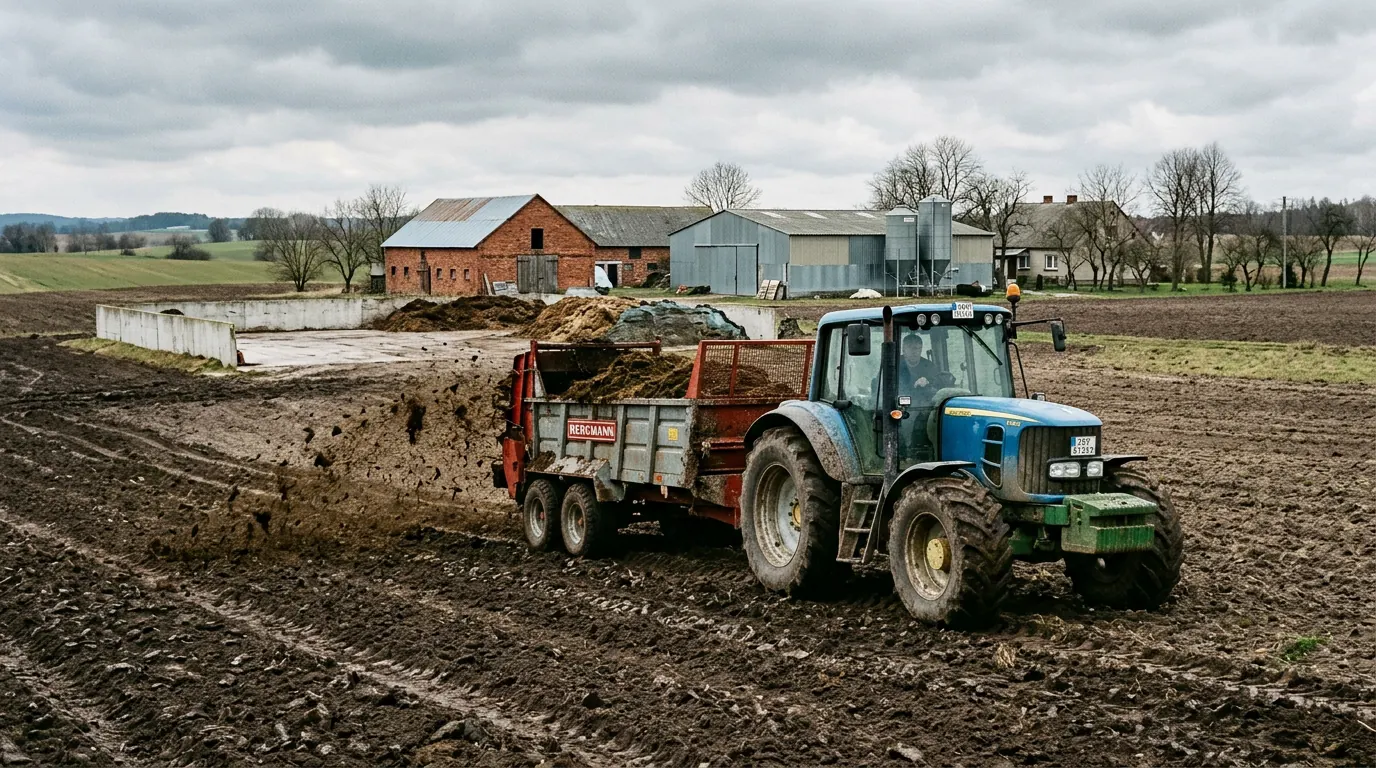
For most beef farms, a single-axle spreader with a 3.5 t load is enough if you haul manure from the barn and yards to nearby fields and not over long distances. A single axle is lighter, easier to maneuver in a narrow yard and at gates, and usually needs less tractor power than a two-axle machine. Before you buy a used one, check the box, the beater and the hydraulics, because that is where the most expensive repairs show up. The price depends first on the machine's condition and age, and only then on its capacity.
How much manure you haul
Work out how much manure your animals produce before you buy. With a bedded system, manure collects in one place. The number of trips depends on how often you clean the barn and how big your manure pad is. A good starting point is to count how many times a season you must load and spread manure, then compare that with the machine's capacity. Records from your herd register, kept in one place, help with this.
Single-axle 3.5 t spreader: matching it to your farm
Single axle or two axles
A single-axle spreader is lighter and usually cheaper to buy and run. A two-axle machine spreads its weight better on the ground and suits big loads and heavier soils, but it needs a stronger tractor and more room to turn. On a small or mid-sized farm where you haul manure to nearby fields, a single axle is usually enough. Before you decide, measure your gates and entrances, because a long tractor and trailer combination does not always fit in the yard.
Terrain and access roads
On soft, wet ground a light machine on wide tires packs the soil less than a heavy outfit. Check the route to your fields: bends, ditches, small bridges and the state of the road after rain. If you spread on plots far from the farm, plan the route and the number of trips, because they drive your fuel and labor costs. If you finish animals under a contract system, the agreement with the animal owner may decide who is responsible for manure, so settle that before you start looking at machines: how contract finishing works.
What to check on a used spreader
Box and floor
Look at the box from underneath. Rusted joints, worn spots and holes near the floor are the most common places for leaks and cracks. The chain conveyor floor should be even, with no torn-out slats. Check the chains for stretch and play, because replacing them can be expensive. Weld marks and straightening can point to earlier damage, so ask the seller what caused it.
Beater and drive
Spreading drums or discs should be undamaged and fixed without play. If the seller allows it, turn the PTO shaft by hand and listen for rattling bearings. Check the gearboxes for oil leaks, heat after a test run and noise. Ask for the service history and receipts for replaced parts, if the seller kept them.
Hydraulics and brakes
The basics are hoses with no cracks or leaks, cylinders with no oil traces and valves that work smoothly. If the machine has a brake, test it with the trailer loaded and empty. Lights, warning plates and guards should all work, because missing ones affect safety on the road.
Your tractor must handle a loaded spreader
Power and hydraulic system
Match the tractor to the weight of the full spreader and to the drive and hydraulic needs of the machine, not just to the box capacity. The data plate and the manual give these figures. Check how many hydraulic outlets your tractor has and whether they are enough to run the tailgate and the conveyor. When you buy used, ask which tractor the spreader worked with and, if you can, test it on your own equipment.
PTO shaft and guards
The PTO shaft joining the tractor and the spreader must have an intact guard and a safety chain that stops the guard from turning. A cracked or incomplete guard is a common cause of accidents when working with the PTO. Before the season, replace damaged parts and make sure every worker knows how to start and stop the drive. Describe the working rules in the worker app so everyone knows the procedure.
What drives the price of a spreader and how to count it
Purchase price
The price of a used spreader depends on its age, the condition of the box and beater, hours worked, equipment, and whether you buy from a dealer or a private owner. Compare listings and quotes from the same period and for the same specification, because prices change weekly. When you judge an offer, add the likely cost of repairing faults you find, transport and an inspection before first use. Also compare the machine's cost with the value of your animals, for example using the guide on what a cow, bull and calf cost.
Running costs
On top of the purchase price, add fuel, servicing, replacing chains and oils, and the time of the tractor and the operator. Compare the cost of hauling with your own spreader against a contractor who charges per hour or per trip. Sample farm income calculations for beef production, such as the publication from PODR Lubań (a regional agricultural advisory center in Poland), show how to spread machinery costs over the whole production. Agree the exact service rate directly with the contractor.
How much manure to spread and which rules apply
How much nitrogen from manure per hectare
According to the Teagasc Beef Manual, Section 3 (Beef Systems), in the cattle systems it describes, organic nitrogen ranges from 151 to 214 kg per hectare, at a stocking rate of 3.0 to 7.5 animals per hectare, depending on the animal category. The data come from Irish conditions and do not carry over directly to Polish soils. They do show how to count: stocking rate first, then nitrogen, and last the spreader capacity and number of trips. The amount of feed, including haylage, affects how much manure you get, so work it out together with feeding.
Rules and dates
Hauling and spreading manure fall under Polish rules on fertilizing and water protection, which change over time. The legal state in this guide is 22.11.2026, so before each season check the current acts in ISAP (Internetowy System Aktów Prawnych, Poland's online legal database). Settle spreading dates and bans with your adviser or the county inspector, because inspection practice can be more detailed than the general wording. Barn condition and ventilation affect how wet the manure is, so also read the barn ventilation guide.
Frequently asked questions
Is a single-axle 3.5 t manure spreader enough for a beef farm?add
For a small or mid-sized herd, when you haul manure from the barn to nearby fields, it usually is. The number of trips per season and the distance from barn to fields decide. For large volumes or long routes, count the working time and consider a bigger machine or a contractor.
Is it worth buying a used manure spreader?add
A used machine is usually cheaper, but you must check the box, beater and hydraulics carefully. Add the cost of repairs and transport. If the seller does not let you inspect it under power, walk away.
What should I check when inspecting a used spreader?add
A box without holes or deep corrosion, working chains, an even floor, a beater without play, tight hydraulics and working brakes. Also check the PTO shaft guard and the lights.
How much does a manure spreader cost?add
The price depends on age, condition, equipment and region, and quotes change weekly. Compare several offers from the same period and ask dealers for current rates. We give no amounts because they change quickly.
What tractor do I need for a manure spreader?add
Match the tractor to the weight of the loaded machine, its power needs and the number of hydraulic outlets given in the manual. Also check the PTO shaft and its guard. A tractor that is too weak works slowly and strains the drive.
How often should I service a manure spreader?add
Before the season, check chains, bearings, gearboxes and hydraulics. During the season, look over the machine after each long haul. Log inspections and replacements so you have the machine's history at hand.
Sources & resources
- linkTeagasc (Ireland) — Teagasc Beef Manual — Section 3: Beef Systems
- linkODR Lubań (PODR publication) — Sample farm income calculation for beef production (different intensity levels)
- linkInternetowy System Aktów Prawnych (Poland's online legal database) — isap.sejm.gov.pl
- linkMinistry of Agriculture and Rural Development — gov.pl/web/rolnictwo
Prepared by: DlaFerm Team based on data from the sources listed · Publisher: INSTA-TECH sp. z o.o.
Do you keep a cattle herd and want machinery costs under control?
The DlaFerm farm management software lets you log work, inspections and costs in one place. Create a free farm account or get in touch, and we will show you how it works in practice.
Phone
+48 796 258 151