Contract pig finishing: how it works and what you earn
In contract finishing, you raise pigs that belong to someone else and get paid for the service, usually per kilogram of gain or per pig. Your income depends on the rate in the contract, feed use, mortality and growth speed. We explain how to run the numbers before you sign.
verifiedFrom the team that has organised work on poultry farms for years.
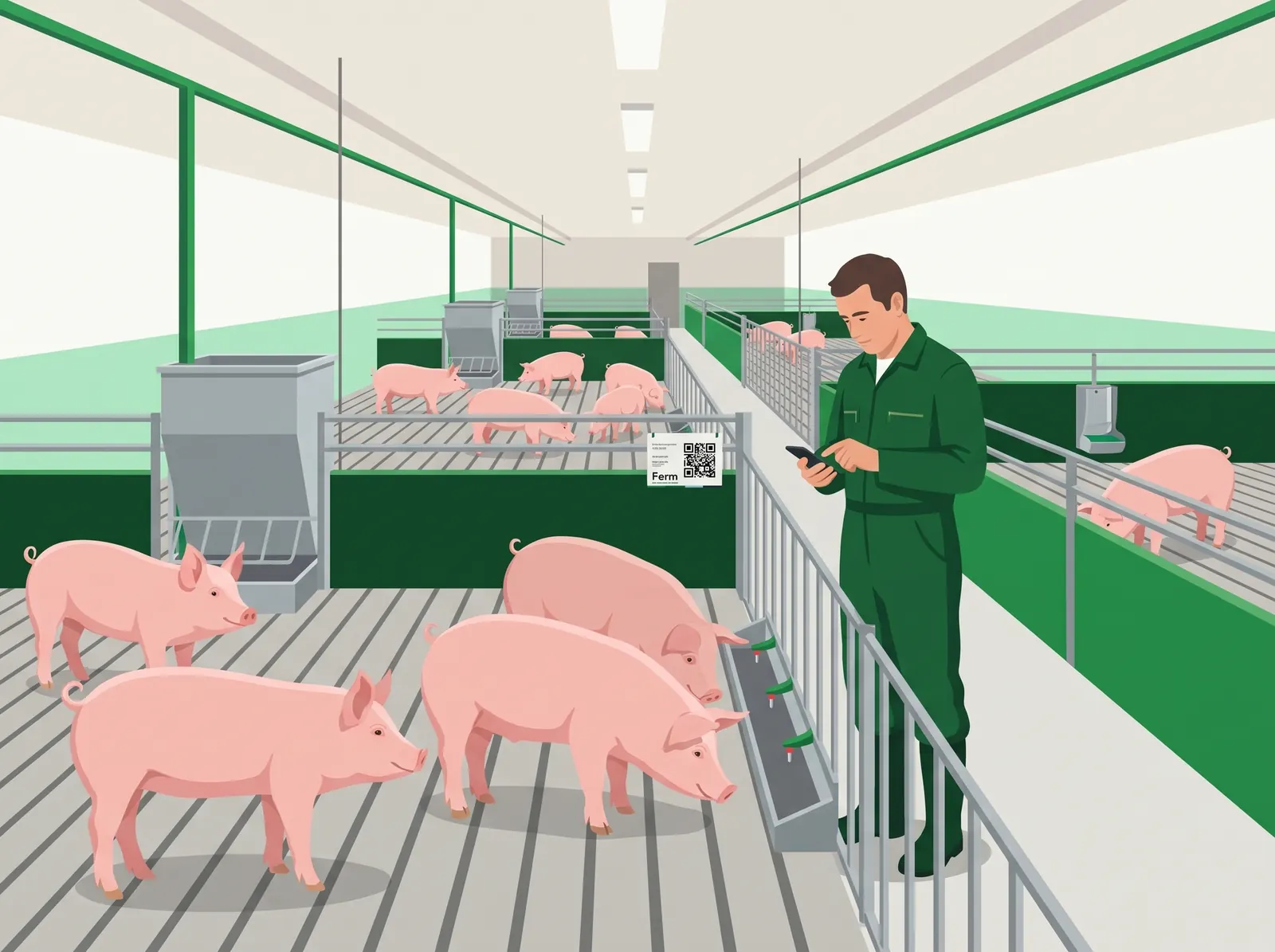
In contract finishing, you house and finish pigs owned by another party, such as a feed company, a processor or an integrator. You are paid for the service you perform, not for selling the pigs. The contract sets the pay: most often per kilogram of weight gain, sometimes per pig raised to a set weight. Your income is the rate minus your costs: labor, energy, bedding, medicines and feed, if the contracting party does not supply it. The name of the arrangement does not settle the terms. The contract does.
Contract finishing versus piecework finishing
In practice, the two Polish terms (tucz kontraktowy and tucz nakładczy) usually describe a similar model: you finish someone else's animals and get paid for the service. The differences are usually about who supplies the piglets, the feed and the medicines, and who carries the risk of losses. Before you sign, check four things: who owns the animals, where the feed comes from, how payment is calculated and who is responsible for deaths. You can prepare the data for this assessment in the app for pig farmers. Do not rely on the name in the offer. Ask for the full contract and read it with an advisor or an accountant.
How your pay is calculated
Pay per kilogram of gain
The most common method is a rate per kilogram of body weight gained during finishing. You earn more when the pigs grow faster and less when growth slows. With this method you need to know the entry and exit weights, because gain is the difference between them. Weigh under the same conditions: on the same scale, at a similar time of day and in the same way. Differences in weighing often lie behind payment disputes, so write the weighing method into the contract.
Pay per pig and per day
Some contracts pay for each pig raised to a set weight, or for each day a pen space is kept available. This model puts more risk on you, because the cost of a death or of poor growth falls on you alone. With pay per day, space use also matters: empty places in the building are a cost, even when there are no animals to fill them. Before you choose this option, work out how many days finishing takes from placement to pickup, including the gaps between batches.
What decides your income: FCR, growth, mortality
Benchmarks from the PIC manual
According to the PIC Wean to Finish Guidelines (2019 edition), the full-performance program assumes for the finishing phase a gain of 0.955 kg per day at 2.33 kg of feed per 1 kg of gain. The middle level is 0.927 kg per day and 2.59 kg of feed, and the lower level is 0.835 kg per day and 2.80 kg of feed per kilogram of gain. For the whole period from weaning to slaughter, the manual gives mortality of 3.5% in the best scenario, 4.5% in the average one and 7.0% in the weakest. These figures come from a breeding program built on different conditions, so treat them as a reference point, not a guarantee for your farm.
How to calculate FCR on your farm
FCR is feed used divided by weight gained. If you are paid per kilogram of gain, you should know the feed use of every batch and compare it with what left the silo or the feed mill. If FCR rises from batch to batch, the cause may be feed quality, feed wasted at the feeder, disease or too high a temperature in the building. You can collect indicators in a notebook, but software is faster and avoids copying errors, see FCR and EPEF online. Feed silo monitoring also helps when you track feed use.
Treatment, withdrawal periods and welfare on contract
Medicines and withdrawal periods
Treatment is always ordered by a vet, who chooses the medicine and the dose. You do not pick a product on your own. It is worth writing into the contract who pays for treatment and how health cases are reported to the contracting party. Record every administration with the date, the product name and the withdrawal period, because that period decides when the animal can go to slaughter. Well-kept treatment and withdrawal records protect you from disputes when a batch is collected.
Welfare and the contracting party's requirements
The EFSA report on the welfare of pigs on farm describes how housing conditions affect animal health and behavior. The contracting party may require inspections, and contracts often include clauses on housing standards, space and access to water. Minimum standards for the protection of pigs come from Directive 2008/120/EC, and compliance is checked by the Chief Veterinary Inspectorate (Główny Inspektorat Weterynarii). Before you sign, check whether the contracting party's requirements are stricter than the law, and write down who pays for any building changes.
ASF risk and vehicle entries to the farm
Rules on African swine fever
The Ministry of Agriculture and Rural Development (MRiRW) regulation of 12.03.2026 (Dz.U. 2026 poz. 344, Poland's Journal of Laws) sets out measures to fight African swine fever (ASF). The legal status is given as of 22.11.2026. Your obligations may depend on the zone and the epidemiological situation, so before each batch check the current rules with the Chief Veterinary Inspectorate. In practice, inspectors expect farm entries to be recorded and vehicles that carry pigs to be cleaned and disinfected. Write into the contract who is responsible for biosecurity, transport and delivery of the animals.
Entries and the biosecurity plan
With contract finishing, animals, feed and company vehicles all come onto your farm. It is worth logging every entry with the date, purpose and time, and keeping a visitor log when you have several partners. A biosecurity plan should define the clean and dirty zones, rules for visitors and how vehicles are cleaned. Farm entry control and the biosecurity plan generator help with both tasks and keep your documents in order without paper notebooks.
How to work out whether finishing pays
Income calculation
A sample calculation of farm income from pork production, prepared by ODR Lubań (a regional agricultural advisory center), shows that the result depends on how intensive the finishing is and on whether you buy piglets from outside. In your calculation, enter the entry cost, meaning the weight and price of the piglet or weaner, daily feed use, energy, bedding, medicines, labor and depreciation of the building. Then compare the result with your income from payment per kilogram of gain or per pig. You may know a similar logic from broiler contracts, where the rate and batch results also count.
What affects the rate
The rate for the service depends on the region, batch size, building quality, risk level and who supplies the feed. Market prices and quotations change often, so we give no amounts here. You can find current information from contracting parties, agricultural chambers and research institute publications. Before you sign, set the proposed rate against your own costs and the results of your earlier batches, not against promises in the offer. You can handle payments for this kind of finishing in the service settlements module.
Frequently asked questions
What is contract pig finishing?add
It is a model in which you finish pigs that belong to a contracting party and get paid for the service. Your income comes from the contract, not from selling the pigs. The contract always defines the duties and who owns the animals.
What is the difference between contract finishing and piecework finishing?add
In practice, both terms often describe a similar model. The differences are usually about who supplies the animals, feed and medicines, and who carries the risk of deaths. Check this in the contract terms, not in the name.
How is pay for contract finishing calculated?add
Most often per kilogram of weight gain or per pig raised to a set weight. With pay per kilogram, the entry and exit weights and the weighing method matter. The rate and terms are written into the contract.
Which indicators decide income in pig finishing?add
The most important are daily gain, feed used per kilogram of gain (FCR) and mortality. The PIC manual gives reference values for the finishing phase, for example FCR of 2.33 kg:kg in the full-performance program. Compare your farm's results with your own data from earlier batches.
Can a farmer choose the medicine in contract finishing?add
No. A vet chooses the medicine and the dose. Record every administration, and know the withdrawal period of the product before the animals are collected.
Which ASF rules do you need to know when finishing pigs?add
The MRiRW regulation of 12.03.2026 (Dz.U. 2026 poz. 344) applies, with the legal status as of 22.11.2026. The scope depends on the epidemiological situation, so check the current rules with the Chief Veterinary Inspectorate. Record farm entries from the first day of a batch.
Sources & resources
- linkODR Lubań (PODR publication) — Sample calculation of farm income from pork production (piglet bought in, different intensity levels)
- linkPIC — PIC Wean to Finish Guidelines
- linkEFSA AHAW Panel — Welfare of pigs on farm (EFSA Journal 20(8):7421)
- linkMRiRW / Dziennik Ustaw — Regulation of the Minister of Agriculture of 12.03.2026 on measures to fight African swine fever (Dz.U. 2026 poz. 344)
- linkEU / Publications Office of the EU — Council Directive 2008/120/EC laying down minimum standards for the protection of pigs
- linkChief Veterinary Inspectorate (Główny Inspektorat Weterynarii) — gov.pl/web/wetgiw
Prepared by: DlaFerm Team based on data from the sources listed · Publisher: INSTA-TECH sp. z o.o.
Do you get paid for finishing per kilogram of gain or per pig?
The service settlements module in DlaFerm.pl helps you record rates, batches and results in one place. Create a free farm account or get in touch, and we will show you how it works in practice.
Phone
+48 796 258 151