Haylage: how to make it, what it is worth, how to feed it
Haylage is grass that is wilted and then sealed as silage in a clamp or under plastic. It is the backbone of a beef cattle diet. Good haylage starts in the field: the grass wilts to about 30% dry matter, then is sealed airtight. Below you find guide amounts from the IZ PIB table (Poland's National Research Institute of Animal Production), feeding rules and the most common mistakes.
verifiedFrom the team that has organised work on poultry farms for years.
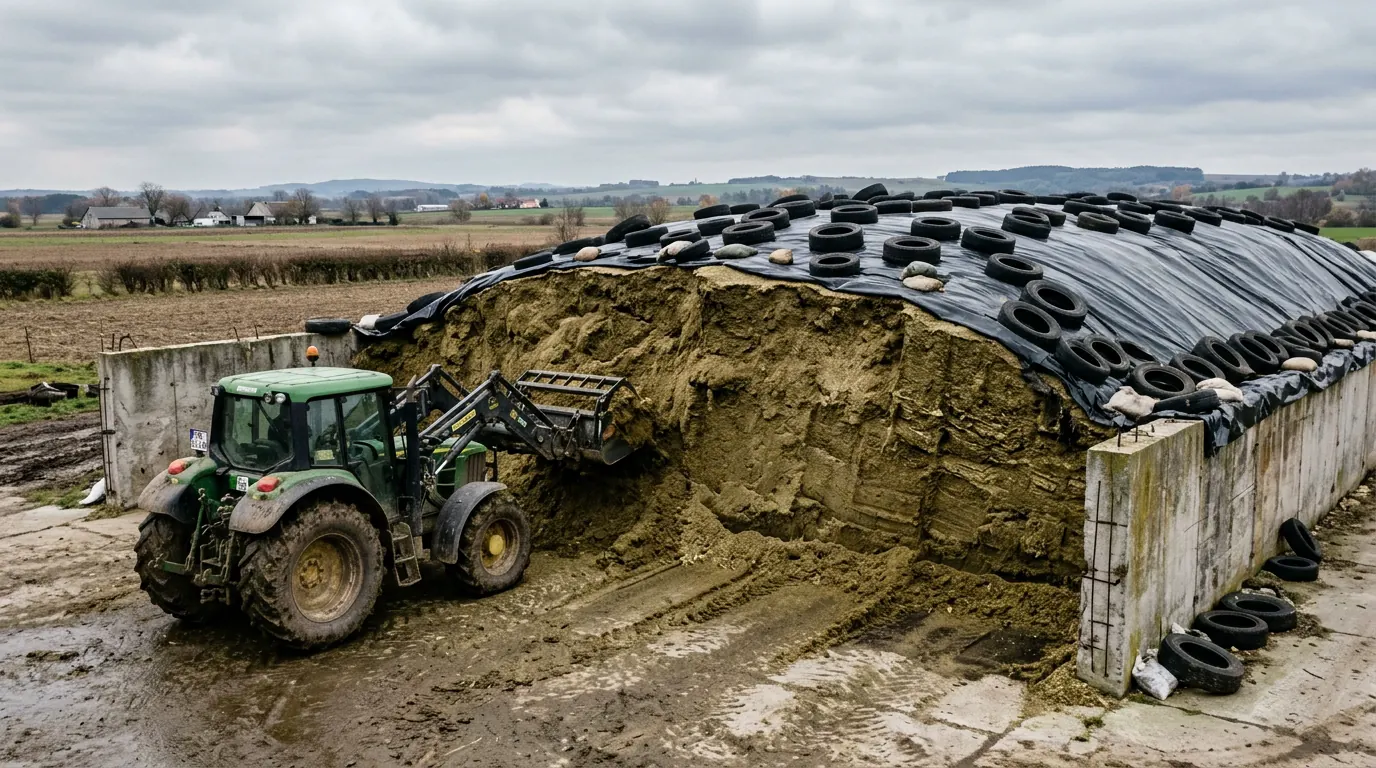
Haylage is grass that is wilted and then ensiled in a clamp, on a slab or under plastic wrap. Wilting before ensiling lowers the water content, so fermentation runs more calmly and the feed loses fewer nutrients. In practice we mean silage from grass wilted to about 30% dry matter (DM), as given in the feeding table of the Institute of Animal Production (IZ PIB). For beef cattle it is the base of the forage diet: animals eat it willingly, and its value depends on cutting date, weather during wilting and how well it is sealed.
Why it is a staple feed
According to a leaflet from OODR Łosiów (a Polish agricultural advisory center), haylage counts as forage, like hay and straw, and animals eat it readily because it tastes good. Forage is the foundation of feeding, and concentrates are added on top. The IZ PIB handbook on organic cattle rearing shows this rule directly: silage amounts are given as a guide, because it is fed ad libitum. So you do not control grams as much as whether animals have constant access to good feed and whether the silage spoils in the feed trough.
How to make good haylage
Cutting and wilting
Cut the grass at a good growth stage, when the meadow is dry. After cutting, let it wilt until it reaches about 30% dry matter. With higher moisture, effluent collects in the clamp and the risk of butyric fermentation and losses grows. Material that is too dry is harder to compact and seal. Weather decides how fast it wilts, so set the harvest date as you go, not in advance. A mix with legumes, such as alfalfa or clover, has a different makeup than pure grass, so record exactly what you ensiled.
Ensiling and airtightness
Load the material quickly and evenly, compact it in layers with heavy machinery, then seal it airtight with plastic or a cover. Every hole in the plastic lets air in, and air spoils the feed from the top. The edges of the clamp and the spots by the walls spoil most often, so check them first. A sour smell is a good sign, while a rotten smell, mold and wet, hot material mean losses. Write down ensiling dates and the state of the clamp, because it helps you decide at feeding time. You can track stocks easily in the feed silo monitoring module.
How much haylage per head
Amounts by body weight
The IZ PIB table from the study "Feeding beef cattle in organic rearing" gives guide amounts for silage from wilted grass (30% DM): 13 kg a day for animals weighing 200 kg, 16 kg at 300 kg, 19 kg at 400 kg and 21 kg at 500 kg. This corresponds to a dry matter intake of about 5.6, 7.0, 8.3 and 9.4 kg a day. The values are a guide, because haylage is fed ad libitum. In the variant with wilted grass and legumes, animals get 10–18 kg of silage a day, and maize is added at 4–7 kg.
How to work it out for your own herd
Weigh a few animals from a group of similar weight, or estimate weight with a weigh tape. Then match the amount to a range in the table, not to a number by eye. The amount follows body weight, not age. Check leftovers at the feed trough every day. Lots of leftovers mean you are feeding too much or the silage is poor. If feed disappears fast and animals lose condition, contact a vet. Record weighing results and feed use, and for herd records the IRZplus integration helps (IRZplus is ARiMR's online animal register in Poland).
Feeding step by step
Order and mixing
The feeding rules in the OODR Łosiów leaflet speak of giving feeds in the right order. In practice this means you give forage first and add concentrate in a set portion. If you use two kinds of silage, IZ PIB recommends mixing them before feeding and feeding the mixture. That way animals do not pick out one batch. Regular feeding times keep a steady rhythm of intake.
Concentrate: how much at once
A single portion of concentrate, for example meal or beet pulp, should not exceed 1.5 kg per animal. This is what the OODR Łosiów leaflet states. Too much concentrate acidifies the rumen microflora and causes many problems, including acidosis. So haylage stays the base of the ration, and concentrate is split into several portions through the day. Change the ration gradually, especially after the move from pasture to haylage.
Haylage for suckler cows and calves
Suckler cows and heifers
A study by J. Trela and colleagues (WZ 2011) describes beef herds as using pasture, hay, spring straw and haylage as forage, and in winter nursing cows also get concentrate. Haylage keeps body condition without too much concentrate. Heifers, cows with low pregnancy stage and younger animals are fed by age and condition, not with one ration for all. This approach helps keep animals healthy and weight gain predictable.
Calves and the fiber source
The KPODR Minikowo instructions on rearing beef calves (KPODR is a regional agricultural advisory center in Poland) recommend that the source of fibrous forage be different from the bedding. Calves may eat soiled bedding together with pathogens. The authors also write that calves prefer hay to straw, and good-quality fiber supports rumen development. Chop straw fed as feed so that particles do not exceed 20 mm, because then it works mechanically on the digestive tract.
Haylage costs in the feed budget
What a sample calculation shows
The ODR Lubań calculation for beef production (ODR is a Polish agricultural advisory center) assumes 40 dt of wilted grass silage in both the crossbred variant and the purebred beef variant. In that table feed makes up 71.0% and 65.1% of direct costs. Maize silage and rapeseed meal also take a good part of the budget. This is an example, not a norm. Results depend on feed prices in your region, meadow yield and the length of finishing.
What drives the cost of your own haylage
The biggest effects come from the costs of mowing, harvest and ensiling, and from yield per hectare. Good haylage, harvested on time and sealed airtight, reduces purchases of concentrate, because animals make better use of the energy in the fiber. Feed prices and quotes change often, so we do not give them in this guide. You can check current rates with local suppliers and at agricultural advisory centers such as ODR.
Animal health on haylage
Acidosis and ration changes
The most common mistake is too much concentrate at once, plus a sudden change of ration. This leads to rumen acidification and acidosis, which can show as lower appetite and uneven chewing. If you see such signs, contact a vet. The vet chooses the treatment, the medicine and the dose, and you record events in the treatment and withdrawal period records.
Mold and contamination
Molding or rotting silage harms animal health. Do not feed material with a rotten smell, clear mold, or contamination with soil and manure without talking to a vet. Keep storage areas apart from places where you take feed for feeding. Record what you feed and when, because it makes finding the cause easier if a problem appears. We describe how such records are set up on the page how we implement DlaFerm.
Frequently asked questions
What is haylage?add
Haylage is grass wilted and then ensiled without oxygen. Wilting to about 30% dry matter is the typical starting point for silage from wilted grass. It differs from silage of fresh grass by having less water.
How much haylage should I feed per cow per day?add
Guide amounts from the IZ PIB table run from 13 kg a day for animals weighing 200 kg to 21 kg for 500 kg, for grass silage at about 30% DM. Haylage is fed ad libitum, so the final amount depends on appetite. Match it to the weight and condition of the animals.
Can calves eat haylage?add
Yes, but the fiber source should not be the bedding. The KPODR Minikowo instructions advise that fibrous feed be clean and safe for calves. Discuss the diet of young animals with a vet.
How can you tell if haylage has gone bad?add
A sour smell is a good sign. A rotten smell, mold, and hot or wet material point to losses. Do not feed such material without talking to a vet.
What most often causes acidosis in cattle?add
Most often it is too much concentrate at once. The OODR Łosiów leaflet states that a single portion of concentrate should not exceed 1.5 kg per animal. Change rations gradually and report symptoms to a vet.
Can I mix two kinds of silage?add
Yes, but mix them before feeding. IZ PIB recommends feeding two types of silage as one mixture. That way animals do not pick out one batch of feed.
Sources & resources
- linkIZ PIB — WZ — Feeding beef cattle in organic rearing (K. Bilik et al.)
- linkOODR Łosiów (gov.pl) — Feeding beef cattle (leaflet)
- linkIZ PIB — WZ — 60 years of IZ work on beef cattle (J. Trela et al.), WZ XLIX(2011)4:11–56
- linkODR Lubań (PODR publication) — Sample calculation of farm income from beef production (different intensity levels)
- linkKPODR Minikowo — Rearing beef calves (instructions, SGGW authors)
Prepared by: DlaFerm Team based on data from the sources listed · Publisher: INSTA-TECH sp. z o.o.
Running a beef herd and keeping track of feed stocks?
The feed silo monitoring module helps you watch forage stocks in one place. Create a free farm account in DlaFerm.pl or get in touch, and we will help you start with your first silo.
Phone
+48 796 258 151