Acidosis in cattle: signs, causes, feeding
Acidosis in cattle is an acidified rumen, most often caused by too much concentrate in the ration. The first signs are weaker appetite, less rumination and loose manure. Call a vet quickly. The vet sets any drug dose, and on your side you control how much feed you give and in what order.
verifiedFrom the team that has organised work on poultry farms for years.
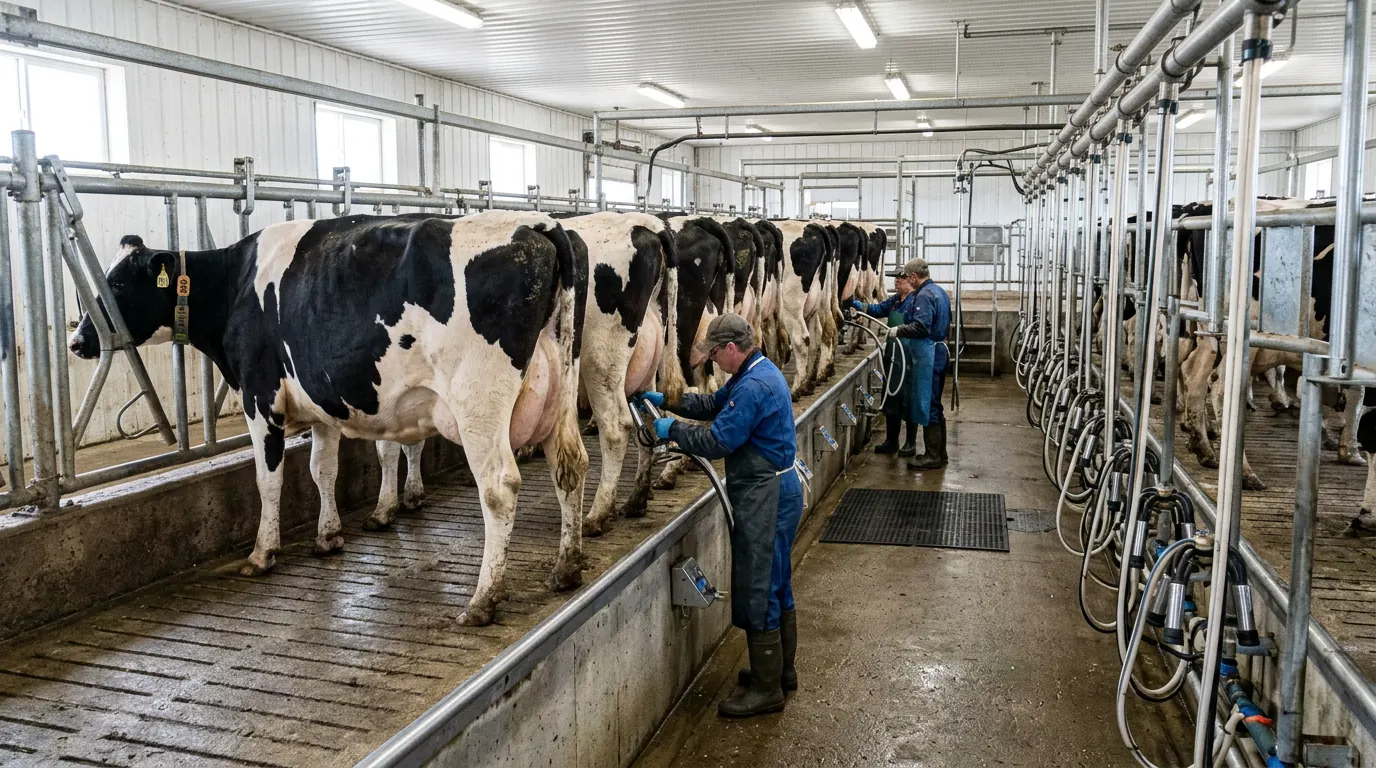
Acidosis in cattle means the rumen contents become too acidic. It happens most often when a cow or finishing animal gets too much concentrate compared with roughage, or when the diet changes too fast. The rumen microbes stop digesting properly, and lactic acid and other fermentation products build up faster than the animal can neutralize them. The course can be acute or subacute: the animal eats less, weakens and gains less. Acidosis is mainly a feeding mistake, so you can prevent it, not only treat it.
What to do if you suspect acidosis
If several animals in a finishing group suddenly eat less, back away from the feed or have loose manure, do not wait for them to recover on their own. Check the latest change in feeding: a new batch of grain, a sudden rise in the share of ground grain, or access to feed outside the ration. Call a vet and tell them what changed and when. The vet makes the diagnosis and the treatment, and chooses drugs so that the withdrawal period is respected. Keep records of the suspected case and any drugs given as you go in the treatment and withdrawal records in DlaFerm.pl, so you never lose track of dates.
Signs of acidosis in cattle
Acute signs
In the acute form you usually see a sudden drop in appetite, less rumination and a swollen left flank. Manure can be watery, and the animal stands with an arched back, keeps away from the group and clearly weakens. Lactating cows lose milk fast. Drinking a lot of water does not rule out acidosis, because it is often one of the body's first reflexes. Every such case needs an urgent call to a vet.
Subacute and chronic signs
In a milder form, acidosis can last for weeks and go unnoticed. You see poorer body condition, uneven gains and loose, shapeless manure. Some animals go lame, because acidification damages the hooves and promotes inflammation. In practice, such a herd uses more feed per kilogram of gain, and production indicators get worse for no clear reason.
What to watch in the herd
A daily walk-through is enough if you do it in a fixed order: appetite at the feed first, then behavior in the group, and last manure and rumen fill. Note every change you see. Catch a drop in gains early, so check your FCR and EPEF indicators regularly (FCR and EPEF online in DlaFerm.pl) before the problem shows across the whole group.
Why the rumen becomes acidic
Too much concentrate
Concentrates are high in energy and starch and low in fiber. A leaflet from OODR Łosiów (a Polish agricultural advisory center), "Feeding beef cattle", says too much concentrate acidifies the microflora of the digestive tract, which leads to many health problems, including acidosis. That is why roughage in a finishing ration, meaning hay, straw, silage and haylage, plays a real role and is not just a filler. Animals eat it willingly, and it keeps rumination going properly.
Changing the diet too fast
Rumen microbes adapt to a specific feed and need time to change their make-up. A sharp switch from a roughage ration to a concentrate one, or a new batch of grain with a different starch content, causes acidification even if the total amount of feed did not change. Make changes gradually, not overnight, and write down the date of each ration change.
Grain and how it is prepared
Cereal grains differ in value for finishing cattle. According to the OODR Łosiów leaflet, barley is best digested rolled, as flakes or pellets. A small amount of whole grain is acceptable, but more whole grain means some of the starch reaches the rumen in an uncontrolled way. How you process the feed matters as much as what is in it.
Concentrate portion: what the guidance says
A single concentrate portion
The OODR Łosiów leaflet says a limited single portion of concentrate, for example ground grain or beet pulp, should not exceed 1.5 kg per animal. That figure applies to one feeding, not the whole day. If the daily concentrate amount is higher, split it into more feedings instead of putting it all in one trough. For each finishing group, set the amount based on the feed's composition and what the animals actually eat.
Order of feeding
The leaflet recommends feeding in the right order. In practice, this means the ration cannot rest on concentrate alone, and roughage must always be available. Before you add another portion of grain, check that the animals have already eaten the hay or silage. Keep an eye on stock levels and the type of grain in the silo, for example with silo monitoring in DlaFerm.pl.
Drugs and doses
The drug dose, route and length of treatment are always chosen by a vet who knows the herd and the animal's condition. Do not give drugs from your stock on your own, and do not copy doses from internet posts or other farms. Every drug given needs a date and a withdrawal period on record, because that period decides when the animal can go to slaughter or the milk can enter the market.
How to prevent acidosis in a finishing herd
Constant access to roughage
Animals should always have access to hay, straw or silage, because it keeps the rumen working steadily. Do not cut it back in favor of concentrate just because animals gain weight faster. Check that roughage does not run short anywhere in the barn, including groups kept in a poorer corner.
Gradual diet changes
Introduce every change in feed composition in several steps, raising the share of the new ingredient in small amounts. This applies to new grain as well as a change of silage batch. Record what you changed and when, so you can easily point to the cause if a problem appears.
Where to check the guidance and when to call a vet
Basic rules for feeding beef cattle are published by agricultural advisory centers and the National Research Institute of Animal Production (Instytut Zootechniki PIB). The Teagasc Beef Manual (Nutrition section) covers feeding cattle in finishing systems, and AHDB describes feeding suckler cows and calves. These are foreign publications, so take the principles from them, not the specific numbers, because feed conditions in Poland may differ. Call a vet whenever several animals start to get sick within a short time, because signs of acidosis can look like other diseases, and Poland's Chief Veterinary Inspectorate (Główny Inspektorat Weterynarii) states that a suspected disease must be reported without delay.
Frequently asked questions
What is acidosis in cattle?add
It is an acidified rumen, caused by microbes failing to cope with too many easily fermented components, usually starch from concentrate. It runs an acute or subacute course and needs a vet's advice.
What are the signs of acidosis in a cow?add
Most often a drop in appetite, less rumination, bloating, loose manure and weakness. In a longer course you see poorer gains, lower milk yield and lameness.
How much concentrate can you feed cattle at once?add
The OODR Łosiów leaflet says a limited single portion of concentrate, for example ground grain, should not exceed 1.5 kg per animal. Set the daily amount with the feed's composition in mind, and leave any drug dose to a vet.
Can you treat acidosis yourself?add
No. A vet assesses the animal and chooses the drug and dose. Treating on your own risks making the animal worse and breaking the withdrawal period.
How do you prevent acidosis in finishing cattle?add
Give constant access to roughage, change the diet gradually and split concentrate into several feedings. Also check how grain is processed, because rolled grain is digested better.
Is acidosis contagious?add
No, acidosis is not contagious. It is a feeding disorder, so you prevent it through diet and herd management. Signs that look like other diseases still need a veterinary exam.
Sources & resources
- linkOODR Łosiów (gov.pl) — Feeding beef cattle (leaflet)
- linkTeagasc (Ireland) — Teagasc Beef Manual — Section 6: Nutrition
- linkAHDB Beef & Lamb (UK) — Beef BRP Manual 5: Feeding suckler cows and calves for Better Returns
- linkChief Veterinary Inspectorate (Główny Inspektorat Weterynarii) — gov.pl/web/wetgiw
- linkInstytut Zootechniki PIB — izoo.krakow.pl
Prepared by: DlaFerm Team based on data from the sources listed · Publisher: INSTA-TECH sp. z o.o.
Do you run a beef finishing herd?
The treatment and withdrawal module in DlaFerm.pl records every drug given and tracks withdrawal periods in one place. Create a free farm account or get in touch, and we will show you how it works in practice.
Phone
+48 796 258 151